Risks and its
Management after Financial Crisis in Kazakhstan
According to
the vice-president of “Akmola Stroi” financial crisis brought many changes in
this industry”. The manager in “Sembol construction” said that crisis is “a
risk for some of companies, but for another it is the opportunity”. Crisis had
two effects: construction stopped, many companies go bankrupt and many workers
lose their jobs, however for managers of construction companies that survived
this was an opportunity for growth. “We become more wise and prudent” said the
manager of “Akmola Stroi. Before to start any project they carefully analyse
it. For example, now they are carefully observing the economy of neighbour
country Russia, because they procure materials from that country. They with
awareness sign any contracts or agreements and try to take under consideration
and negotiate any incompliance in advance. Contract is conventional method to
minimize risks. After financial crisis such risk as currency fluctuation become
very significant since economies of Kazakhstan and neighbour countries around
become unstable. For instance, financial crisis brought such event as
devaluation of national currency “Tenge”. Because of that event many companies
lose lots of money. Now this kind of risks construction companies try to
minimize through financial instrument such as “Hedging”. According to Buzzle
Hedging is a financial instrument such as options, futures and swaps that are
used to minimize risks which arise from changes of the price of one currency
against another. For example, graph 4.1 shows how price of US Dollar is
appreciating against national currency of Kazakhstan “Tenge”. For example, when
one party wants to buy another currency and he thinks that currency which he
wants to buy will appreciate against his currency. To minimize the effect of
those changes he can buy futures, options or swap contracts. These contracts
will give right to buy a currency at initial rate.
After crisis
all prises decreased. Precisely, prices for materials decreased, but in the
same time the prices for housing also decreased, consequently now construction
companies make less profit than they did before crisis. Managers state that now
for some buildings if it is too risky but return is huge companies make joint projects,
by that way they divide risk for two parties. Because of financial crisis
demand for housing sharply decreased. This significantly hit companies.
Managers of the companies state that it was impossible to foresee this
financial crisis. However, even this event significantly affects construction
companies technical risks in residential construction industry mostly stay the
same, except demand for housing and economic risk like currency fluctuations.
Graph 4.1
Tendency of Currency “Tenge” against US Dollars
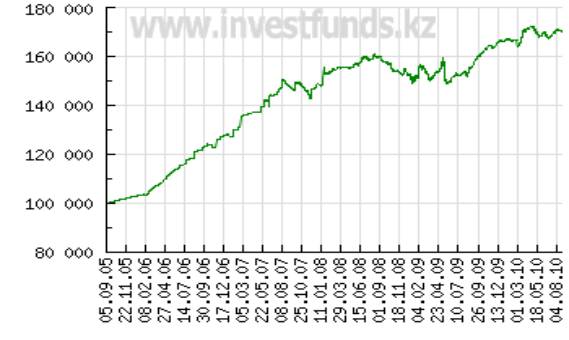
Adopted from www.investfunds.kz
According
to Kahkonen and Artto (1997) risk identification is the most critical and
important step in project risk management process. During the secondary
research it were identified various risks associated with constructions.
Mainly, they were based on the research of Kahkonen and Artto (1997) and
El-Sayegh (2008). Risks identified by El-Sayegh (2008) are presented in the
table 5.1.
Table 5.1. Most significant risks in construction industry
|
Risk |
|
1. Inflation and
sudden changes in prices |
|
2. Owners’
unreasonably imposed tight schedule |
|
3. Subcontractors’
poor performance and management |
|
4. Delay of material
supply by suppliers |
|
5. Change of design
required by owners |
|
6. Owners’ improper intervention
during construction |
|
7. Shortage in
manpower supply and availability |
|
8. Delays in approvals |
|
9. Lack or departure
of qualified staff |
|
10. Shortage in
material supply and availability |
The table
5.2 presents the most significant risks identified in residential construction
industry in Kazakhstan. Basically, these risks, as it was stated by respondents
were before financial crisis and after. However, after financial crisis some
risks become more significant than others. For instance, risk like currency fluctuations
or changes of prices for materials are risks that become more significant after
financial crisis. According to respondents these risks depend to internal and
external economic condition and out of manager’s control.
Table 4.1
List of the most Significant Risks Identified in Kazakhstan Market
|
1 |
Corruption |
|
2 |
Financial |
|
3 |
Change of materials price |
|
4 |
Change of design after work has started |
|
5 |
Logistics risk |
|
6 |
Communication problems |
|
7 |
Poor quality of workers |
|
8 |
Delays in materials delivery |
|
9 |
Architectural risks |
|
10 |
Weather conditions |
In comparison of risks written in
literature review and research findings it can be said that they are similar.
Risks like change
of materials price and inflation and sudden changes in prices,
delays
in materials delivery and delay of material supply by suppliers, change of
design after work has started and change of design required by owners are
mainly same.
Risk like corruption
plays very important role in the industry. It directly affects the success of
the construction projects. As it was stated by Macomber
(2001) there are three types of risk that affect success of a project, they are
financial risk, schedule risk and quality risk. Risk of corruption
significantly affects all three aspects of project. For example, the money that
was prepared to finance a project will go for corruption. This affects quality
because managers will procure fewer materials for construction. Also this will
affect duration of the construction project because a company will have to hire
fewer workers. For instance, if according to El-Sayegh’s (2008) most
significant risk can be change of materials or inflation, in this country the
most significant risk is corruption.
Also those risks
identified in Kazakhstan construction companies can be classified according to
El-Sayegh’s (2008) Classification of Risks (see figure
2.1). Risks like corruption and communications with government can be
classified to political risk. Change of materials price, currency fluctuations
and decreased demand for apartments can be arranged to economic risk. A weather
condition in the city of Astana is natural risk. Change of design, delays with funding to contractors can be
classified to owner’s risks.
In comparison with the risks
stated by Kahkonen
and Artto (1997) it can be said that in addition to risks associated with
owners it can be added corruption and problems with funding. Kahkonen and Artto
(1997) argue that risk of defective design can
be transferred to architect or engineer, however according to manager of
“Sembol Constructions” company they face risk with architects. When an
architectural firm do not possess enough experience they face risk that a
project will be submitted late or with defections.
References
·
How to analyse qualitative data, available at
URL: http://www.emeraldinsight.com.ezproxy.stir.ac.uk/research/guides/methods/qualitative.htm accessed 27th of July
·
Geography
of Kazakhstan, available at URL: http://expat.nursat.kz/?3295 accessed on 14th of August
·
How to conduct
interview, Anon., n.d , available at URL: http://www.emeraldinsight.com.ezproxy.stir.ac.uk/research/guides/methods/interviews.htm accessed on accessed 27th of July
·
Economy watch, USA Construction Industry, available from
URL: http://www.economywatch.com/sector-watch/us-construction.html accessed on 23rd of July.