V. S. Lisokolenko,
postgraduate student
Simon Kuznets Kharkiv National University of
Economics
Methods of
strategic analysis of enterprise marketing communications
In recent years, the strategic
management process has become more complex and costly. In condition of growing
competitiveness in many markets managers face the problem of conducting a
profound strategic analysis of enterprise marketing communications. Therefore,
in order to assist strategic managers, a wide variety of tools and techniques
have been developed.
Strategic analysis is
extremely vital, because it enables enterprise to take advantage of the path of
least resistance for achieving its goals.
There are a lot of scientific
works of famous economists devoted to the problem of managing the
communicational policy of the enterprise and its impact on the efficiency of
the organization, namely Abramov, Bagiev, Basovskii, Bernet, Golubkov,
Zavialov, Kotler, Panko, Prymak, Prohorova, Romanov, Rossister and others.
Considering the works of Ukrainian scientists, marketing communications have
become the object of research not so long ago - less than a decade. However, in
their works, methods of communicational management at an enterprise haven’t
been formulated distinctly yet. That is the reason, why topic of this article
is vitally relevant.
The aim of the
article is to determine the main methods of strategic analysis of enterprise
marketing communications.
Permanently auditing
the marketing environment is of considerable importance for the planning of
marketing measures and their implementation. Globally changing value
orientation, fashions and styles may influence the contents of communication
messages. The social acceptance of certain consumption areas may change und
thus suddenly represent a new chance (e. g. the social acceptance of
environmentally friendly fuels) or threat (e. g. outlawing of environmentally
hazardous sources of energy) for marketing, especially the marketing of newly
developed products. [1]
The first methods of
strategic analysis are analysing opportunities and threats. In our day and age,
corporations distinguish themselves by their increasing dynamics and
complexity. Changes in their macro-environment considerably affect the
management of marketing communications. These changes in the marketing
environment create new opportunities for marketing communications (e. g. by a
greater differentiation of the media system), but they also hold new threats
(e. g. increased information overload of the targeted persons) [3].
Executives employ a
specific opportunity and risk analysis in order to identify the relevant
external environmental forces which are of significance for their corporation (
fig. 1).
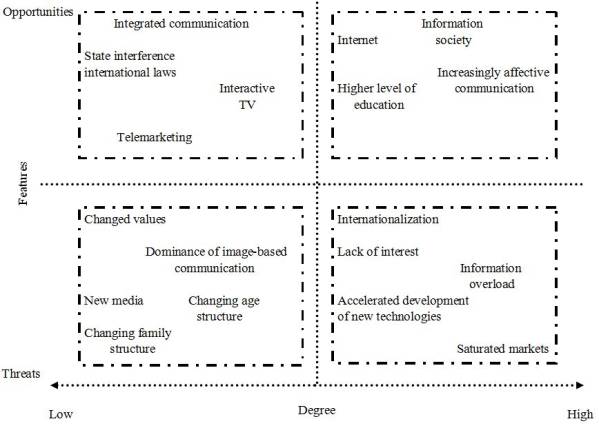
Fig. 1 – Analysing opportunities and threats.
The second methods of
strategic analysis are analysing strengths and weaknesses. The decisions taken
with regard to market communications are considerably affected by the
competitive situation which companies are facing. They need to take into
account the activities of their rivals, especially when they decide on
positioning and the way in which this is communicated but also when they start
their media planning process and design their advertising messages [2] (fig.
2).
In a strengths and weaknesses analysis you explore
your strengths and weaknesses and try to discover the professional
opportunities that exist for you. Your personal obstacles, issues that might
hinder your progress, are discussed as well. A strengths and weaknesses
analysis can also be called a personal SWOT analysis.
Probing your own strengths and weaknesses will
clarify what the best next step is and how you can improve yourself. It will
also tell you more on where you would like to work and where you would be able
to prove yourself most.
It is a good idea to prepare for an assessment by
performing your own strengths and weaknesses analysis, so that you are clear
about what you think you have to offer to a company and in what areas you need
improvement. These issues will be brought up in the assessment for sure, and
having thought about it in advance will be in your benefit. Basically this is
how you present yourself to the employer: what are the advantages the company
can count on and what areas need to be worked on. You do not want to mess up a
presentation like this [5].
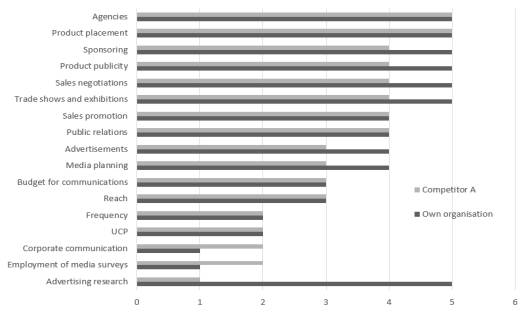
Fig. 2 -
Communication-oriented analysis of strengths and weaknesses.
The third methods of
strategic analysis are portfolio analysis. The portfolio analysis ensures that
a corporation is always considered as an entity and that its philosophy is
future as well as strategy oriented. Market communication can only be
reasonably planned and implemented if it is imbedded in an overall corporate
strategy. The portfolio analysis determines, above all, budget requirements
(fig. 3).
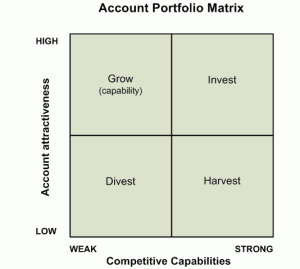
Fig. 3 - Portfolio analysis.
Portfolio analysis involves quantifying the operational and financial
impact of the portfolio. It is vital to evaluate the performances of
investments and timing the returns effectively.
The analysis of a portfolio extends to all classes of investments such as
bonds, equities, indexes, commodities, funds, options and securities. Portfolio
analysis gains importance because each asset class has peculiar risk factors
and returns associated with it. Hence, the composition of a portfolio affects
the rate of return of the overall investment [2].
The fourth methods of
strategic analysis are positioning analysis. The positioning of their business units and the
product and service they offers is a vital decision area for corporate
management. It encompasses the central idea that captures the corporation’s or
brand’s meaning and their distinctiveness and thus represents the starting
point of each and every communication concept.
On positioning their
products, and on communicating this position to their customers, companies
ought to avoid the following mistakes [4]:
- Underpositioning occurs when there is a perceived lack
of differentiation, i. e. the target groups cannot identify any special
features about a company or its offers which are considered to be one of many.
- Overpositioning results from the fact that a company
and its offer are perceived as too specific or too narrow by the target group.
This causes certain demand potentials to be restricted or even excluded.
- Confused
positioning arises due to an uncertain or diffuse image in the minds of
customers due to contradictory positioning attempts, multiple utility claims or
frequent repositioning.
- Doubtful
positioning, i. e. the target group has strong reservations about the company
or brand and accredits it with little credibility.
Thus, strategic
analysis is extremely vital, because it enables enterprise to take advantage of
the path of least resistance to achieve goals. It assists to define and
determine the best path to take, helps in measuring the success or failure of
the strategies implemented in the company. Analytical methods and tools are
keys to ensuring that consistency and an appropriate level of rigor are applied
to the analysis.
References:
1. Busch, R. Marketing communication
policies: monography / R. Busch. –
Berlin:
Springer-Verlag, 2012. – 378 р.
2. Businessballs Porter’s five forces model.
www.businessballs.com/portersfiveforcesofcompetition.htm [Accessed 12 February
2008].
3. Middleton, J. The ultimate strategy
library: the 50 most influential strategic ideas of all time /J. Middeleton. -
Oxford: Capstone, 2008. – 264 p.
4. Porter, M.E. Competitive strategy:
techniques for analyzing industries and competitors. / M.E. Porter. - New York,
London: Free Press, 2009. – P. 23-30.
5. Орлов
П. А. Маркетинг: [ навчальний посібник] / П. А. Орлов, С. І. Косенков, Т.П. Прохорова та ін. – Х.: ВД «ІНЖЕК», 2012. – 528 с.
6. Пономаренко В. С. Стратегія розвитку підприємства в умовах кризи : монографія / В. С. Пономаренко, А. М. Тридід, Н. А. Кизим. Х.: ХНЕУ, 2003. – 324 с.
7. Прохорова Т. П. Маркетинговая политика коммуникаций: Учебное пособие. – Х.: ИД «ИНЖЭК» , 2005. – 224 с.