Economic sciences/16.Macroeconomics
Kocharian I.S.
Ph.D. of Economy, docent,
first vice-rector of Kyiv National
Karpenko-Karyi University of Theatre,
Cinema and Television
Needs of regions for obtaining higher education in field of culture and art
Regional
factor essentially influences the effectiveness of decisions regarding the
development of educational facilities and the distribution of educational
services for getting the higher education. The large dimension of this system
and full autonomy of fields of knowledge makes worthwhile the macroeconomic
planning on basis of economic-mathematic modeling of distribution of
educational services by different fields of knowledge.
For statement and implementation of model of planning the educational
services distribution on example of higher educational institutions of culture
field, represented by such institutions as theaters, philharmonic, television
and radio organizations, film demonstrators, publishers, museums, libraries,
clubs, circuses, parks of culture and recreation, aesthetic schools – total
number in 2014 amounted to 35,619 units [4, p.452], it is necessary the
information of tree levels: educational facilities for training specialists;
needs for educational services (higher education); specific investments in
permanent assets of domestic-social area and in permanent assets of higher
educational institutions.
Higher
educational institutions with bachelor and master training in field of culture
and arts are subject to state customer – Ministry of Culture of Ukraine [1];
Educational facilities are concentrated in six regions, which have to meet
the needs of higher education in all 27 regions of Ukraine [2]. In this
connection it is necessary to prepare the information about needs of specified
six regions and the total needs of other regions (21 regions).
By the need for obtaining higher education it is meant not the number of
people with secondary education who wish to become specialists in the field of
culture and art, but that part of them, which have sufficient level of
preparation for entrance exams and training in higher educational institutions
of this type. The necessity of modeling the needs is related to the lack of
statistical information by regions.
From the 11
universities of the state customer Ministry of Culture of Ukraine, which
provide higher education in culture and art field, the calculations of needs in
this field by regions held without KNUCA, because of a large number of
specialists of this university does not belong to the fields of knowledge
"culture" and "art" .
The
calculation of needs in obtaining the higher education in field of culture and
art is based on the number of persons in general education institution and
adjustments of needs taking into account the propensity of youth in regions to
concerned field.
For modeling
the needs the assumptions are taken:
- the number
of applicants, which determines the need for obtaining higher education, is
defined as the part of number of pupils of general educational institutions;
- these
parts for studied regions are taken equal;
-
determination of the part of applicants is based on present statistics (for
last periods);
- approved
licensed number of admission of students actually reflects educational
facilities of the higher educational institutions.
To determine the need it is used the information about the number of pupils
in general educational institutions (GEI) by regions (2013/14 educational year)
and the proportion of persons of the total number of pupils in GEI who choose
to obtain a higher education in fields of culture and art as well as the total
number of students admission to higher educational institutions of III - IV
accreditation levels including the KNUCA.
Notation of
amounts used in the task:
r – index of the region; r =  –
elements of set of regions, higher educational institutions of which are
providing services in the field of culture and arts; r =
–
elements of set of regions, higher educational institutions of which are
providing services in the field of culture and arts; r =  –
elements of the set of regions, where people have a need for higher education
in the field of culture and art; r =
7 – union of other regions, i.e. these are remaining regions of Ukraine from 27
that are not included in the set r =
–
elements of the set of regions, where people have a need for higher education
in the field of culture and art; r =
7 – union of other regions, i.e. these are remaining regions of Ukraine from 27
that are not included in the set r =  ;
;
 - number of
pupils enrolled in general education institutions (GEI) of r region, thousand;
- number of
pupils enrolled in general education institutions (GEI) of r region, thousand;
 - total number of students of GEI of Ukraine, thousand;
 ,
, ,
, - number of students admitted in Ukraine, in HEI KNUCA,
adjusted number of students admitted in Ukraine;
- number of students admitted in Ukraine, in HEI KNUCA,
adjusted number of students admitted in Ukraine;
 - part of pupils who chose to receive
higher education in the field of culture;
- part of pupils who chose to receive
higher education in the field of culture;
Table 1
Information for calculating the needs of regions in obtaining HE in culture
and art field (2013/2014 e. y.)
(developed by
author on data [3, p.411, 418; 1])
|
No. |
Region |
Number of
pupils |
Adjusted
number of students, thousand |
Evaluation
of pupils propensity to HE in field of culture |
|
1 |
Kyiv |
241 |
237 |
100 |
|
2 |
Kharkiv Oblast |
220 |
217 |
80 |
|
3 |
Lviv Oblast |
255 |
251 |
45 |
|
4 |
Odessa Oblast |
235 |
232 |
50 |
|
5 |
Donetsk Oblast |
338 |
333 |
40 |
|
6 |
Luhansk Oblast |
171 |
168 |
55 |
|
7 |
Other regions |
2744 |
2703 |
15 |
|
8 |
Ukraine, total |
4204 |
4141 |
385 |
 in GEI, thousand
 , points
Also, necessary information:
admitted students in Ukraine in 2013/14 e.y. – 348 thousands of
persons/year [3, p. 418], including KNUCA – 5.2 thousands of persons/year[1];
admitted students to higher educational institutions of culture and art
field in 2013/14 e.y. – 6438 thousands of persons/year [1].
In addition
to the indexes of number of pupils and students the table brings the evaluation
of GEI pupils propensity to getting higher education in the fields of knowledge
"culture" and "art" by regions. Evaluation conducted by
expert assessments in 100 - point scale, 0 ≤  ≤ 100, with
higher points corresponding to greater propensity to the modeled field.
≤ 100, with
higher points corresponding to greater propensity to the modeled field.
As proved
above, the modeling of needs of applicants in getting the higher education in
field of culture and art made without HEI KNUCA.
Present the
main dependences, on which the implementation of proposed methodical approach
bases.
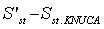
Adjusted
number of students annual admitted to universities of III - IV accreditation
levels without HEI KNUCA.
 (1)
(1)
that is  = 348 thousand – 5.2
thousand = 342,8 thousand persons per year.
= 348 thousand – 5.2
thousand = 342,8 thousand persons per year.
Consider the coefficient of reduction of admission to the university
without HEI KNUCA:
 , (1)
, (1)
that
is equal to k = 0,985 ( ).
).
Adjust the total number of pupils under this coefficient:
 , (3)
, (3)
that is  = 4141 thousands of
persons (
= 4141 thousands of
persons ( ).
).
Calculate the part of pupils who choose the field of culture for getting
the higher education:
 , (4)
, (4)
that is
equal to  = 0,00155 (
 ).
).
Calculate
the needs of youth in acquiring HE in field of culture and art by regions
assuming that the coefficient  remains constant for all regions,
  = const,
  r,
r,  .
.
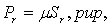
With this
assumption, the need  of the region r,
  .
.
 (block 6) (5)
The results
of calculations by region and Ukraine are given in Table 2.
Table 2
Results of calculations of needs in obtaining HE in field of culture and
art by regions
(developed by author)
|
No. |
Region r |
Need |
Evaluation of propensity of
pupils to HE in field of culture, points |
Deviations
of points |
Adjusted
need in |
|
1 |
Kyiv |
350 |
100 |
45 |
1102 |
|
2 |
Kharkiv Oblast |
337 |
80 |
-25 |
755 |
|
3 |
Lviv Oblast |
390 |
45 |
-10 |
224 |
|
4 |
Odessa Oblast |
354 |
50 |
-5 |
270 |
|
5 |
Donetsk Oblast |
516 |
40 |
-15 |
265 |
|
6 |
Luhansk Oblast |
262 |
55 |
0 |
262 |
|
7 |
Other regions |
4228 |
15 |
-40 |
3560 |
|
8 |
Ukraine, total |
6437 |
385 |
|
6438 |


 HE in field of culture by regions, persons/year
These data presents input information about needs for solving optimization
problem of distribution of educational services by regions on the criterion of
minimizing the investment in system of higher education in the field of culture
and art.
In forming of plans was not accounted the factor of support of the social
infrastructure in connection with increase of population amount in regions that
takes place with applicants. Support of specified level requires additional
investments in domestic-social field.
Bibliography:
1. Official web-site of Ministry
of Culture of Ukraine [Electronic resource]. – Access: http://mincult.kmu.gov.ua.
2.
On state order for training specialists, scientific, scientific-pedagogic
and working personnel, for advanced training and retraining for state needs in
2015 year: Act of Cabinet of Ministers of Ukraine; List from 01.07.2015 No.462
[Electronic resource]. – Access: http://zakon5.rada.gov.ua/laws/show/462-2015-%D0%BF.
3.
Statistical Yearbook of
Ukraine for 2013 year. State statistic service of Ukraine [Electronic resource]. – Access: http://ukrstat.org/uk/druk/publicat/Arhiv_u/01/Arch_zor_zb.htm.
4.
Statistical Yearbook of
Ukraine for 2014 year. State statistic service of Ukraine [Electronic resource]. – Access: http://ukrstat.org/uk/druk/publicat/kat_u/publ1_u.htm.