CHARACTERISTICS AND CLASSIFICATION OF OBJECTS
PROTECTED GROUND
Mukatay N., Atyhanov A.K., Rozi Amut., Ospanov A.T.
Kazakh National Agrarian University, Almaty, Kazakhstan
6D080600-Agricultural
Engineering and Technology
nureke_phd@mail.ru Tel:8702-166-3-99
To plants in protected ground are artificial
agricultural buildings where year-round cultivation of vegetables. The most
perfect type of cultivation constructions protected ground are greenhouses.
This is due to the fact. They allow you to do all agricultural activities without
compromising the integrity of the fences and the widely use of various
mechanisms for the care of plants. Further, in object of the thermal management
we consider the block glasshouse. According to the source of the greenhouse
frame are classified as transparent barriers. Heat loss through cultivation
facilities is directly proportional to the surface area of the glazing and the
temperature difference. So to date we are searching for materials that have
good "transparent" as glass for optical radiation, and at the same
time, which is a good heat insulator. For example, as such material can be used
polycarbonate plates.
Existing
greenhouses industrial type can be classified on a number of operational and
construction features: by appointment seasonality, growing technology, the type
of material of the frame and translucent fencing, spacebar heating and
ventilation [1].
The
purpose of the greenhouse is divided into vegetable and seedling, and a
seedling greenhouse for growing seedlings for open and protected ground differ
in technological equipment and design of ventilation systems.
Duration: all year (winter) and seasonal
(operated in spring, summer and autumn). As a rule, the greenhouse frame is
installed in a permanent place. With the exception of mobile greenhouses,
widely spread in some North-Western regions for growing seedlings and early
greens of perennial vegetable crops.
On cultivation distinguish rack, estelline
(soil) and hydroponic greenhouses. In turn, the hydroponic greenhouses can be
fitted with different equipment in accordance with the method of growing. There
are greenhouses with traditional, classical way of supplying the nutrient
solution by the method of flooding in which plants are grown in a concrete
sealed trays or racks filled with granite gravel or expanded clay.
In recent times the wide spread of various
methods of small-scale culture of growing plants in peat-based substrate with
the use of drip irrigation systems, running water and aerovega culture,
aeroponic culture, etc.
As the material of the frame used in greenhouses
galvanized steel and aluminum profiles, wooden laminated elements.
In appearance translucent fencing greenhouses
are divided into glass and film greenhouses with a coating of hard polymer
materials. Film cover film in one or two layers. To save energy, apply special
dual-layer rigid polymer materials with an air gap between the layers 5-25 see.
On design and planning decisions greenhouses can
be divided into agrarian and block, according to the sectional profile to lean
with equal and unequal slopes, with flat, cylindrical and hyperbolic rays.
The greenhouse is the most advanced type of
cultivation constructions protected ground. Significant difference greenhouses
from other types of plants in protected ground - the ability to create
favorable conditions not only for growing plants, but also for staff and
technological equipment. As a result, greenhouses increase the productivity of
labor and production culture, disappears the seasonal nature of agricultural
work. In the greenhouse, in contrast to the small shelters and greenhouses can
without compromising the integrity of the fencing to perform all agricultural
activities, as well as widely used various mechanisms to care for the plants.
One of the first types of greenhouses Klin was a
greenhouse. She had a blank North wall and lean-to glass roof, facing South
[2]. This design provided a good thermal insulation and lighting in the winter
months. Greenhouses of similar design and is currently widely accepted and
recommended for construction on private land. One of the options shed buried in
the ground of the greenhouse is shown in (figure 1).
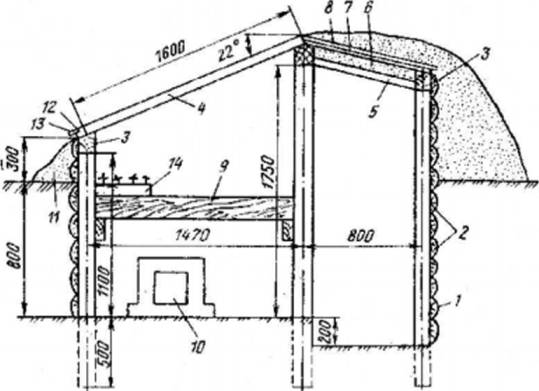
Figure 1 - Winter lean-to greenhouse.
1 - pillars; 2 - cladding of the slab; 3 - rail; 4 - greenhouse frame; 5 -
facilities; 6 - saw; 7 - roofing; 8 - earth backfilling; 9 - rack; 10 duct; 11
- slope; 12 - resistant Board; 13 - low tide; 14 - a box of seedlings.
In the future, as we increase the area of
greenhouses lean-to greenhouses gave way to the gable of the hangar [3]. They
do not have any internal supports. A typical example of such greenhouses to
individual owners is a winter greenhouse with a gable roof of the greenhouse
frames (figure 2).
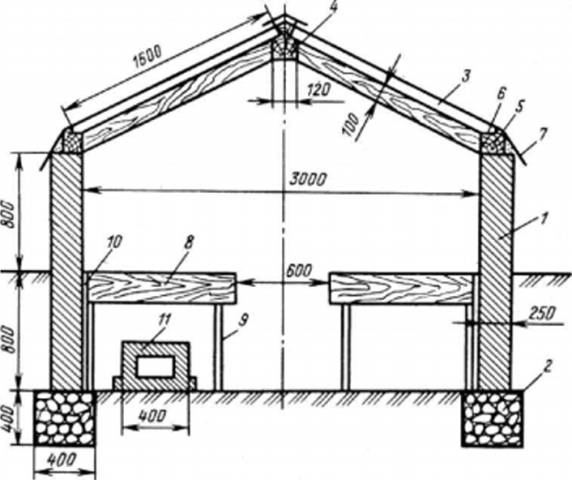
Figure 2 - Winter gable greenhouse.
1 - wall; 2 - Foundation; 3-rafters; 4 - ridge bar; 5 - wrap timber; 6 -
groove for the stop frame; 7 - low tide; 8 - rack; 9 -rack; 10 - the gap
between the wall and the rack; 11 -chimney
Along with gable hangar greenhouses with flat
slopes, widespread greenhouses, the sectional profile of which is close to the
arc of a circle or is a broken line (polygonal profile). As a rule, these
greenhouses are coated with a film of polymeric material (figure 3) [4].
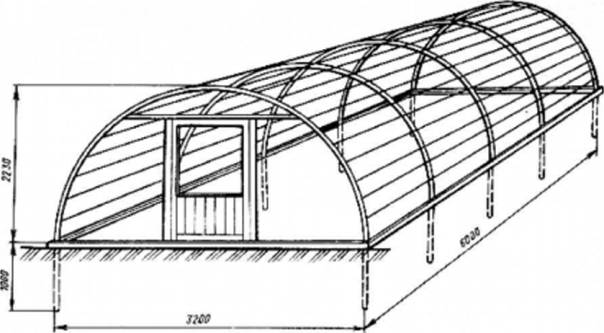
Figure 3 - Arched
greenhouse for personal use
However, the cylindrical shape of the possible
accumulation of water and snow in the upper area of the roof, the formation of
"bags" and as a result, the shading of plants and the destruction of
the coating. Therefore, a more preferred hyperbolic or arrow-shaped form of the
roof (figure 4).
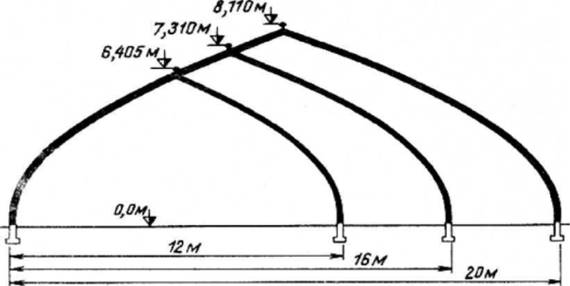
Figure 4 - Modification of the frames of the Finnish greenhouses
Block greenhouses include an arbitrary amount of
hangar [5]. The walls between adjacent greenhouses eliminated, leaving only the
supporting stand. Change the size of the greenhouse is possible by increasing
the number of sections and their length, which is not treparel any significant
changes in the design. This feature is widely used in practice, when based on a
standardized kit of parts to create the greenhouse area of 50 - 6000 m2.
We offer underground
thermos – greenhouse
Underground thermos -
greenhouse has been installed in the training and production phase of Zhetysu
state University named I. Zhansugurov, Almaty region Taldykorgan. (Fig. 5).
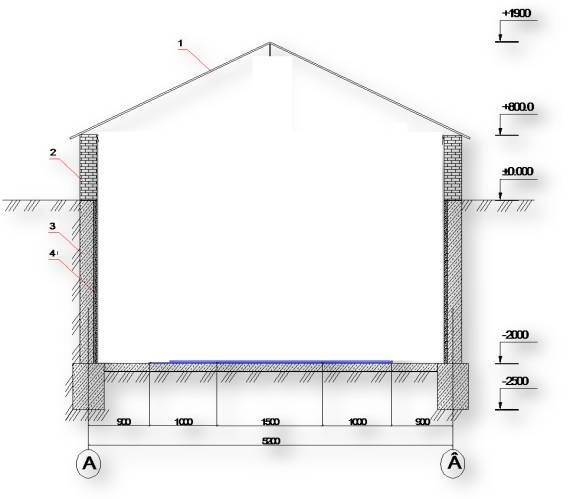
Figure - 5.
Undergroundgreenhousethermos.
1 – polycarbonate , 2 – brick, 3 –
reinforced concrete wall , 4 - light reflective material.
The main feature of the greenhouse
and the thermos is economical in its consumption of energy for heating. Of
course greater efficiency savings depends on how buried this greenhouse in the
ground.
Although the greenhouse thermos can
build not buried, but the best effect to retain heat in the greenhouse is
achieved if the greenhouse is partially or completely embedded in soil. From this
stems the second feature is that the greenhouse is constructed as a trench.
The third feature reflective wall,
which is created in the greenhouse increased illumination. In cloudy weather,
this greenhouse is lighter in respectively 2 times higher than in open areas.
This gives an advantage over other greenhouses in the wintering period, as in
Sunny weather the heat inside is supported by solar energy.
The fourth feature is due to the
bright lighting and constant temperature without fluctuations is achieved yield
increases of more than 30%.
Through energy-saving
technologies to decrease costs by 45%, which contributes to a rapid payback in
2-3 years.
The measures, techniques
for installation and fastening of sheets from polycarbonate, ensuring
sufficient tightness of connections and eliminates the possibility of heat
loss.
Recommendations for the
care of the soil in the greenhouse and lighting parameters. The use of solar
energy for energy supply will help to replace from 20 to 60% of the thermal
load on the objects of agriculture, depending on climatic location, to exclude
the cost of shipping fossil fuels (important for remote users), to prevent
pollution of the environment and agricultural products.
Conclusion
In
conditions of increased requirements for new construction presented in this
paper a factor analysis of various greenhouse designs will make the right
choice taking into account the construction of greenhouses with reliability,
safety and long-term operating prospects.
Literature:
1. Automation and
electrification secure pound. Edited Prishchep LG M .: Kolos. 1996. - 320 with.
2. Designing of the
complex electrification. Edited by L. Prishchep GM: Kolos.-2003.-270 with.
3. The climatic factors
and thermal conditions in the open and protected ground. Kurtner TA .. Uskov
I-B.- L .: Gidrometeoizdat. 2002
4. Goncharuk, Lebl New
directions in automation warm microclimate. // Mechanization and
electrification of SH 2003.
5. Ways to reduce energy
consumption for heating greenhouses. // Technique milestones. 2013.