Kairbekov S.D., Aimbetova D.T., Esymov A.B., Zharlykasov B.J.
A.
Baitursynov Kostanai State University, Kazakhstan
Use of information technology in medicine
Medicine - one of the oldest and most important
spheres of life. It existed in the earliest stages of mankind.
Today IT penetrates deeper in every conceivable sphere
of life and, of course, medicine, and especially surgery, are among the first
in line for technological innovations.
In this paper we propose to move with the times and
make the scope surgery new opportunities opened up by the advent of Microsoft
Kinect. Its main advantage - the ability contactless interaction with the
computer.
People used to use the mouse and keyboard to work with
the software, but it does not always meet the specifics of business.
One of the key features of surgery as a sphere using
the software - a requirement of sterility, which is usually difficult to
perform was due to I / O devices that you want to carefully re-sterilized after
each operation. When using the computer in the operating room, doctors
use assistants to interact with the computer and do not participate in the
operation itself. This complicates the whole process, as well as extra people
in the operating room may interfere.
In this regard, in most cases, surgeons attempt to
minimize interaction with the computer during operation, although it may be
very useful.
During surgery, the surgeon is often necessary to know
the details of the internal structure of the patient to avoid the mistake of
blindly pursuing surgery. It uses software that allows you to view real-time
visual models of internal organs during surgery, as shown in Figure 1. These
models come in 2 types: 2D models and 3D models.
|
|
|
|
Figure 1. Snapshot tomography |
Figure 2. Example for viewing MRI and CT images |
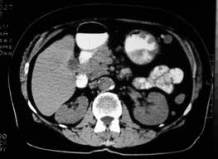
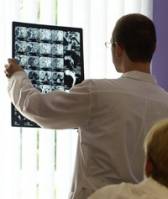
The most commonly used 2D models include photographs
of the patient and MRI scans (magnetic resonance imaging) or CT (computed
tomography).
Also commonly used 3D models, as shown in Figure 2.
They can either reflect the actual structure of a particular person, if used
sophisticated software to digitize bodies or any common well-known model organs
or body parts that can be used as reference material for the surgeon .
Overall objective of this work is to develop a
software system that will allow surgeons and their assistants to view and
manipulate surgical models, and produce different types of analysis of the
patient's body surface.
This paper describes a system that will, along with
other functionality to manipulate such models during operation without contact
with the mouse or keyboard. Also, this work aims at solving the following
problems.
Often before reconstructive surgery (or during)
specify some numerical characteristics of the patient's body surface: for
example, the volume of tissue with a release coating of the patient or the
distance between two points on the body.
The implemented system will do this in real time so
that the surgeon (or his assistant) need only mention the two ends of the
segment to calculate the distance, or hold your finger on the contour area to
calculate the volume of the layer. Program will calculate and display the result.
In the end, thanks to the use of implemented modules
of the system will be able to increase the convenience of operations,
accelerate the process of operation, reduce the risk of medical errors, reduce
the number of assistants in the operating room and improve the quality of
operations in general.
Medicine is not in place, the rivalry between the
various medical clinics results in the daily implementation of new technologies
to improve the quality of care and their own attractiveness.
Leading IT-companies are fighting for leadership in
the field of medicine by creating new systems or adapting old ones.
This work represents another step in the way of
introduction of Microsoft Kinect technology in medicine, and especially
surgery. The system will allow low cost to improve the quality of surgical
operations, raise the prestige of the clinic.
There are many other sorts of applications Kinect
technology in medicine. Certainly at this point in the world within different
scientific or commercial projects developed hundreds of similar products, which
will be implemented in real clinics and hospitals.
You can be sure that sooner or later will get
accustomed and Kinect technology will be adopted by healthcare professionals
worldwide.
literature:
1. Сравнение Kinect For Windows Beta и OpenNI; http:// brekel.com/?page_id=671
2. Буторин Д.Н. MS Agent и Speech API в Delphi. СПб.:
БХВ-Петербург, 2005. - 448 с.
3. Библиотека 3DTools;
http://3dtools.codeplex.com/
4. Библиотека HelixToolKit;
http://helixtoolkit.codeplex.com/
5. Microsoft видит будущее Kinect в
медицине; http://www.thevista.ru/page.php?id=14452