Alexander N.
Podobry, Vladimir A.
Maklaev
Ulyanovsk State
Technical University, Russia
Approach to Uniform
Integration of Corporate Data Warehouses for Designing of Computer-Aided
Systems
An integrated information system of Company management shall have, as an
information basis, a common distributed database where every user with the
requisite access rights may promptly receive data from different information
sources. The designing of effective and secure information infrastructures is
to be based on applying of formal models for metadata structuring, functioning
and isolation of access to information resources.
The integration of corporate data warehouses
requires the designing of a common cloud to represent the information on implementation
of a product-lifecycle stage, and the designing of an experience base for a Design
Organization. For this reason, a federated architecture for data-storage is to
be designed. This type of architecture will allow isolating data warehouses
taking into account the needs and the purpose of computer-aided and information
systems, and combining them due to a common structure of interconnections. To
design this architecture, basic components of information and computer-aided
systems are to be sorted out, that is, corporate data warehouses are to be
uniformed. The uniform representation
of corporate data warehouses and their descriptions in metadata will allow automating
at maximum the design of services to perform sorting out and to process data
sets which meet the defined conditions and constraints. The basis for the
suggested integration of information resources of computer-aided systems forms
the data sets, which are stored in independent corporate data warehouses.
The information system, per se, is a set of objects interacting with
each other. On that premise, the following main object types can be sorted out:
- documents – an information, fixed in the information
system;
- reference books – an object for storage of data with
the same structure and in list-form;
- Registers – tables for on-line data accumulation and a summary acquisition;
- Constants – reserved values for variables.
Each object type includes the list of superclasses, i.e., components of
the same type. A superclass includes components describing this object. These
components may refer to a source object and represent the dependence between a subclass’s components and another component, which
is the superclass one. On this basis, a diagram of dependencies between
information objects is proposed (fig.1).
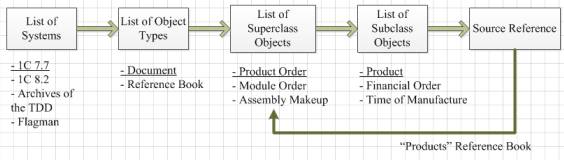
Fig. 1 Uniform Structure of Information Systems
A majority of information and computer-aided
systems measures up to the represented description in terms of “document” and
“reference book”.
Thus, in the given example of “1C 7.7” Corporate Information System, the
document “Product Order” has the field “Product” which refers to the reference
book “Products” where objects refer in turn to another reference book, etc.
There are three main tables for metadata storage at the database level
that are suggested (fig.2):
- META_SYSTEM_PARAM – list
of information systems
- META_OBJECT – list of
objects of information systems and their interconnections
- META_DICT – reference
book for interpretation of metadata-structure characteristics
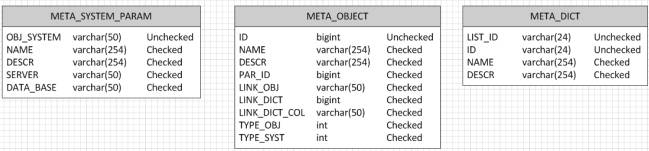
Fig. 2 Structure of Metadata at Database Level
The reference book for lists of information
systems includes the name, description and accounting data to link to a
system’s data warehouse. The table of a list of information systems’ objects
represents an undirected graph wich has, as a point, an object of the
information system, and, as an edge, a linkage between objects.
On the basis of this metadata structure, a query
to data sets may be formed taking into account the structure for writing
queries in Transact SQL. The major components of this language are: Select,
Join, and Where (fig. 3).
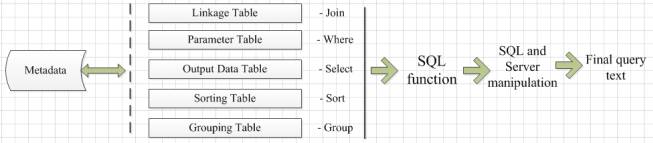
Fig. 3 Structure for Designing SQL-Query Based on Metadata
The component Select is formed on the basis of
the fields, discribed in META_OBJECT table, and is interpreted in LINK_OBJ
attribute. The linkage table Join is formed based on the reference
fields LINK_DICT и LINK_DICT_COL. The
parameter table Where includes the conditions applied to the fields’ sets to
limit the output of data. After the major components of the query generator are
populated, a SQL-function appears, allowing appplying functions to manupulate
data sets. As a result of the described manupulations, we have the final
Transact SQL query text referring to independent corporate data warehouses.
The full information on the final query is
stored in the table of metadata and represents the fields’ sets and their linkage
with other objects, both within a corporate data warehouse, and with another warehouse
(fig.4).
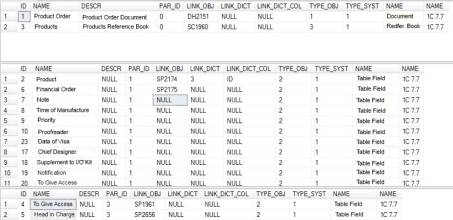
Fig. 4 Storage of Information at Database Level
The remaining two components of the query design
may be applied to the final query: the storing and grouping tables are
implemented as in the Transact SQL language.
Thus, taking into account the peculiarities of a
manufactuing enterprise, the result of integration may be shown as the data
representation module which gives information both to design the experience
base for the Design Organization that is implemented on the basis of a set of
facilities, called WIQA (Working In Questions and Answers) [4, 5] which is to
serve the workflows “Experience Interaction” at the stage of a concept design
of a CAS (computer-aided system); and to track the product lifecycle. This module receives information from the
main corporate data warehouses on the basis of metadata (fig. 5).
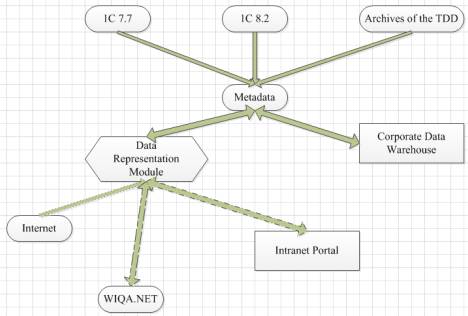
Fig. 5 Structure for Integration of Uniform
Corporate Warehouses
The data representation module may be shown as a service allowing sorting
out and processing of data according to the predefined conditions and
constraints. Based on the module’s structure, implemented on the basis of MS
SQL, data may be represented both in a form of data sets and as Web-pages.
These services represent an accumulated “knowledge base”,
i.e., data library available for
everybody’s use. That is, evey task under solution may represent a groundwork
for other tasks. Thus, the approach given meets main requirements of SOAs
(service-oriented architectures). The result of the service work may be
represented by “data marts”, i.e., a set of the data required to resolve a
particular task.
To this point, the corporate data warehouses have been uniformly
integrated, at that, the warehouses’ objects have been included into the
metadata structure. We have represented a diagram of data integration by
example of a manufacturing enterprise. The data representation module implemented
on the basis of MS SQL Server DBMS (database management system) has been
described. The structure for data storage allows using OLAP data representation
methods and including new independent data warehouses into this structure.
BIBLIOGRAPHY
1.
ISO/IEC Std 2382-1
http://www.morepc.ru/informatisation/iso2381-1.html
2. Lisin, Nikolay. G. Patchwise Automation or How
to Manage a “Zoo” of Software Programs //BYTE Publishers, 2009
http://www.bytemag.ru/articles/detail.php?ID=14862
3. Voroysky, Felix S. Informatics.
New Methodical Reference Dictionary (Introduction
to Informatics and Computer Science in Form of Terms). – 2nd Revised
and Enlarged Edition, – “Liberia” Publishers, 2001.
4. Maklaev,
Vladimir A., Andrey A. Pertsev. Regulations
Professional Maturity of a
Design Organization. – Ulyanovsk: Ulyanovsk State Technical University, 2012 –
300 p.
5. Sosnin, Petr
I. Question-and-Answer Programming of a Man-Machine Interaction. – Ulyanovsk:
Ulyanovsk State Technical University, 2010 – 240 p.