Maulenova R.S.
Al-Farabi Kazakh
National University, Almaty, Kazakhstan
THE
STRATEGY OF USING THE BIOCONTROL AGENTS (ENTOMOPHAGES) FOR PLANTS IN GREENHOUSE
COMPLEX
Abstract. The effective implementation and application of biological control
agents (entomophages) contributes to obtaining environmentally friendly
products and increasing the crop yield in the manufacture of vegetable
cultivation in the protected ground. Thus, it was found that the efficiency of
application of predator Amblyseius
swirskii in conjunction with the parasitic wasp Encarsia formosa against the greenhouse whitefly Trialeurodes vaporariorum contributed to
increase in production yield for 2 times compared with the chemicals.
Key words: biological
control, beneficial insects, entomophages, IPM (Integrated Pest Management).
Introduction. In modern
conditions, the role of plant protection in the farming systems due to the loss
of crop production from pests (pathogens, weeds) sharply increases. The
practice of the use of pesticides in the open and closed ground leads to
contamination of open water reservoirs and groundwater, soil and the
atmosphere, and also to the emergence of resistant populations of pests to
pesticides and the damaging effects of pesticides on the natural ecosystem. In
this regard, specialists and amateurs to grow plants need to know and always
keep in mind the degree of a danger of chemical pesticides to the environment
and humans. Therefore, they should endeavor to use alternative means and
methods in the fight against pests and plant diseases. Primarily, it refers to
the biological method. Thus, the purpose of research is the structuring of
information and systematization of knowledge on the application of biological
control in greenhouse complex for further development of efficient IPM
protocol.
Materials and methods. As a practical basis, the experience of the greenhouse complex LLP
“Green House – Зеленый
Дом” in Tekeli city, Almaty region was used. Insects have a huge amount of
natural enemies (entomophages), which are the main objects of biological plant
protection. Thus, there are two systems that are used in mentioned greenhouse
complex: Swirskii-system (Amblyseius
swirskii – predatory mite) and
Encarsia-system (Encarsia Formosa – parasitic
wasp).
Statistics
of crop yield and productivity – quantitative indicators characterizing crop
production. Crop yield of a given culture is the total volume of products
obtained from all over cultivated area. This volume of production is called the
gross harvest. While productivity means the amount of products of a particular
agricultural crop obtained per hectare (or m²) of crop. So, determination
of these indicators helps specialists to obtain confirmation about efficacy of
implementation and application of biocontrol in greenhouse complex.
Monitoring
of population density of the pest as well as its antagonist, is one of the most
important factors that determine the long-term success of plant protection in
greenhouses. There are two means of monitoring that are used in practice:
pheromone traps and sticky traps. Sticky traps, in its turn, are divided into
diagnostic traps and rolled traps. Yellow sticky traps are used in mentioned
greenhouse. It constitutes plates from
water-repellent hard plastic, which on both sides an adhesive composition is
applied. Holes for attaching are located in the upper part of the trap. Paper
strips are pasted over the glutinous basis to protect the adhesive coating which
is removed before placing a trap on a stationary spot
Results and discussion.
Greenhouse complex is divided into
several small greenhouses; so, here is a table of average yield for each of it
(Table 1):
Table
1. Average yield of greenhouses
|
Years/ Greenhouse |
2013 |
2014 |
2015 |
|||
|
Productivity, kg |
Cultivated area, ha |
Productivity, kg |
Cultivated area, ha |
Productivity, kg |
Cultivated area, ha |
|
|
1-4 |
8,9 |
2 |
11,9 |
2 |
19,8 |
2 |
|
6 |
6,4 |
1,4 |
8,8 |
1,4 |
15,6 |
1,4 |
|
7 |
7,9 |
1,9 |
11,4 |
1,9 |
18,7 |
1,9 |
In order to calculate the average yield (productivity), we should use
the formula of weighted arithmetic mean:
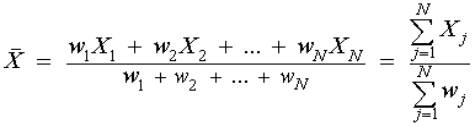



As we can see from the Table 4, in 2013 year this
greenhouse complex used only chemical control against whiteflies.
Used insecticides are:
· Admiral (Active substance: pyriproxyfen): One treatment causes lethal disorder
in each of the phases of development of the pest, which causes a decrease in
the number of not only treated, but also future generations. The preparation,
getting into an adult insect, does not kill it, but causes sterilization of
adults and prevents the formation of harming phase of development. Getting into
larvae, it violates the metamorphosis process, which leads to the death of
immature phases of development. It can cause irritation
of the eyes, nose, respiratory tract and skin. Prolonged and repeated exposure
may cause dizziness and headache.
· Applaud (Active substance: buprofezin): Buprofezin violates the process of
synthesizing of chitin by ingestion of the pest, as a result larvae do not molt
and they die. The preparation has ovicidal properties. With a high degree of
damage by pests it is recommended to use a mixture of the drug Applaud on the
basis of buprofezin with synthetic pyrethroids, the most effective against the
adult form of whitefly.
· Teppeki (Active ingredient: flonicamid): Stops feeding of sensitive insects
immediately after use. It has a powerful systemic and translaminar activity,
moves quickly on a leaf of protected culture providing a reliable and
long-lasting protection.
So, the productivity of
1m² is 7,9 kg (Table 4) and cost for 1m² is 70 tenge. Consequently,
gross harvest is 418700 kg (Table
5).
In 2014 year, this
greenhouse used only Swirskii-system (Amblyseius
swirskii) in appropriate IPM protocol, and as a result we can see that
productivity increased until 10,9 kg from 1m² (Table 4). However, costs
for biocontrol is also increased so, 98 tenge for 1m². Nevertheless, as a
result we have 577700 kg (Table 5)
of gross harvest which is obviously plus for greenhouse complex.
The following 2015 year,
together with chief agronomist of greenhouse, Dutch agronomist and agronomists
from Ukraine, using systematized information, we developed IPM protocol, which
will probably help to increase production yields thereby contribute obtaining
environmentally friendly products.
Thus, after using
systematized and structured knowledge on biological control, it was established
the good compatibility of application Encarsia-system (Encarsia formosa) with Swirskii-system (Amblyseius swirskii) (Table 4).
So, by using this opportunity, greenhouse complex increased its
productivity until 18,3 kg/m², herewith expending almost the same amount
of costs (103 tenge for 1m²). Meanwhile, the gross harvest rose up to 969900 kg (Table 5).
As an example, here is
recommended IPM protocol for 7th greenhouse, which is 1,9 ha (Table
2):
Table 2. Recommended IPM
protocol for 1,9 ha:
|
I
introduction (in presence of pests): |
Ø
On seedling department in the
phase of 3-4 true leaves; Ø
500,000 adult mites. |
|
II introduction: |
Ø
After planting into greenhouse in
the phase of flowering; Ø
1,850,000 mites. |
|
III introduction: |
Ø
After 15-20 days depending on pest
population; Ø
1,500,000 mites; Ø
Encarsia-system: 70,000 species. |
Given IPM protocol is
successfully introduced into other greenhouses.
Here are calculations
(Table 3) that evidence economic profitability of biocontrol application for
enterprise. In order to demonstrate it, costs for 1 kg are calculated through a
simple ratio (proportion):
Table 3
|
2013 year (use of chemicals): |
2014 year (use of Swirskii-system): |
2015 year (use of Swirskii-system + Encarsia-system): |
|
|
|
|









When comparing 2015 year
with the use of biocontrol and 2013 year with the use of chemicals (Table 3),
it is clearly seen that the cost of 1 kg of the product (prime cost) is less
(cheaper) for 3 tg, which is
economically advantageous to the greenhouse complex.
Eventually, development
and introduction of biological control in industrial production in accordance
with the recommended IPM protocol contributed to increase of the yield and
production of environmentally friendly products.
Table 4.
Productivity and costs of 1m² for each year
|
Years of application |
2013 |
2014 |
2015 |
|
|
Productivity, kg/1m² |
7,9 |
10,9 |
18,3 |
|
|
Costs
for 1m², tenge |
Biocontrol |
|
98 |
103 |
|
Chemical control |
70 |
|
|
|
|
Costs
for 1 kg of product, tenge |
Biocontrol |
|
8,9 |
5,6 |
|
Chemical control |
8,8 |
|
|
|
According to Productivity
of 1m², kg we can calculate the
overall crop yield (Table 5) for each year (2013, 2014, 2015), and compare with
each other. Here we should use the data about cultivated area, in our case:
cultivated area – 5,3 ha (53000 m²). Using the following formula:

So, let’s calculate gross harvest for each year:
2013 year:

2014 year:

2015 year:

As a result we have following table:
Table
5. Gross harvest evidences for each year
|
Years of application |
2013 |
2014 |
2015 |
|
Gross harvest, kg |
418700 |
577700 |
969900 |
Thus, as a result of
monitoring, it was found that the efficiency of application predator Amblyseius swirskii in conjunction with
the parasitic wasp Encarsia formosa
against the greenhouse whitefly Trialeurodes
vaporariorum contributed to increase in production yield for 2 times
compared with the chemicals, as evidenced by the following data: in 2013 year
the yield of 1m² was 7.9 kg by using chemical treatments, however by using
an effective IPM protocol in 2015 year the yield of 1m² has increased up
to 18.3 kg.
Conclusion: Eventually, this data is an evidence of successful and
effective implementation and application of biological control (entomophages)
in greenhouse complexes, which promotes the production of environmentally
friendly products and increase production yields of vegetables grown in
greenhouses. In 2016 year, this greenhouse complex is using fungal preparation
“BotaniGard”. BotaniGard (mycoinsecticide) is an effective biological
insecticide that is used to control whitefly, thrips, aphids, and many other
insects. It is based on the highly successful fungus, Beauveria bassiana.
Analysis of the results will be presented in another work – diploma project at
Masters degree.
References:
1.
Биологическая
борьба с вредными насекомыми и сорняками. Пер. с англ. Н.А. Емельяновой и др.
М.: Колос, 1967. -616 с.
2.
Биологическая
защита растений/М . В. Штерншис, У. Джалилов, И. В. Андреева, О. Г. Томилова;
Под ред. М. В. Штерншис. — М.: КолосС, 2004. — [4] л. ил.: ил. — 264 с. —
(Учебники и учеб. пособия для студентов высш. учеб. заведений).
3.
Защита
растений. Сборник научных трудов. РУП «Институт защиты растений». Минск, 2015.
4.
Albajes R. Integrated Pest and
Disease Management in Greenhouse Crops/ R. Albajes, M. Lodovica Gullino, J. C.
Van Lenteren. - Dordrecht: Kluwer Academic Publishers, 2002. -566 pp.
5.
Mahr D.L. Biological control of
insects and mites/ Mahr D.L., Whitaker P. -Wisconsin: Extension, 2008. -120 pp.
6.
Schiffers B. Biological
control and integrated crop protection/ Schiffers B. -Brussels: PIP c/o
COLEACP, 2011. -118 pp.
Contact information:
Maulenova Raushan – 4th
course student on Biotechnology specialty
Department of
Biotechnology
Faculty of Biology and
biotechnology
Al-Farabi Kazakh
National University, Almaty, Kazakhstan
e-mail:
mraushans@gmail.com