Zhunussova
A.E., Kirgizbayeva K.Zh.
L.N.Gumilyov
Eurasian National University
Energy analysis as a method of achieving energy saving
With the
economic crisis in the Republic of Kazakhstan energy efficiency should be a
priority, which allows relatively simple control measures to significantly
reduce the burden on the budgets of all levels to curb the rise in energy
tariffs, improve the competitiveness of the economy and increase the supply in
the labor market [1].
Many foreign and domestic companies involved in its
development program different ways to optimize costs, improve the quality and
competitiveness of products. One way is to conduct energy analysis, provides
not only cost savings, but also the modernization of the production process
with a consequent increase in the quality [2].
Consider a practical example of the energy analysis in
the framework of oil-extracting enterprise of JSC "CNPC-Aktobe".
The main stages of the energy analysis are:
1. The use and analysis of the energy consumption
based on measurement and other data, ie
- Identification of existing sources of energy;
- Assessment of the use and consumption of energy in the present moment
and for the past periods of time;
2. based on analysis of usage and energy usage
significantly identification field energy;
- Identification of structures, equipment, systems, processes and
personnel working for JSC "CNPC-Aktobe" or on behalf of, that can
significantly affect energy use and consumption;
- Identification of other variables affecting significant energy use;
- Determination of the results of the current power plants operation,
equipment, systems and processes related to significant energy use;
- Assessment of future use and energy consumption;
3. identification, prioritization and registration
opportunities to improve energy results [3].
Step 1: Analysis of the use and consumption of energy based on
measurement and other data.
Consider a summary chart of the total energy consumption of JSC
"CNPC-Aktobe" (Fig. 1).
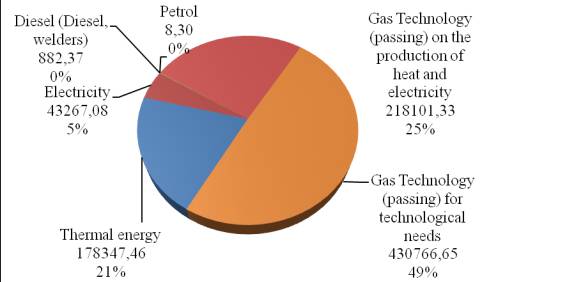
Figure 1 - Diagram of the total energy consumption of
JSC "CNPC-Aktobe" in tce in 2015.
By the use of significant energy related consumption
of certain types of energy in excess of 2% of the total energy consumption of
JSC "CNPC-Aktobe", therefore, to the areas of significant energy use
include:
- Consumption of electric energy;
- Consumption of thermal energy;
- Gas consumption process;
- Water consumption.
In accordance with the provision of energy management
system of JSC "CNPC-Aktobe" to structural units of the significant
energy use include structural units with a total consumption of a particular
type of energy greater than 5% of the total energy consumption of this type of
energy for the Company.
|
Energy
type, energy source |
AEN |
ZHNGK |
ONGDU |
KNGDU |
|
Thermal
energy |
|
Х |
|
Х |
|
Electricity |
Х |
Х |
Х |
Х |
|
Gas
Technology (passing) on the production of heat and power |
Х |
Х |
|
Х |
|
Gas
Technology for technological needs |
|
Х |
Х |
|
|
Water |
Х |
Х |
|
Х |
Types of energy and energy resources of the structural subdivisions of
JSC "CNPC-Aktobe" relating to the significant use and consumption are
shown in Table 1.
Table 1 - Types of energy and energy resources for the structural units
of JSC "CNPC-Aktobe" relating to the significant use and consumption
2. The component
measuring equipment, energy audits of buildings, structures, constructions and
engineering systems with the use of measuring instruments, diagnostic equipment
subject to energy efficiency (energy audit)
In accordance with the Law of RK "On energy
saving and energy efficiency", "Rules of the audit" (approved by
the Government of the Republic of Kazakhstan from August 31, 2012 № 1115)
refers to the energy audit of the accredited types of energy saving and energy
efficiency activities.
The methodology and criteria used to conduct energy
audits are set to the "Rules of the audit" (approved by the
Government of the Republic of Kazakhstan from August 31, 2012 № 1115).
At the time of the energy analysis energy audit was
not carried out.
It is necessary to establish a timetable for carrying
out energy audits and resolve the issue of its funding.
3. Identification
and performance of energy results, the results of the current power plants,
operation of the equipment, systems and processes, to establish baseline energy
Indicators of energy the results of the current energy
and energy baselines JSC "CNPC-Aktobe" are presented in an electronic
database documentation SEnM within existing meters. The base period adopted the
consumption of energy and water in 2015.
Conclusions energy objectives and targets of JSC
"CNPC-Aktobe" for the years 2015-2016.
Significant impact on significant energy use has a
staff of JSC "CNPC-Aktobe" service equipment and processing plants,
as well as the technological personnel of JSC "CNPC-Aktobe".
An essential element of the analysis of energy
consumption and energy efficiency is a technical accounting of energy
consumption, but it is not fully implemented in the Company. Collection of
information on energy consumption is being enlarged.
Energy analysis of the use and consumption of energy
for the most part based on the current consumption and use of energy, which may
differ from the actual energy consumption.
It is necessary to:
1. Prior to 31.12.2016, the install metering devices
in areas of significant energy consumption and use.
2. In 2015, to make the collection of data on
consumption and significant energy use taking into account the installed
meters. to re-power analysis At the end of 2016.
3. According to the results of instrumental
examination in the planned energy audit to make an overall assessment of the
activity of JSC "CNPC-Aktobe" in the field of energy saving and
energy efficiency, identify the possible energy saving potential, to develop
measures for energy conservation and efficiency.
References:
1. A. Sherubaev savings- One of the strategic objectives of the State
Energy and Electrical //.-2015.-№10
2. A practical guide for the selection and development of energy-saving
projects / under total. Ed.
OL Danilova, PA Kostyuchenko, Moscow, 2006, 668 p.
3.Syusyukin AI Tarasovskiy VG The concept of creating a system of
sustainable consumption and energy efficiency at the enterprise // electrics. 2009. № 6. C. 33-39.