Экономические науки/10. Экономика
предприятия
A. Chernyavs’kyy
Department of
special constructions of DPSK Ltd.
Resource approach in civil engineering economics
Development of civil construction is an indicator of overall social and
economic evolution of society. Construction in its turn can stimulate multiplication
effect and exert positive influence on employment, overage salary level,
development of trade and services sector.
Research of capital and floating assets, human resources (together with
investing process) plays major role in construction economics. Theoretic works
on capital and floating assets are basic foundations for optimization of
financial and material flows. Timeliness of research in the field of
construction economics is determined by growing competition in the construction
services market.
Economics of construction in general is many-sided area of knowledge. At
least three approaches on essence of capital and floating assets can be mentioned.
The first point of view is based on interpretation of building sector as
a social and economic system. L. Chistow [4] takes resource approach stand and
considers capital and floating assets to be financial and material resources in
construction cycle.
The position of A. Asaul [1] and V. Chernyak [3] falls in categories of real estate economics. Capital and
floating assets are strongly connected with development of real estate investment.
Real estate appraisal is the key question.
The third approach is remarkable for its breadth of views. V. Buzyryow [2] uses
methods of accounting and housing property management to describe capital and
floating assets structure and trends.
Depending on ultimate objective of research, capital assets can be grouped
by:
1) using in production process (productive or nonproductive);
2) effect on objects of labour (active or
passive part of capital assets);
3) functionality (buildings and erections, power equipment, working
machines etc.).
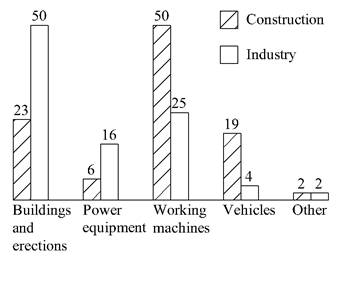
Fig. 1. Structure of capital assets in building sector
(in comparison with industry), %
The main measures of capital assets objects actual life time increasing
include providing maximum possible scientific and technical achievements in
designed object and timely modernization of object using optimum criteria and limitations.
Structure of material floating assets can be characterized by the
following percent ratios: 20-35% at preparation stage, 60-70% at production
stage and 5-10% at selling stage.
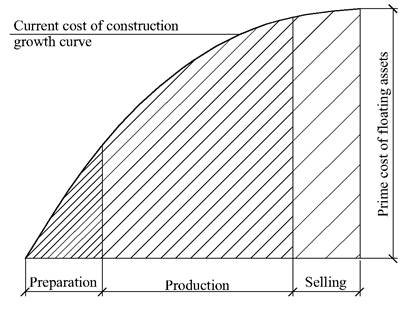
Fig. 2. Material floating assets at different stages
of circulation
Structure of floating assets depends on:
- cost of material resources at preparation stage;
- duration of being of material resources at preparation stage;
- type of current cost of construction growth curve at all stages;
- cost of construction works;
- duration of production stage in turnover cycle;
- duration of selling stage.
Methods of acceleration of floating assets turnover include resources
cost reducing and straightening of current cost growth curve at preparation
stage.
About 10-20% of human resources in European
countries are employed in building sector.
Structure of blue collar workers is as follows:
- common labors – 41%;
- constructions erectors – 26%;
- mechanization experts – 19%;
- transportation workers – 7%;
- drivers – 2%;
- others – 5%.
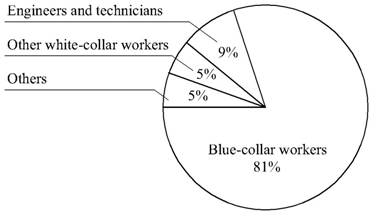
Fig. 3. Approximate structure of human resources in
building sector
There is notable growth in percentage of mechanization
experts and constructions erectors. This trend is supposed to continue due to technological
progress.
World labor market is formed by human
resources exporting and importing. The major centers of labor migration include
- nearby 40% of all builders in
- from 86 to 92% of all human
resources in
References
[1] Asaul A. (2007) Economics of real estate. Piter,
[2] Buzyryow V., Chekalin V. (2001) Economics of housing property. INFRA-M,
[3] Chernyak V. (2007) Economics and
management at enterprises (construction). KNORUS,
[4] Chistow L. (2001) Economics of
construction. Piter,
[5] Endres A.,
[6] Yatsenko
A. Dubyniuk Y. (2005) International markets of
resources. CNL, Kyiv.