Visual
merchandising. Presentation types.
D.Galun,
Ph.D
There are two types of product presentation: facing and
profile in the practice of visual
merchandising at present.
‘Front’ (facing) is from the French
‘front’- the forehead, the front
side. The facing presentation is
considered to be presentation of the product in the plane paralleled to the forehead. This is the most advantageous product presentation,
as you can see all the parts of the
product, finishing, overall shape and silhouette in this position. Some brands have
an approach of common usage of only facing clothes presentations (Fig. 1).
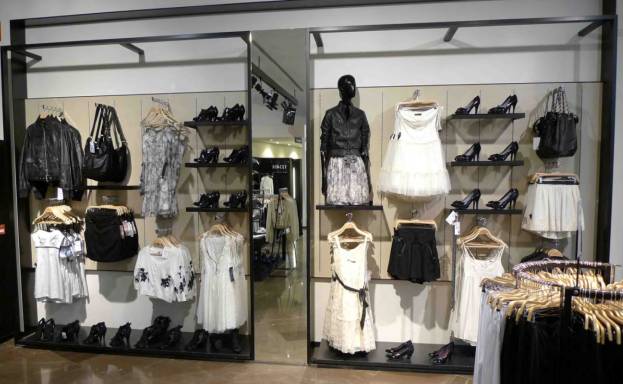
Figure 1. Two
displays, each consists of
seven facing presentations.
In this case, the focus
is on each of the presented products, and the consumer's attention is scattered
if there is more than 7 accents (Figure 2). This fact
was perfectly proved by the experience of William Hamilton, a Scottish
philosopher of XIX century. In accordance with his test, if you throw a handful of
marble balls on the floor, you can find that it is difficult to sweep eyes over
more than six - seven balls at the most without an error at a spell. Thus we can perceive about six points without accurate
counting at certain.
For this reason,
sales area is divided by trading equipment in such a way that there were no
more than seven facing bars (Figure 1).
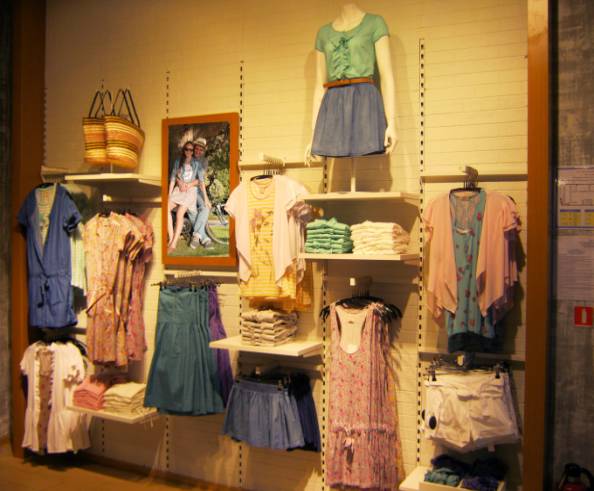
Figure 2.
One display is composed of nine facing bars.
Facing
presentation - is an accent, an eye-stopper that should be used for the drawing
attention purpose. The presentation
cannot consist of accents merely, such as facing presentations,
otherwise it will be difficult to perceive visually. Attention stability
is determined by the duration of
maintaining the concentration.
‘Profile’ is from the French ‘profil’ -
side view of the
subject. Profile (lateral or side) presentation is a product placement sideways
to the consumer. This method is the most economical in terms of capacity, as allows you to place
the visible product in more per square meter. This method is standard.
It does not give a full idea of the product for the consumer and it requires further stimulation methods
of his attention in contrast to the facing
presentation. The profile presentation
is a line, the facing one
is a point in respect of composition. The point is a pause, rest and the line is
movable tension [1]. Both of these elements form by its crossbreeding its own
language, the language of product presentation (Fig.4).
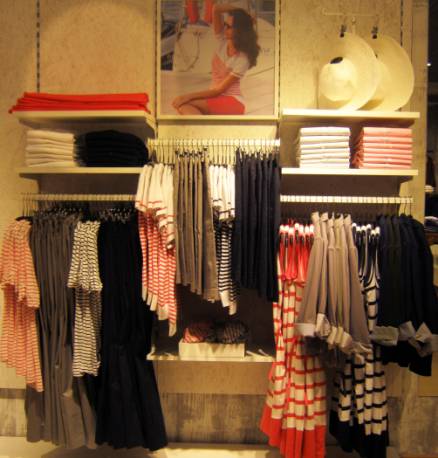
Figure 3. The
profile presentation is on wall-display.
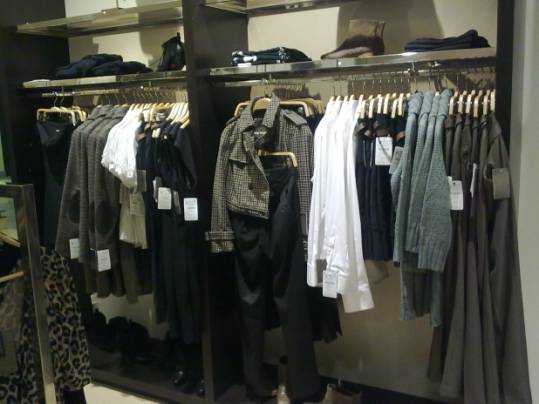
Figure
4. The alternation of the
facing and profile hanging
of clothes is on two wall displays.
In terms of psychology, to maintain
the concentration it
needs to alternate tension and
relaxation through an appropriate placement of elements different
in charging, i.e. facing and profile bars. But we should remember
that too long
section of profile hanging
won't conduce to efficient perception, it must be limited to 60 cm (Fig. 5).
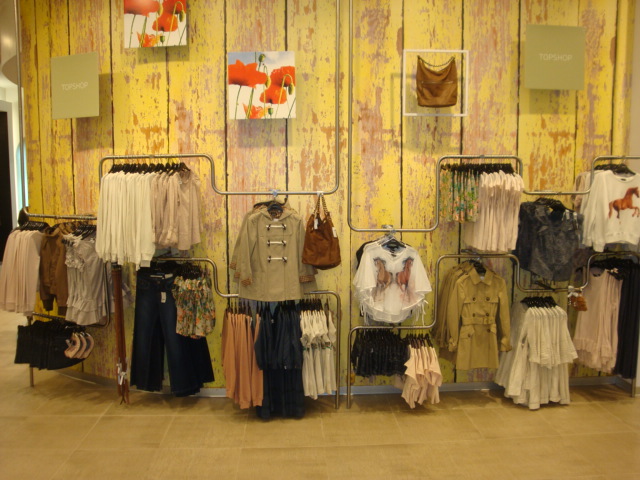
Figure 5. The facing and profile hanging
are at different levels with alternation.
About the
author:
• Last name, first name in full. Galun Dmitry
• Degree (if any). Ph.D.
• Name of educational institution. Moscow State University for Design and
Technology
• E-mail address. galund@mail.ru
• Mailing address (be sure to index). 107 113, Moscow, Russia, 3d Rybinskaya
1/40-41
• The category of
the article. Engineering
• Number of magazines you wish to receive. 1