Экономические науки /
6.Маркетинг и менеджмент
Гавенко О.О.
студентка факультету экономических наук, специальность
«Финансы и кредит», Черноморский государственный университет им. П. Могилы
WORKING CAPITAL MANAGEMENT: THEORETICAL
FOUNDATION
The world economy is
rapidly changing. Rapid technological changes along with the increasing global
competition give managers more responsibility for conducting their activities.
One of the most controversial management decisions is profit and working
capital management which plays a significant role in the growth and survival of
profit. The issue of decision making can be seen in all areas of finance, and
working capital management is not an exception. The management of working
capital is divided into two groups: asset management implementation and
management of the debt. Balance in current assets and current liabilities is so
important that decisions about one greatly influences the other Working capital
management is the management of short-term financing requirements of a firm. This
includes maintaining optimum balance of working capital components –
receivables, inventory and payables – and using the cash efficiently for
day-to-day operations. Optimization of working capital balance means minimizing
the working capital requirements and realizing maximum possible revenues. Efficient
working capital management increases firms’ free cash flow, which in turn
increases the firms’ growth opportunities and return to shareholders. Even
though firms traditionally are focused on long term capital budgeting and
capital structure, the recent trend is that many companies across different
industries focus on working capital management efficiency.
There is much
evidence in the financial literature that present the importance of working
capital management. Results of empirical analysis show that there is
statistical evidence for a strong relationship between the firm’s profitability
and its working capital management efficiency. However the measures of working
capital management efficiency vary across different industries. The study gives
significant evidence that issues of working capital management are different
for different industries and firms from different industry sectors adopt
different approaches to working capital management. Firms follow an appropriate
working capital management approach that is favorable to their industry. Firms
in an industry that has less competition would focus on minimizing the receivable
to increase the cash flow. For firms in industry where there are large numbers
of suppliers of materials, the focus would be on maximizing the payable.
In order to raise
capital for an investment, managers could easily dispose of liquid current
assets, adopting an aggressive working capital policy, such as pressuring for
lower levels of inventory and decreasing customer credit terms.
Another factor affecting company decisions
regarding working capital level could be related to the conflict of interests
between managers and shareholders. In companies with a low level of monitoring
and few instruments to discipline management decisions, managers might decide
not to invest in projects with a positive net present value, or they might even
decide to invest in projects with a negative net present value.
The working capital meets the short-term financial a business enterprise
requirements. It is the investment required for running day-to-day business. It
is the result of the time lag between the expenditure for the purchase of raw
materials and the collection for the sales of finished products. The components
of working capital are inventories, accounts to be paid to suppliers, and
payments to be received from customers after sales. Financing is needed for
receivables and inventories net of payables.
The proportions of
these components in the working capital change from time to time during the
trade cycle. The working capital requirements decide the liquidity and
profitability of a firm and hence affect the financing and investing decisions.
Lesser requirement of working capital leads to less need for financing and less
cost of capital and hence availability of more cash for shareholders. However
the lesser working capital may lead to lost sales and thus may affect the
profitability.
Minimizing inventory
may lead to lost sales by stock-outs. The working capital management should aim
at having balanced, optimal proportions of the working capital management
components to achieve maximum profit and cash flow.
Necessary is not only comprehensive and consistent, but flexible formation
mechanism, working capital amount optimization and replenishment (see Fig. 1.).
Mechanism of current assets was developed from sources […]
This approach to the
working capital management of agricultural companies is quite effective as
current assets most liquid assets of the company, which are subject to various
financial risks. Therefore, the more quickly and effectively be made by
management, the more financially-secure would venture.
To improve the working capital management
quality and its efficiency use necessary is develop a whole measures system
implemented in the internal and the external environment of the enterprise.
These measures cover virtually all industrial phases and commercial process,
affecting many business aspects: technology, design, scientific, technical,
organizational, planning, accounting, and other motivational.
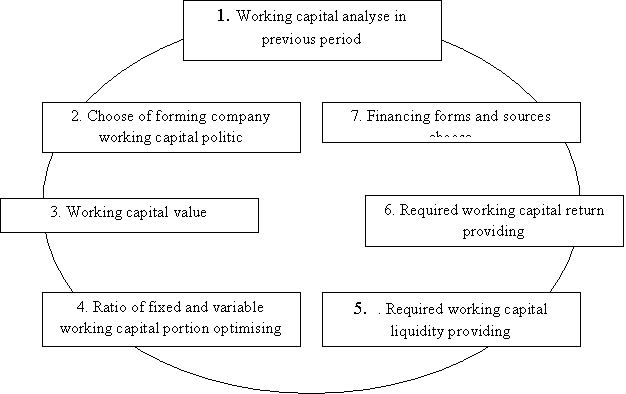
Figure 1: Working capital managing mechanism
Source: Own elaboration, based on […]
Working capital sources for
the company are their own assets, borrowed and involved funds. In particular,
on agricultural companies most common sources are: share capital (fund),
deductions from income to special purpose funds, earmarking and turget income,
stable liabilities increase. The funds amount allocated for replenishment of
current assets, depending on the expected profit rate and the borrowing
possibility, as well as other internal and external factors.
Working capital formation
should be based on developed at the time by economists, researchers formation
principles of continuity, connectedness management, timely decision making,
orientation to achieve strategic objectives, information accuracy, rationality
and optimality.
While managing the working capital, two main characteristics
should be kept in mind: short life span; swift transformation into other current
asset form.
Each constituent of current asset has comparatively
very short life span. Investment remains in a particular form of current asset
for a short period. The life span of current assets depends upon the time
required in the activities of procurement; production, sales and collection and
degree of synchronisation among them. A very short life span of current assets
results into swift transformation into other form of current assets for a
running business. These characteristics have certain implications:
1. Decision regarding management of the working capital has to be taken
frequently and on a repeat basis.
2. The various components of the working capital are closely related and
mismanagement of any one component adversely affects the other components too.
3. The difference between the present value and the book value of profit is
not significant.
The assessment of the working capital
should be accurate even in the case of small and micro enterprises where
business operation is not very large. Working capital has a very close
relationship with day-to-day operations of a business. Negligence in proper
assessment of the working capital, therefore, can affect the day-to-day
operations severely. It may lead to cash crisis and ultimately to liquidation.
An inaccurate assessment of the working capital may cause either
under-assessment or over-assessment of the working capital and both of them are
dangerous.
The main feature of circulating assets
is their high liquidity and hence the possibility of operational covering the
debts from returns, of making investments and keeping a liquid reserve in the
account and in the safe. There is a report specific for each company between
sales (turnover) and the assets necessary to achieve them.
Starting from the ratio of sales (turnover) and the
assets necessary to achieve them, but also from the analysis of working capital
indexes, necessary working capital and net treasury, one can identify three
politics of management operating cycle with different effects on profitability
and risk:
1. Offensive/aggressive/attack policy (WC < WCN)
2. Defensive/ protective/prudential policy (WC >
WCN)
3. Balanced/ optimal policy (WC = WCN)
Offensive policy is promoted by those
managers who want to achieve a high turnover with minimum stocks implied. In
this case, permanent capital absorbed in these physical or financial assets
generates a working capital inferior to circulating assets during the year and
for covering the deficit of working capital the company always calls on
treasury credits. The strategy of funding the required working capital based on
short-term bank loans involves some inconvenience. Thus, resorting to
short-term loans over the medium and long term can lead to cost savings, but
triggers the risk of insolvency in the case of resources’ insufficiency and the
need to call on other short term loans for financing current activity, showing
a certain risk concerning the credit terms (higher interest rates, inability to
renew loans, etc.). Under these circumstances, funding required working capital
through short-term loans, better adapted to company’s needs, may be more risky,
the arbitrage between long-term and short-term actually relying on the
anticipation of interest rate changes.
For these reasons, this policy can be judged as being a risky decision
because the company depends on the bank’s decisions
concerning loans and interest. However, if the profitability is higher than the
interest, this policy of the working capital is acceptable because it appears
the positive effect of obligation.
Protective defensive policy is practiced
by conservative leaders who aim to achieve a high turnover with high stocks and
liquidities. For any increase in turnover, managers are concerned about the
adequate increase of stocks that ensure the continuity of exploiting activity
(current and safety stocks). Financing the financial necessary of the
exploitation is carried out especially from permanent resources (working
capital) ensuring the company’s solvency, but in the same time assuming a
higher cost of resources in relation to that of short-term bank loans, but also
a coverage of loans’ renewal risk and of interest increase rate; in other
words, although the policy is costly and less profitable, it is more
conservative.
Balanced policy has a neutral effect,
because it is based on the principle of harmonization between the duration of
temporal immobilization of circulating assets and the exigibility of
liabilities meant to cover the financing needs in terms of minimizing financing
costs and the risks the company is facing. Balanced policy is recommended
because it keeps working capital at the average level of circulating assets
fluctuations, this being the minimum required level of the working capital. If
this strategy is used, during the peak of activity, the company calls on
short-term loans, and when there is a gap in activity appears an excess of
liquidities in the working capital that can be used for various short-term
investments. This policy is considered an equilibrium policy providing the best
development of profitability and liquidity financial objectives: the
diminishing of “lazy” reserves will increase profitability and reducing the
short-term loan applications will increase the ability to pay, respectively the
company’s financial autonomy. “Lazy” reserves are determined by the progressive
growth of the net treasury, also determined by the progressive growth of the
working capital, reserves which, in the absence of a profitable investment,
have a high opportunity cost.
Consequences of under
assessment of working capital:
- Growth may be stunted. It may become difficult for the enterprise to
undertake profitable projects due to non-availability of working capital.
- Implementation of operating plans may become difficult and consequently
the profit goals may not be achieved.
- Cash crisis may emerge due to paucity of working funds.
- Optimum capacity utilisation of fixed assets may not be achieved due to
non-availability of the working capital.
- The business may fail to honour its commitment in time, thereby
adversely affecting its credibility. This situation may lead to business
closure.
- The business may be compelled to buy raw materials on credit and sell
finished goods on cash. In the process it may end up with increasing cost of purchases
and reducing selling prices by offering discounts. Both these situations would
affect profitability adversely.
- Non-availability of stocks due to non-availability of funds may result
in production stoppage.
- While underassessment of working capital has disastrous implications on
business, overassessment of working capital also has its own dangers.
Consequences of over
assessment of working capital:
- Excess of working capital may result in unnecessary accumulation of
inventories.
- It may lead to offer too liberal credit terms to buyers and very poor
recovery system and cash management.
- It may make management complacent leading to its inefficiency.
- Over-investment in working capital makes capital less productive and may
reduce return on investment.
Inventory management includes all types of stocks. For
effective working capital management, inventory needs to be managed
effectively. The level of inventory should be such that the total cost of
ordering and holding inventory is the least. Receivables management is also
very important part of working capital management. Given a choice, every
business would prefer selling its produce on cash basis. However, due to
factors like trade policies, prevailing marketing conditions, businesses are
compelled to sell their goods on credit. In certain circumstances, a business
may deliberately extend credit as a strategy of increasing sales. Extending
credit means creating a current asset in the form of ‘Debtors’ or ‘Accounts
Receivable’. Investment in this type of current assets needs proper and
effective management as it gives rise to costs such as: cost of carrying
receivable (payment of interest); cost of bad debt losses.
Each business should project expected sales and
expected investment in receivables based on various factors, which influence
the working capital requirement. From this it would be possible to find out the
average credit days using the above given formula. A business should
continuously try to monitor the credit days and see that the average credit
offered to clients is not crossing the budgeted period. Otherwise, the
requirement of investment in the working capital would increase and, as a
result, activities may get squeezed. This may lead to cash crisis.
Cash is the most liquid current asset. It is of vital importance to the
daily operations of business. While the proportion of assets held in the form
of cash is very small, its efficient management is crucial to the solvency of
the business. Therefore, planning cash and controlling its use are very important
tasks. Cash budgeting is a useful device for this purpose.
Conclusion
Effectively managing working capital there is possibility
not only to stabilize the financial situation, but also fast enough to achieve
positive results in the financial recovery operation. Companies’ financial
recovery development strategy must include the working capital management principles
as the most mobile part of the property. To
explain the essence working capital phenomenon there are a number of
definitions presented in the scientific and academic literature. They can be
divided according to the approach to determine the nature working capital
material component. Most appears is determine in which current assets are
considered as a material property set that values and businesses that cater to
the current economic process and consumed within one operating cycle.
The companies ability for continuously operate in
longer period depends on how firms deal with investment in working capital
management. The optimal working capital management could be achieved by firm
that manages the trade off between profitability and liquidity. Similarly
investment in current assets should be just adequate, neither in excess nor
deficit because excess investment increases liquidity but reduces profitability
as idle investment earns nothing and inadequate amount of working capital
threaten the solvency of the firm because of its inability to meet its
obligation. It is taken into consideration that the working capital needs of
the firm may be fluctuating with changing business activities which may cause
excess or shortage of working capital frequently and prompt management can control
the imbalances. This aspect points to the need of arranging funds to finance
current assets. It means that whenever there is a need for working capital,
financing arrangement should be made quickly. The financial manager should have
the knowledge of sources of the working capital funds as well as investment
avenues where idle funds can be temporarily invested.
References:
1.
Армстронг М. Стратегическое управление человеческими
ресурсами // М. Армстронг – М. : ИНФРА – М, 2002 – 210c.
2.
Базаров Т. Управление персоналом // Т. Базаров – М. : ЮНИТИ, 2003 –
216с.
3.
Добрынин А. Человеческий капитал в транзитивной экономике: формирование,
оценка, эффективность использования. // Добрынин А – СПб. : Наука, 1999 – 192c.
4.
Дятлов С. Основы теории
человеческого капитала. // С. Дятлов,
Спб. УЭФ, 2010 – 170с.
5. Smith J. Human resource management: From theory to practice //
J. Smith, N.Y., 2012 – 240p.
6. Thomson R. Capital management // R. Thomson, London, Hodder and
Stoughton, 2012 – 98p.