Экономические науки/6.Маркетинг и менеджмент
Graduate
student Korovina V.D.
Perto Mohyla Black Sea State University, Mykolayiv,
Ukraine
STRATEGIC PLAN PREPARATION ON THE BASIS OF FINANCIAL STABILITY
INDICATORS
The
major problem of every enterprise operating in the market, is to ensure the
survival and further development. Strategy development is the most efficient
and smart way to do it, thus it is possible to consider all alternatives, chose
the best one and to create an efficient monitoring system. Strategic plan
should certainly be based on reliable financial indicators. It should be
emphasized that stability indicators should be primarily considered while
planning, as they show enterprise’s
position in the market, competitive strengths and weaknesses, and areas that
should be paid attention to. This issue is not considered at the appropriate
level by Ukrainian scientists though it would enable domestic enterprises to
develop more intensively.
The
paper investigates financial stability indicators’ influence on enterprise’s
development and strategic plan preparation, suggests the system of stability
indicators calculation which is recommended for strategic planning.
Special
attention to the analysis of enterprises’ financial condition and financial stability
insurance in the market economy paid M. Bilyk [1], O. Pavlovsky, N. Prytuliak,
N. Nevmerzhitsky, N. Davydenko [2] has developed effective methods
for assessing financial stability, O. Zagorodny, V. Seredynskoyi [3]
and I. Burdenko [4] examined in detail enterprises’ financial
stability diagnostics. V. Kovalenko, [5] studied financial stability
strategic management. It should be noted that most literature is devoted to
concept of strategic management application, and it is not fully taken into
account financial stability indicators analysys.
Strategic
management is considered as an organizational management that relies on human
potential as the basis of organization, directs production to consumer demand,
provides flexible control and timely changes in the organization, according to
changes in the external environment, and can achieve competitive advantage,
allowing the organization to survive and achieve its long-term goals. Strategic
management as the system becomes effective only when applied at all levels of
the organization.
Based
on the researches of scientists the structure of strategic management includes:
environmental analysis in which the organization operates; mission formation
and goal setting organization; optimal strategy choice; strategy
implementation; strategy assessment and control. In order to achieve continuous
growth of business enterprise should build its own development strategy. Business
Strategy is considered as the process of development direction formation on the
basis of new goals, matching internal capabilities with enterprise
environmental conditions and the development of measures to ensure their
achievements.
The
types of strategies are classified according to the certain criteria that are
presented in table 1.
STRATEGIES
TYPES
Table 1
|
# |
Criteria |
Strategies types |
|
1 |
Depending on
development scale |
- total (general) strategy; - auxiliary (supporting) strategies. |
|
2 |
Depending on
activities |
- marketing; - production (operating); - financial; - investment; - strategy of other areas and activities. |
|
3 |
Depending on
resources’ type |
- formulation and manpower use strategy; - core strategy and logistics; - strategy of equity capital; - strategies to attract debt capital |
|
4 |
Depending on growth
rates |
- accelerated growth strategy; - limited growth strategy; - strategy of status conservation; - reduction strategy. |
|
5 |
Depending on ways to ensure development |
- concentrated development strategy; - diversified development strategy; - integrated development strategy. |
Financial
stability is one of a sustainable enterprise characteristics. It is conditioned
by economic environment stability in which the company operates. It depends on
operational results, enterprise’s active and effective response to changing
internal and external factors. There are the following types of economic
stability: internal; external; hereditary; general; financial.
The
main economic viability component is financial stability (Picture 1), due to
which the company is able to provide marketing and personnel stability, promote
industrial and technical and technological stability, support investment
stability, improve the efficiency of the management.
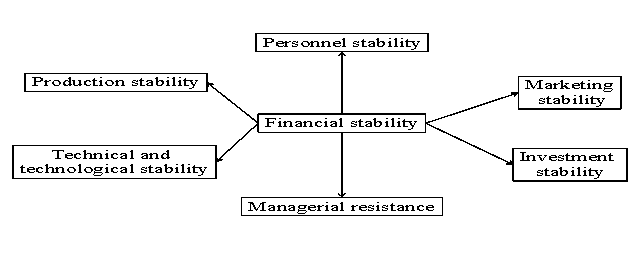
Picture 1. Financial stability influence on
enterprise’s economic viability
Financial
stability of the company - it is the main component of the overall company’s
sustainability that is the subject of financial management, company’s business
activities and describes the state of financial resources as provision of
proportional, balanced development while maintaining solvency, creditworthiness
in risk tolerance.
In
financial stability analysis procedures which most contribute to its
effectiveness should be used. Analytical methods may include modalities, rules
and measures to the most appropriate performance. In financial stability
analysis method - is a combination of analytical methods and rules of business
research aimed at studying the different objects of analysis, to help get the
most complete assessment of financial stability and profitability.
Enterprise’s
financial condition, its resilience and stability depend on the results of its
industrial, commercial and financial activities. If manufacturing, financial
and general strategic plans are successfully executed, it positively effects the
financial condition of the company. Stable financial position is the result of
competent, skilled strategic management of an enterprise.
The
most convenient and highly understandable methodology of financial stability
calculation is proposed by Bilyk M.D. According to this methodology is possible
to target real conclusions and to develop effective proposals to draw up a
strategic plan for the company.
Financial
stability analysis of the company's activities is implemented through the
calculation and assessment of such factors:
•
financial autonomy coefficient;
•
financial dependence coefficient;
•
financial risk coefficient;
•
maneuverability equity ratio;
•
factor structure covering long-term investments;
•
long-term fundraising ratio;
•
financial independence capitalized sources coefficient.
The
company may have different financial stability, which is divided into four
types (Table 2).
FINANCIAL
STABILITY TYPES Table 2
|
Financial stability type |
Description |
|
Absolute stability |
High solvency: the
company is not dependent on loans |
|
Normal stability |
Normal solvency:
efficient use of borrowed funds, high yield production activities |
|
Unstable state |
Violation of solvency:
necessary to attract additional sources |
|
Crisis |
Insolvency –
bankruptcy stage |
Effective
management strategies development is possible as a result external and internal
environment analysis. Financial condition indicators using is crucial in
assessing the internal environment. Financial stability determining the of the
enterprise directly affects the strategic plan preparation. Only factors management,
that ensure the financial stability of the company, provide an opportunity to
build a strategy aimed at sustainable development and reduces risks. Financial
stability is an important characteristic of financial and economic activity in
a market economy. If the company is financially stable, it has an advantage
over other companies of the same profile and investments in obtaining loans,
selecting suppliers and selection of qualified personnel. Stable financial
position is the result of competent, skilled strategic management of business
enterprises. The financial stability of the enterprise is the key to stable
operation and development.
Therefore,
the company should build its own development strategy to achieve continuous
growth of business and most efficient operation. Selection and implementation
of management strategy depends on the economic situation of the enterprise,
which is possible if the analysis of the external and internal environment.
Using indicators of financial condition is crucial in assessing the internal
environment, and the definition of enterprise financial stability directly
affects the development of strategic management. Only management factors that
ensure the financial stability of the company, provide an opportunity to build
a strategy aimed at sustainable development and reduces risk.
Literature
1.
Bilyk M.D. (2005) Financial analysis:
Tutorial, KNEU, 592 p.
2.
Davydenko N.M. (2009) Corporate enterprises’ financial stability in
agricultural sector, Visnuk KNEU,
Vol. 2, p. 50-58.
3.
Zagorodna O, Seredinska V. (2010) Enterprises’ financial condition and
stability diagnosis, Visnuk KNEU,
Vol. 3, p. 20-24.
4.
Burdenko I.M. (2008) Trade enterprises’ financial stability and its providing
in transforming economy conditions, Visnuk
ODEU, Vol. 2, p. 40-45.
5.
Kovalenko V.V. (2010) Financial stability strategic management of the banking
system: methodology and practice, Symu, DVNZ “YABS NBU”, 228 p.