Historical
sciences / 4. Ethnography
PhD.
postgraduate E.L. Hasanov
Corresponding member of
International Academy of Theoretical and Applied Sciences,
Scholar of Ganja branch of
Azerbaijan National Academy of Sciences,
Ganja, Azerbaijan
HISTORIC-ETHNOGRAPHICAL RESEARCH OF LOCAL
HANDICRAFT BRANCHES OF GANJA CITY
Carpet – making treatment: The craftsmanship
of carpet-making is one of the important cultural achivenments of the Easten
people in Azerbaijan production of carpets appeared in the I millennium BC. But carpet –making in
the first period  of Middle Ages has
turned to the independ sphere of craft.
In Ganja, that has minimum 4000 years history, production of carpets differed
with quickly development. In this
ancient city, that is native land of great Azerbaijani poet and thinker Sheikh
NizamyGanjevi, were weaved very uncial, inimitable kinds of carpet.In Ganja ,
that has rich traditions, were prepared carpets with various characteristics .
For this reason one of Azerbaijani carpet groups are Ganja carpets o
of Middle Ages has
turned to the independ sphere of craft.
In Ganja, that has minimum 4000 years history, production of carpets differed
with quickly development. In this
ancient city, that is native land of great Azerbaijani poet and thinker Sheikh
NizamyGanjevi, were weaved very uncial, inimitable kinds of carpet.In Ganja ,
that has rich traditions, were prepared carpets with various characteristics .
For this reason one of Azerbaijani carpet groups are Ganja carpets o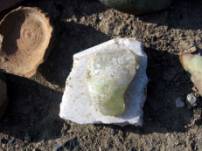 r (Ganja –Khazakh
carpets).Pay attention ,that in Ganja
namely local kinds of carpets –palaz (carpets without of pile) are weaved.These carpets ,that are
producing by local inhabitants, are
differ with specific handicraft features:
r (Ganja –Khazakh
carpets).Pay attention ,that in Ganja
namely local kinds of carpets –palaz (carpets without of pile) are weaved.These carpets ,that are
producing by local inhabitants, are
differ with specific handicraft features:
1. Ganja carpets are differ with pile.
2. Thickness indicators of such kind of
carpets with comparaturly small number attract attention (25 x30) .
3. Composition is more distinct and simple.
4. Most of ornamental patterns have geometrical features.
 5. In coloring carpet samples were used
bright colors.
5. In coloring carpet samples were used
bright colors.
6. Local carpet masters skillfully used
buta’smotivellypatterns .
The size of Ganja’s
carpets begins from 3 square metres to 10 square metres. There are 2 important
carpets groups are exists:
1. Ornamental carpets
2. Carpets with a plot
 Majority of local
wool products , richness of natural colors and existence professional carpet –making women made for quick
development carpet making craftsmanship in Ganja and in its surround
territories.
Majority of local
wool products , richness of natural colors and existence professional carpet –making women made for quick
development carpet making craftsmanship in Ganja and in its surround
territories.
Just only in 1845
year there were producted2969 carpets in Ganja . Among them products of 1784
manats have been exported. Also ,from Ganja province there were exported 23
thousand pood in 1886, 30 thousand 275 pood
in 1889, 33 thousand 156 pood in 1893, and 37 thousand 228 pood in 1913
carpets by railway . One part of these
qualitative Ganja carpets have been transported with Batumi part top Turkey to
Istanbul , and from there to West Europe and North America.
In whole at the
beginning of IX- XX century the quality
of carpet craftsmen were more
than XX thousand. At the result of it
during a lot of years were prepared such kind of qualitive carpets as “Kohne
Ganja”(“Old Ganja” ), “Phahrali”,
“Chiraqli”, “Chayli”, “Samukh”,
“Zeyva”, “Sarisi” ,”Shadilli”.
In this period in Ganja were producted as carpet with pile,
also carpets without pile .
Such kind of
carpets without pile as phalas, kilim, holdall, bead, verni, sumach,
heybe,carpet – bag were different
with qualities and colored ornamental elements.
Especially we must
say , that Ganja carpets have always been valued for its quality and art characteristics. As the result of in IX
– XX centuries most of Ganja carpets were showed in world in fluentid
exibition.In 1850, 1852 and 1912 years in Tbilisi , in 1896 – in Nijni
Novqorod , in 1900 year in Paris , in 1911 year in Turn Ganja carpets
were showed and highly in international exibiton.
Nowadays , Ganja’s
carpets are kept in authoritative museums of World, and also in collection of
different people. The studing of Ganja’s carpets for art characteristics
quality frm science point of view is very important for investiqation heritage
of world culture.
c) Bone processing
.In middle ages in spheres of gentle and applied art , gence of inhabitants of territory
,in agriculture life bone was widely
applied .Bone products , raw materials, that found during investigations in and around Ganja , prove , that time
bone processing separated from other spheres of craftsmanship. Osteology
analysis prove,that most of samples are prepared from the bone of bull, caw, deer among big hord animals and
sheep , goat , boar among little hord animals .Only deering investigations in
Mingechaurs there were found a lot of samples of combs , 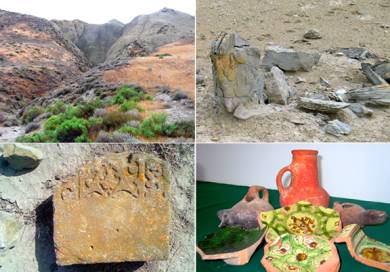 aqriculture
instruments , art and othet bne things . Such kind of bone samples als were
found in monument complexes territory of Injachay and Kerpicli in Goranboy
region during excavation . Art samples and dice for playing nard , found in
territory Shatal , also attracts our attention . This samples of art make more
ancient history of city culture of Azerbaijan and in whole play nard .There
were found knife handles , rare geometrical decoratons, samples of pipe and
other instruments here.
aqriculture
instruments , art and othet bne things . Such kind of bone samples als were
found in monument complexes territory of Injachay and Kerpicli in Goranboy
region during excavation . Art samples and dice for playing nard , found in
territory Shatal , also attracts our attention . This samples of art make more
ancient history of city culture of Azerbaijan and in whole play nard .There
were found knife handles , rare geometrical decoratons, samples of pipe and
other instruments here.
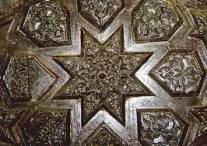 During excavations there was found bone products
,that used as rasw materials and cutting with pipe. In XI- XIII cebturies this
sphere of art was developing mostly . This thought is proved with a lot of bone and horn , found in zone of excavation
. This period from bone there were prepared buttons, knifes and etc. Found
during archeological excavations and used in wooden treatment and knife , showed
that at the beginning of XI – XIII in and around Ganja
this sphere of craftsmanship in exist.Bone boards with circucle surface
molding decoration decoration were found in Mingechaur,in Khogali barrow № 2 , Sarichoban ,Borsunlu and
others. Monument, that including to Borsunlu Complex is finishing with small
During excavations there was found bone products
,that used as rasw materials and cutting with pipe. In XI- XIII cebturies this
sphere of art was developing mostly . This thought is proved with a lot of bone and horn , found in zone of excavation
. This period from bone there were prepared buttons, knifes and etc. Found
during archeological excavations and used in wooden treatment and knife , showed
that at the beginning of XI – XIII in and around Ganja
this sphere of craftsmanship in exist.Bone boards with circucle surface
molding decoration decoration were found in Mingechaur,in Khogali barrow № 2 , Sarichoban ,Borsunlu and
others. Monument, that including to Borsunlu Complex is finishing with small 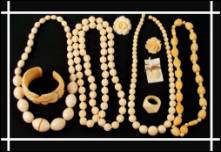 wheel desk from
bone and two omlets ,prepared from teeth of boar . In this period also were
prepared such kind of agriculture instruments as wood shovel, rake and etc. But
they didn’t reach nowadays.
wheel desk from
bone and two omlets ,prepared from teeth of boar . In this period also were
prepared such kind of agriculture instruments as wood shovel, rake and etc. But
they didn’t reach nowadays.
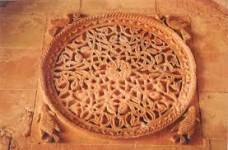 Masonry and stone treatment: Ganja and its
surrounded territory are also rich with different stones. Presentation of white
and in mountaine and Aran Karabakh and
also lime, travertip and marble building stones in and around Ganja, pure white
, a lot of colored aqats , chalsedons , viel , ametist , obsidian , aqats,
crystal and other kind of rare colored stones in the river basins of Shahdaq
Kecheldaq, and other territories created favourable ground for developing in
this ancient country from ancient times stone cutting , stone grind , stone
polishing and for building great modern , columned, arched, circuled and four-
cornerd buildings here.
Masonry and stone treatment: Ganja and its
surrounded territory are also rich with different stones. Presentation of white
and in mountaine and Aran Karabakh and
also lime, travertip and marble building stones in and around Ganja, pure white
, a lot of colored aqats , chalsedons , viel , ametist , obsidian , aqats,
crystal and other kind of rare colored stones in the river basins of Shahdaq
Kecheldaq, and other territories created favourable ground for developing in
this ancient country from ancient times stone cutting , stone grind , stone
polishing and for building great modern , columned, arched, circuled and four-
cornerd buildings here.
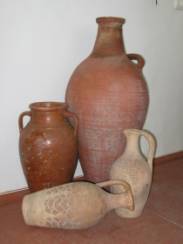 Similar with it ,
but founding stone potter with simple
surface in grave courgan № 12 also proves it . Founding such kind of
things on Uzerlik tepe also proves our thoughts.
Similar with it ,
but founding stone potter with simple
surface in grave courgan № 12 also proves it . Founding such kind of
things on Uzerlik tepe also proves our thoughts.
Some at the
materials consist of mace stone . They coincidence to height grave borrow № 1 фтв
12 .Mace stone have spherical form. They are similiar with materials in Middle Bronze period. Founded in ruin graves
cast –ironed boiler and painted spear with thin breath and length are similar
for monuments of that period of Azerbaijan (Kizilveng , Aznabyurd and
etc.)
In Complex Borsunlu
there are grinding stones with hole for hanging and mace pead , prepared from
grey marble in form of pear. Borsunlu
mace is differ from all other monument’s mace of Azerbaijan. Maces in form of pear
mostly we can see in complexes in the North Iran and South Turkmenistan ,that
concern to the second half of second thousand BC.
Among
archaeological eguipment there have been found two big boards from
stone “camel eyes”.Base –colomns, capitels, that are symbols of irrerlaceable
art , part of colomns, different man monuments, masonry art symbols,that have
gence , agriculture and religious meaning, especially grave monuments and
phalluses , collections of different colored (red, brown , black ,grey and
other rare colored) stamps and symbols of decorations , that were found in
Azerbaijan during archeological investigations prove it. These rare discovers
in and around Ganja are known from the
archaeological investigations in ancient cultural, art and trade centers of Azrebaijan,such
as Mingachevir ,Barda , Baku, Smamakha , Qabala , Ganja , Shatal, Beylagan,
Shabran, Khazakh, Qakh, Quba, Qushchu, Shargah , Torpaggala and other
archaeological and architecture
complexes. The best sample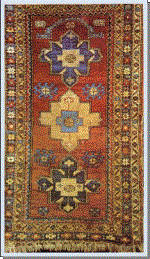 s of monuments,
that concern to stone treatment are consists of colomn props , mill and
gridding stones . In whole there were founded in and around Ganja a lot og samoles , that concern to X
century. They are consist of stone figure, mills and colomn props. But stone eguipment , found in Ganja
, Shamkir and Shatal prepared from mill and candlestick. Mill are usually
prepared from colvanic , quartz, limestone and
basalt. They used for grinding seed , millet , solt and for othet aims.
s of monuments,
that concern to stone treatment are consists of colomn props , mill and
gridding stones . In whole there were founded in and around Ganja a lot og samoles , that concern to X
century. They are consist of stone figure, mills and colomn props. But stone eguipment , found in Ganja
, Shamkir and Shatal prepared from mill and candlestick. Mill are usually
prepared from colvanic , quartz, limestone and
basalt. They used for grinding seed , millet , solt and for othet aims.
We meet mostly mill
stones , scales and pumice stone in stone treatment. At the same time there
were use3d hewed stones for decorating buildings. In this period there were
prepared decorations from precious stone.
Different colored
stone samples and agreements, that
found in monuments of Shamakhi, Barda, Mingechaur, Qakh, Ismayilli, Quba and
other regions are the best symbols of art , painting , religion, heroism
and art thems of Azerbaijan. Such kind
of fleece monuments have been found in village qurzalilar of Goranboy region ,
in Goygol, Dashkesan and Samich and investigated here. It is interesting, that
from the workshop of these monuments have been found instruments of masters and
samples of raw-materials. All these aspects show, that inhabitants of Middle Ages in and around Ganja from the
ancient period did masonry, gridding and stone treatment. This sphere of art in
developed Middle Ages could be in high level .And rare magnificient
architectoral monuments in and around Ganja ,that stay till nowadays, prove it.
 Manufactory trade, silkworm breeding, saddle-making: In traditional
production of cloth manufactory
trade historically played an important place. This kind of craft ,that developed on the basis of local raw materials, was tied
with cotton-growing economy. Since the
time of the early Middle Ages,Ganja as
Tabriz , Ordubad have been the
main center of Azerbaijan in production of cotton cloth.
Manufactory trade, silkworm breeding, saddle-making: In traditional
production of cloth manufactory
trade historically played an important place. This kind of craft ,that developed on the basis of local raw materials, was tied
with cotton-growing economy. Since the
time of the early Middle Ages,Ganja as
Tabriz , Ordubad have been the
main center of Azerbaijan in production of cotton cloth.
In this ancient city printed cotton and calico fabrics have
been widely produced. In traditional
cloth productions the main place took
the urbanmines. In the early 30s of the XIX century in Ganja there were more than 164 people - weaving. The majority
of these artists were weaving. In Ganja , which was the most important center of cloth production were produced different kinds of cotton cloth. Only in the 30s of the XIX
century in Ganja were presently working
30 cloth bench. During one year this
machine were producing 2000 of white cloth , 200 top of red cloth (shile)
and nearly 400 benchchalamaya (thin cloth) spoke.
 In general, inGanja from textile there were made cotton
cloth with simple painting, various
kinds decorations . In most cases, in the XIX-XX centuries after coars calico coloured in white colors of, it coloured to different colors.
In general, inGanja from textile there were made cotton
cloth with simple painting, various
kinds decorations . In most cases, in the XIX-XX centuries after coars calico coloured in white colors of, it coloured to different colors.
Silkworm breeding: Traditional textile of art of
silk weaving products has a special place in Ganja. In the city formed two main
method of silk treatment:
1. Spinning
2. Winding
From the point of
view silkworm breeding development and
its preparing technology there were
two main forms of production: so-called
raw silk weaving and felt weaving .In
this important technological processes
it has such kind of production
stages as cocoon openning, silk initial
processing ,preparing of raw silk ,
weaving technology, painting and decoration.
In the ancient Ganja during the stage of the Middle Ages the great progress of silkworm was represented by raw silk weaving. For this
reason, on the basis of local traditions production of delicate silk textiles from raw silk .There were made such
kind of important samples of art as atlas and kelaqai(silk kerchief).We must
pay attention to the moment, that differ from the other silk fabrics , kelaqai
was prepared by specialists. But distincly of production of raw silk ,that was city silkworm breedig and was man
activity,felt production was woman work.
Saddle-making: In Ganja , that know as the
ancient cultural center, the
saddle-making handicraft differed from
others with rich old traditions. First time preparation of the vehicles was house profession. But afterwards saddle preparation needed of qualified
skilled masters ,so a new type of art
saddle-making, started to form.
Historically the
traditional art of saddle-making in
Ganja,developed in direction of cargo and
passenger saddle making. The art of saddle-making within the local
saddle-types and their components were determined on a specialization.The
production of cargo or pack –saddle a rule
was engaged by pack-saddle
maker. For this reason, in most cases, the profession was called trade of
pack-saddle maker.
Afterwards
military, economic and transportation significance of hourse was decrease, the
demand for goods of saddle-making also
was decrease. The reason of primitive saddle-making decreasing was wide sale of cheaper factory products.
Glass production: There is no any source about
glass production in and around Ganja.The majority of
archaeologists agreed with the idea,that the homeland of glass
production is ancient Egypt, but the famous English archaeologist, Egyptologist
Petri Flindris thought, that it could
be Mesopotamiya or the Caucasus. Taking into account that cobalt,
used in glass coloring wasn t in Egypt, the scientists thought that , it could be in the Caucasus ,
also in Dashkesan.
Samples of glass decorations, of BC, we met in the patterns of Ganjachay, Mingechevir, Xachbulaq and others. In
these areas, the first centuries BC were found in samples of the glass plate.
The majority of containers and the analysis based on graphical elements of the
Roman scholars came to the opinion that the samples of the same scale as the
Roman Empire through trade.
There are more than
2000 beads in complex materials. Colored beads have prepared of different types products.Mostly
distinguish beads,that prepared from blue
green and grey paste. A group of
beads made of bone and antimony.
A part of the hanging beads were prepared from
cockleshells "Nassagibbosula" and "Suraeva
Moneta".According to experts thoughts,such kind of cockleshell,that widely
spred in the Indian and Pacific Ocean,
also the Eastern Mediterranean
region,were put to Azerbaijan with
economic relations.
Among the materials
of Borsunlu Complex are differ with
number of beats in majority
and form.
In III-V centuries, the local craftsmen
themselves also became to produce a
better-designed containers. Among the local clay and glass utensils, that found in and around Ganja ,there were big
similarity in the form and also in the
decoration.
All the glass
dishes, found in and around Ganja are similar with the local clays on
decoration of that period. Glass dishes were containing of Iron, cobalt, magnesium and other
elements,that were specific elements
for Ganja and its surroundings. The
development history of this sphere of craftsmanship can be determined only
through archaeological research. In general, information about the development of this sphere of were found in 1959-1960 years, glass
products in and around Ganja were
obtained only at the end of the twentieth century.
Results of
archaeological excavations in the territory of Azerbaijan and research show,
that in the preparation of glass utensils were two technical methods: casting
method and the method of blowing. The first of these methods is more ancient,
but in the Early Middle Ages and Middle Ages were used both of them.
Producted glass
alloys were transparent colored . By
the addition of dusts of various metals
in glass alloys people got colored glasses. We can see also to get her with different tinted green glasses also parts
of blue, black and pink colored glass
dish in sections of IX-X century in
Shatal and Ganja . In IX-X centuries
appeared dishes, that had handle and
spout .
Glassproducts
,obtained in Ganja and Shatal in the IX-X centuries,find their similiarities in
in dwelling places of the Middle Ages
in Barda, Beylagan, Mingechevir,also in the obtained materials of the
neighboring republics of the same period.
Among decorations
of that period yellow, white and red beads of
round and plain form are met mostly.At the beginning of X-XIII centuries
development of production of glass in and around Ganja characterized by
improvement from the technology point of view. Archaeological researches show,
that outside of the cities in the VIII-IX centuries, also big
settlements were established. This is often due to density in cities.
References:
1.
Guliyeva
N.M., Hasanov E.L. About ethnographic-archaeological research of some
handicraft branches of Ganja during XIX - XX centuries / Progressive
scientific explorations - 2012:
Proceedings of the 8th International scientific-practical conference. Prague
(Czech Republic), 2012, p. 73-75
2. Həsənov
E.L. Gəncə İmamzadə türbəsi (tarixi-etnoqrafik
tədqiqat). Bakı: Elm və təhsil, 2012, 268 s.
3. The dawn of Art.
Leningrad: Aurora Art Publishers, 1974, 196 p.
4.
Ergenekon Cavidan. Tempe keçe sanatında geleneksel süsleme
üsulları ve günümüzde bu saneye yönelik yeni
yaklaşımlar / Azərbaycan xalçası və xalq
tətbiqi sənəti mövzusunda III Beynəlxalq simpoziumun materialları. Bakı: Elm,
2005, s. 45-46
5.
Hasanov
E.L. Some innovation historic-ethnographical arguments about development of craftsmanship in Ganja / Science,
Technology and Higher education: Proceedings of the 1st International
scientific - practical conference. Westwood (Canada), 2012, p. 485-491
6.
Guliyeva N.M., Hasanov E.L. Investigation of basic decorative-applied arts of
Ganja on the basis of some innovative arguments and technologies / Science and
Society: Proceedings of the 3rd
International
scientific-practical conference. London
(Great Britain), 2013, p. 281-291
7.
Hüseynova S.B. Gəncə şəhəri haqqında
bəzi etnoqrafik qeydlər (XX əsrin əvvəlləri) /
Kirovabadın maddi, mədəni və ictimai həyatına
həsr edilmiş II elmi konfransın materialları. Bakı:
Elm, 1987, s. 38-39
8.
Hasanov E.L. Applied innovative researches on local craft and national traditions of
Ganja / Applied Sciences and technologies in the United States and Europe:
common challenges and scientific findings. Proceedings of the 1st International
scientific conference. New York (USA), 2013. Volume 1, p. 27-28
9. Кулиева
Н.М., Гасанов Э.Л. О развитии некоторых традиционных ремесленных отраслей
Гянджи на рубеже XIX-XX веков / I Международная научно-практическая
конференция: История и археология в современном мире. Москва (Россия), 2012, с. 36
10.
Hasanov
E.L. Historic-ethnologic
and anthropological
importance of handicraft branches of Ganja / Humanities and Social Sciences
in Europe: Achievements and Perspectives. Proceedings of the 1st International Symposium. Vienna
(Austria), 2013. Volume 1, p. 3-7
11.
Флоревский Н. Елизаветпольский округ //
Обозрение Российских владений за Кавказом, часть II, СПб., 1836, с. 392-393