Биологические науки/ 6. Микробиология
Khizhnyak S.V., Muchkina E.Y.
Krasnoyarsk State Agrarian University
Changes in the Eisenia foetida digestive tract microbiota after their trophic
adaptation to polyethylene
At
present time polyethylene is one of the most abundant solid pollutants. According
to estimations given by different authors, annually from 16 to 57 million tons
of polyethylene are being accumulated in the environment (Shristi Kumar et al.,
2007, Sangale et al., 2012).
It was demonstrated
that some invertebrates are able to utilize polyethylene, and key role in this
process belongs to the bacteria of their digestive tract (Song et al., 2011). The
red warms Eisenia foetida Savigny
(1826) are using for bioremediation of soils contaminated with wide range of
pollutants including oil and heavy metals (Schaefer, Juliane, 2007; Pattnaik, Reddy,
2011), but information on E. foetida
application for polyethylene biodegradation is very poor.
It is
known that one of the indicators of E.
foetida trophic adaptation to substrate is changes in their digestive tract
microbiota (Yakushev, Byzov, 2008). The present research is devoted to estimation
of changes in bacterial complex in digestive tract of E. foetida cultivated in
the soil artificially polluted with polyethylene. Granulated high pressure (low
density) polyethylene with granules size of 50-100 µm was used in the
experiments (Fig. 1).
Polyethylene
was added to the black soil in the dozes of 1.0 and 2.0 g per 1 kg of soil. Worms
were incubated in polyethylene polluted and non-polluted soil for 15 days. After
incubation the coprolites were collected (1 g of fresh weight per each variant of
experiment) and were microbiologically analyzed using PD culture media (peptone
– 9.0 g/L, casein hydrolysate – 8.0 g/L, yeast extract – 3.0 g/L, NaCl – 5.0
g/L, Na2HPO4 – 2.0 g/L, agar – 20.0 g/L, pH=7,0..7,2).
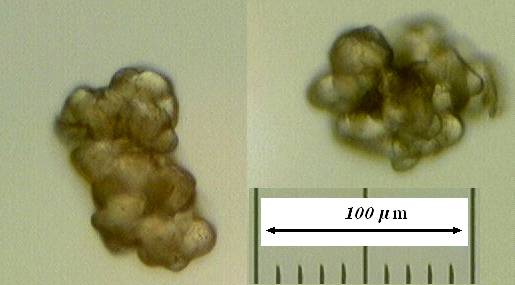
Fig. 1 – Granulated high pressure polyethylene used in the experiment
After
incubation of worms in soil contaminated with 1.0 g/kg polyethylene only insignificant
3% increase of total number of cultivated bacteria in coprolites compared to
control was observed. At the same time incubation in soil contaminated with 1.0
g/kg polyethylene statistically significant (p=0.01) increase of cultivated
bacteria number of 45% in comparison with control variant was detected (Fig.
2).
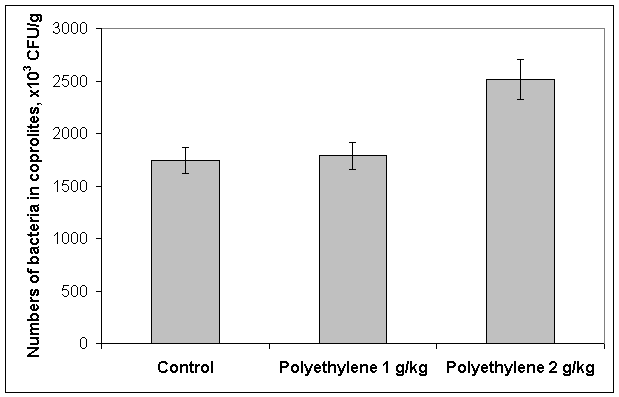
Fig. 2 – Numbers of
bacteria in coprolites in different variants of experiment
The Discriminant
Analyses of the complex of cultural and morphological characteristics of predominated
bacterial strains demonstrated that bacterial complex in coprolites of worms
cultivated in soil contaminated with 2 g/kg polyethylene was statistically
significantly (p<0.01) different from that of worms cultivated in
non-contaminated soil.
Observed
quantitative and qualitative changes in the bacterial biota in E. foetida digestive tract after their
cultivation in the soil contaminated with 2 g/kg polyethylene demonstrates that
during the experiment worms consumed and utilized polyethylene and so may be of
interest as a biological agent for remediation of polyethylene-polluted soils.
An absence of significant changes in digestive tract bacterial biota in the
experiment with 1 g/kg of polyethylene may be explained via assumption that for
the moment of microbiological analyses all the polyethylene was already
utilized and the digestive returned to its normal state.
References:
Yakushev A.V.,
Byzov B.A. Microbiological characterization of vermicomposts by the method of
multisubstrate testing // Eurasian Soil Science. 2008. V. 41. № 11. pp.
1221-1227.
Pattnaik S., Reddy
M.V. Heavy metals remediation from urban wastes using three species of
earthworm (Eudrilus eugeniae, Eisenia fetida and Perionyx excavatus) // Journal
of Environmental Chemistry and Ecotoxicology, 2011, Vol. 3(14), pp. 345-356
Sangale M.K.,
Shahnawaz M. and Ade A.B. A Review on Biodegradation of Polythene: The
Microbial Approach // J Bioremed Biodeg, 2012, 3:10
http://dx.doi.org/10.4172/2155-6199.1000164
Schaefer, M., Juliane, F. The influence of
earthworms and organic additives on the biodegradation of oil contaminated soil
//Applied Soil Ecology, 2007, Volume 36, Issue 1, Pages 53–62
Shristi Kumar, K.,
Hatha, A.A.M. and Christi, K.S. Diversity and effectiveness of tropical
mangrove soil microflora on the degradation of polythene carry bags // Int. J.
Trop. Biol., 2007, 55, pp. 777-786
Song Y., Yang J., Pan H., Li
J., Zhu J., Deng X., Khizhnyak S.V., Gurevich Y.L. Isolation and Identification
of a Low Density Polyethylene Degradable Bacterium // Advanced Materials
Research: Progress in Environmental
Science and Engineering, 2011, pp. 172-178