Artamonova E.N., Tolpasheva D. N.
Saratov State Technical University, Russia
Аbout the history of mechanics
Atthe present stage of the progress of scientific
knowledge is largely determined by the penetration in various fields of
mathematical modeling, which arose in Newtonian mechanics. Modern mechanics
also has huge opportunities that should be relegated to a wide range of
scientists and engineers. It is important to realize that the mechanics - a
method of investigation of nature. For the development of modern mechanics must
navigate in the history of mechanics, to trace its connection with an
application to human activity and the main stages of the process of human
development. The aim - to display a summary report research directions
authors review the history of mechanics as a science, plays a significant role
in scientific, technical and industrial progress and is a typical example for
the establishment of the laws of such development on its dynamic stages. The
authors also studiedthe biographies, science, engineering and teaching the
greatest scientists in this field.
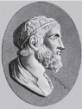




Image of Archimedes
Leonardoda Vinci
The problem of designing different machines and
mechanisms, problem of calculating the equilibrium and motion of different
material bodies, machinery parts and structures were in various stages of the
history of a particular source of influence on the development process of
knowledge in mechanics. Technical impact effect on the development of different
areas of mechanical science - "Structural Mechanics", "mechanics
of space flight", "biomechanics", etc.
Sources of origin. Mechanics (Greek - skills related to the machine;
the science of machines) - the science of the simplest forms of motion of
matter - the mechanical motion. Mechanics explores general patterns linking
mechanical movement and interaction, taking for themselves the laws of
interactions obtained empirically and justified in physics. Mechanics methods
are widely used in various fields of science and technology. Any area of
knowledge for a certain (usually very long) period of development is
significantly determined by its initial stage - the period of the birth. Roots
of mechanical knowledge (as, indeed, and scientific knowledge in general) to be
found in antiquity. The emergence and early development of general concepts and
principles of mechanics goes back to the ancient era. [1]. The first task of
mechanics date back to the ancient Greek scholar Archimedes (287-212 b.c.)
[Fig.1]. He checks and creates a theory of five mechanisms known in his time,
and referred to as "simple machines." This - the lever ("Give me
a fulcrum, - said Archimedes - andI will move the Earth"), the wedge
block, endless screw and winch.
Renaissance. One of the brightest representatives of the
Renaissance - Leonardo da Vinci (1452 - 1519) made a significant contribution
to the development of mechanics. In his notes, it was found the first
description of an experiment to determine the strength of materials. In our
time, the coefficient of friction of Leonardo da Vinci gets deep physical
meaning [2]. This is not only setting the friction, but the characteristic
degradation, because the friction coefficient is determined by the energy
density that characterizes the best of defects in
structure: ∆Uₑ =
∆uₑ∙V
Determined by the energyof various defects and damage.
During this period,the development of industry the
mechanical part of the art is still at an elementary level of development,
experiencing a slow evolution. Characterized by the absence of cars with
complex actuators, primitive state of the art military catapults both
mechanical and starting from the XIV century, gunshot. During the period of
development of elementary mechanics were investigated only the simplest kinds
of equilibrium and motion of material bodies under the action of simple
factors: the gravity force alive traction, etc. Formation of scientific
abstractions mechanics is in its infancy. Knowledge of the basic laws of motion
and equilibrium began at this time, but the simplicity of mechanics problems
are not beyond the scope of competence of elementary geometry, arithmetic and
elementary algebra. Moreover, these branches of mathematics are developed with
the active participation of scientists, engineers.
Modern rationalmechanicsbegan to developafter the works of Galileo, Bernoulli,
Johann Bernoulli, Huygens and others. This period corresponds to the
flourishing manufacturing industry. With requests mechanical engineering
combines theoretical interest in astronomy, the theory of motion of the
planets, Sun, Moon. It was time to develop navigation, geographical
discoveries, conquests overseas colonies. In mechanics at this time there is a
gradual overcoming disunity among different independent directions of science:
between dynamics and statics. A number of new problems - the problem of the
motion of the colliding bodies, the problem of motion of the pendulum, the task
of calculating the motion of flowing water, and others. During this period, on
the one hand, dramatically revealed the desire to overcome the limitations of
the simplified process and knowledge of the laws of mechanical movements. On
the other hand, seeks to establish and to know the general laws of motion and
equilibrium, covering the entire volume affected by the practice of a
particular mechanical material. That is why at this time begins the formation
of the basic mechanics of scientific abstractions, its concepts and laws.
Increased requirements for quantitative analysis entails the development of the
foundations of differential and integral calculus.
Galileo Galilei (1564 - 1642) his famous book
"Conversations and mathematical proofs of the two new sciences",
uniting his past research in the field of mechanics, arrayed in a logical
system of knowledge, not only marked the beginning of the science of strength,
ie, resistance of materials, but also modern scientific method.
New impetusto the development of mechanics was given
by Newton(1642–1727) [Fig.4], who definedthe mechanics as the science of first
principles. Prior to Newton's mechanics is an extensive set of Galileo
Galileipartialresults related to the solution of specific problems and little
to dowith each other. Newton's mechanics shouldbe based on first principles
formulated in the form of axioms. All the rest should follow from these axioms.
As possible axioms Newton formulated the three now famous law. Newton himself
believed thatthese laws are inadequate and need more laws. After the
proclamation of the program of construction of Newton mechanics based on first
principles, all subsequent studies began to focus in that direction. The result
has been the rapid emergence of mechanics as an independent fundamental
research.
After the proclamation of the program of construction
of Newton mechanics based on first principles, all subsequent studies began to
focus in that direction. The result has been the rapid emergence of mechanics
as an independent fundamental research. The program belongs to Newton, mainly
Leonard Euler. First of all, Euler mechanics translated into the language of
differential equations, and developed the theory of integration. It was built
in 1765 a
science that is currently known as Newtonian
mechanics.
Euler was the creator of many branches of mechanics
and mathematics. In particular, he was the creator of the theory of thin elastic
rods. It is in this theory was first clearly manifested fundamental limitations
of Newtonian mechanics, although in a disguised form of this incompleteness was
already present in the dynamics of rigid bodies - another section of mechanics,
pioneered by L. Euler (1707-1783). Analyticalmechanics during development of
science chronologically covers the second third of the XVIII - beginning of XX
century. The main events of this time are the industrial revolution of the
XVIII century. and, as a consequence of her, the development of large-scale
factory industry until the end of the XIX century. At this stage, the process
of formation of the fundamental principles of mechanics. There are new factors
affecting the nature of the development of mechanics. It requests mechanical
engineering, mechanical questions of natural science of the XVIII century. But
still do not cease academic debate: the mechanics of Euler-Newton bad
translation, or the truth? Today one can say in 1776 Euler gives the final
formulation of the fundamental laws mechanics in the form of two independent
postulates: the laws of dynamics of Euler. The depth and power of the Eulerian
mechanics was fully realized only in the second half of XX-th century. The
reason is simple. Maybe even Newtonian mechanics are so large that it can solve
a myriad of important theoretical and practical problems. The limited Newtonian
mechanics essentially occurs only in the description of the phenomena of the
microworld. For this reason, the focus was on the development of Newtonian [3]:
|
P= mm + cosθ(1 – mm)
+ sinθm× 1, |
|
called the angleof rotation and is considered positive
if the rotation when viewed from the end of the vector m going
counterclockwise. Textbooks on theoretical mechanics should change due to the
transition to the mechanics of Euler. The knowledge capital, which was created
by great mechanics since Newton, was not enough. Mechanics continues to evolve.
XIX centurycan rightly be called the century of the
emergence of mechanical transport. This was due to the introduction of
universal industrial engines - steam engine. In Russia, the main practical
problems turn of the century in Russia belonged to the road construction,
mining and factory production, military engineering and naval business. An
important role in the establishment of Applied Mechanics in Russia played
Instituteof Railway Engineers. Contributed to the development mechanics
P.Bazen, A.Betankur, N.N.Bozheryanov, I.A.Vyshnegradsky, F.A.Gerstner, D.I.
Zhuravskii, G.Lame and many others. In the second half of the XIX century
Russia were important tasks the construction of railways, bridges, tunnels,
roads Petersburg-Moscow, St. Isaac's Cathedral, Moscow Manege, Georgian
Military Highway, factories and machines for them, the construction of ships.
This required knowledge of mechanics.


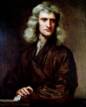
Galileo Galilei Leonhard
Euler
Isaac
Newton
Physico-Technical periodof mechanics begins with the
end of the XIX century and continues up to the present day. A characteristic
feature of the production method in this step is the use of new material
properties and the interaction factors material bodies. This period is also
characterized by the transition to the production of machines that perform complex technical
processes and the emergence of automated production. Machines replace human in
the most diverse and important functions, including logic, memorization,
selection, classification, solution of equations, design and modeling,
monitoring and examination, etc. This process develops. Mechanics are also
entering a new phase of development. Vigorously continuing the process of
isolating individual mechanical disciplines and thus increasing range of
mechanical abstractions. There are concepts such as compressible fluid, plastic
materials, the body of variable mass, viscous liquid and others. Besides the
basic principles of classical mechanics introduced new hypotheses about the
properties of the motion of material bodies, taking into account the physical,
chemical and other processes in the studied bodies. The development of
technical science has changed with the advent of computers. The greatest
influence on the mechanics had a finite element method, its foundations were
described in 1936 by Soviet scientists. Mechanics were able to design the most
advanced techniques of long and tall buildings. For example, the world's
longest bridge built in China through the Gulf of Jiaozhou.
Experts predict XXI century - a centuryof
man-madedisasters, natural and environmental disasters. Often, there are
reportson the fall ofmissiles, aircraft, explosionsat industrial sites,
building collapse. Among thecauses of the tragedyare oftendesign errorsdue
tomisuseof the lawsof mechanics. Virgin Galactic SpaceShip 2 crashed on Oct.
31, 2014 during a test flight.
“There would be a sudden, massive increase in
drag on the aircraft,” Alexander Smits, a professor of mechanical and aerospace
engineering at Princeton University in New Jersey, said in an interview.
In conclusion, development of a technique of creating
complex mathematical models belong to the mechanics, and then have been
consistently applied physicists, geophysicists, chemists, biologists,
linguists, and more recently - by sociologists and economists.
References:
·
1. Куртик Г.Е. Понятие скорости в античной науке:
Аристотель - Птолемей. //Исследования по истории физики и механики. 1991-1992.
– М.: Изд. Наука - 1997. с. 219-248.
·
2. Федоров В. В., Ромашев Р. В. Явление
структурно-энергетической аналогии процессов механического разрушения
металлов.- М.: Наука.- 1989.
·
3. Жилин П.А. Прикладная механика. Теория тонких
упругих стержней. //Учеб. пособие.- СПб.: Изд-во Политехн. ун-та.- 2007. 101 с.
·
4. Тимошенко С. П., История науки о сопротивлении
материалов с краткими сведениями по истории теории упругости и теории
сооружений, пер. с англ.- М.- 1957;
·
5. David H.
Allen, Introduction to the mechanics of deformable solids: bars and beams.
-Springer New York Heidenberg Dordrecht London.- 2013.
·
6.K.
Osakada, History of Plasticity and Metal Forming Analysis, ICTP 2008 //The 9th
International Conference on Technology of Plasticity.