Семенко І.В.
Буковинський державний медичний
університет, Україна
Our native land Bukovina
(Буковині,
рідному краю присвячується)
Кожна людина повинна знати історію свого рідного краю, свою мову та
культуру. Існують сім чудес світу, якими захоплюються люди різних країн.
На сьогоднішній день вже визначені сім чудес України:
Заповідник "Кам'янець" (Кам'янець-Подільський)
Києво-Печерська Лавра
Софія Київська (Київ)
Софіївка (Умань)
Херсонес Таврійський (Севастополь)
Хотинська фортеця (Хотин)
Хортиця (Запоріжжя)
Цілком природно постає питання про визначення основних чудес кожного
регіону України, зокрема мальовничої її частини – Буковини. У даній роботі
робиться спроба визначення семи чудес Буковини.
 Матеріал може бути
використаним на заняттях з іноземної мови при вивченні теми "Мій рідний
край".
Матеріал може бути
використаним на заняттях з іноземної мови при вивченні теми "Мій рідний
край".
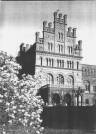
Bukovina is rich in places of interest, attracting tourists from
different countries. One of the most famous sights of Bukovina is a Stone
miracle, the former Residence of Bukovinian Bishops, the building of the present
day Chernivtsi National University.
This wonderful architectural ensemble was built in 1864-1882. Projecting and
constructing were held by Joseph Hlavka (1831-1908), a famous Czech
scientist, architect, confounder of the Prague Academy of Arts and Sciences,
author of many buildings in his motherland and abroad.
The whole ensemble attracts with its unusual look reminds a medieval
castle. High brick walls are decorated with ceramics and fretted stone.
Straight towers, butt-ends
and pointed ledges with high merlons. Steep slops of the roof are decorated
with the ornament of white, blue, green and brown glazed tiles.
All this gives the impression of eternity, sublimity and festivity.
The court-yard
is encircled with the buildings from three sides. At the centre one can see the
Bishop palace with the central entrance.
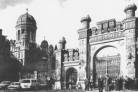 On the right wing
of the palace there is a building with the tower and the clock. On the left
there is a building of the seminary with a church.
On the right wing
of the palace there is a building with the tower and the clock. On the left
there is a building of the seminary with a church.
The
project of the Residence was distinguished at the world industrial exhibition
in Paris. No wonder that it causes great admiration of those who see it and
pride of those generations of students who happened to study masterpiece of
architecture.
Khotin fortress.
There are many legends about Khotin fortress that is one of the most
remarkable places of Bukovina. Much has been written about it by historians and
writers, both, in prose and poetry. The fortress was built in 1002 on the
steepy banks of the Dnister at the time when merchants from Genuya had their
trading centers at the banks of the Dnister. When these merchants left these
places Khotin got into do domain of Moldova. Moldavian owner Stephan the Great,
strengthen the fortress. After Stephan’s death Turks occupied the lands of
Moldova together with Khotin. According to one of the legends Stephan’s widow
hid in the fortress with out leaving it for a moment though she was still young
and very beautiful. Turkish Pasha was ahead of Turkish army, heard about her
beauty and wanted her to be his wife. The young widow refused and jumped from
one of the windows of the fortress on the steepy bank of the Dnister.
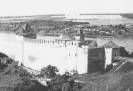 In the XVI-th century the town Khotin,
named after the fortress and the fortress itself belonged to Turks and
Moldavians. At this time Khotin was the centre of international trade. From its
fair meat of different kinds was carried to Hungary, Germany, Rus, Poland and
even Italy.
In the XVI-th century the town Khotin,
named after the fortress and the fortress itself belonged to Turks and
Moldavians. At this time Khotin was the centre of international trade. From its
fair meat of different kinds was carried to Hungary, Germany, Rus, Poland and
even Italy.
In 1621 a remarkable battle between Polish and Khotin troops took place.
In this battle a decisive role played 40.000 of Kozaks with their hetman
Sagaidachniy. Many historians think that Khotin war, the victory of kozaks in
this war saved not only Polish army but Poland and Ukraine from Turkish
slavery. Having suffered above 17 centuries under the thunder of field-guns Khotin fortress has
survived as one of the most prominent historic relics of Bukovina and Ukraine.
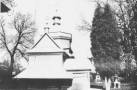 Churches of
Bukovina.
Churches of
Bukovina.
Bukovina is rich in monuments of architectural antiquity. The most
unique of them is a stone Voznesenska church in Luzhany built in 1453-1455. It is one of the oldest
churches that has preserved its fresco painting made as soon as the church was
built.
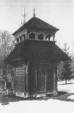
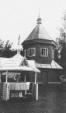
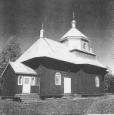
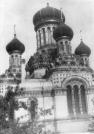
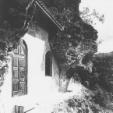
The attention of experts is also drawn by one-storey wooden churches in the
villages of Dubivtsi, Orshivtsi, Oshikhliby and Vikno.
The church in Dubivtsi is a classic sample of a Bukovinian dome temple
which has preserved the purity of its form and material till now.
Similar temples still exist in Berehomet, Ivankivtsi and Verenchanka.
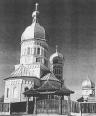
Here are some more examples of ancient wooden churches of Bukovina.
 It goes without
saying that there are many wonderful churches and Cathedrals made of stone
both, in the capital of Bukovina Chernivtsi and in the region. One of the best
samples of this architectural construction belongs to the old believers’
Cathedral in the village of Krynytsya.
It goes without
saying that there are many wonderful churches and Cathedrals made of stone
both, in the capital of Bukovina Chernivtsi and in the region. One of the best
samples of this architectural construction belongs to the old believers’
Cathedral in the village of Krynytsya.
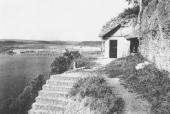
One of the most attractive sights of Bukovina is Galytskiy Monastery
that was founded in the period of Kyiv Rus on the bordering line between the XI-th and the XII-th centuries. The most
remarkable thing about this monastery is the fact it as well as the church
nearby, the monks’ cells and the stairs leading to this original ensembles are
cut in white stones of the rocks facing the Dnister and all this produce
unforgettable impression upon those who happen to see this miracle of ancient
architecture.
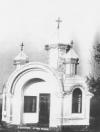 Anna’s temple and
Monastery.
Anna’s temple and
Monastery.
Not far from the town of Vashkivtsi, in the valley of Cheremosh River,
there is a mountain called Anna’s Mountain.
It happened ages ago. Bukovina’s land was attacked by Turks many times.
They ravaged the fields, killed people, and captured young men and beautiful
girls. Once upon a time they came in a village that was located near a
mountain. The youth was having good time in the square. One of the Turks
noticed a beautiful girl and tried to seize her. The girl, whose name was Anna,
managed to climb the mountain where she was finally caught by the Turk. In
despair she cried out: ”Oh,
my dear land, take me within, do not let the enemy get me”! And a miracle happened: the skies grew black a terrible
storm broke out and the land split to let the girl in The Turk seized Anna’
plait but the wind caught it and scattered silky grass over the mountain…
Years have passed. The mountain got Anna’s name and a marvelous temple
and a monastery were raised at the place where the native land had taken the
girl to its embraces. Now this mountain is the pilgrimage place of women and
girls who decorate the Anna’s temple with flowers.
Caverns of Northern Bukovina.
Northern Bukovina is famous for its caverns. The underground world of
Bukovina is rich and various. One of the biggest underground labyrinths of the
world is located near between village of Anadoly near the Dnister and the
village of Podvirne near the Prut. It's real dimensions are unknown, only its
fragments are being still investigated.
The “Popeliushka” cave is in
the southern part of gigantic underground system. The length of its passages
exceeds 90 km and puts it on the 3-rd place in the world among the gypseous caves and on
the 13-th place among all
other caves.
The “Popeliushka” strikes with its galleries and rooms, the artful
design of passages, lakes, conjoins and multicolored clays.
The cavern “Bukovinka” is located near the village of Stanivtsi,
Novoselitsia region. It is of the labyrinth type and has three storeys. The
main, middle on, contains a number of parallel corridors connected by narrow
passages.
The “Skitska” cave is one of the biggest in Bukovina: its length is 2.380 metres.
Resting and healing places of Bukovina.
People can not only enjoy beautiful and historical places in Bukovina,
but they can be healed an cured in sanatoriums and rest in the picturesque
mountains, near wonderful woods inhaling fragrance of smerichka and other
forest plants, gathering berries and mushrooms, swimming and boating in the
rivers, fishing in the lakes, touring in the mountings where they can enjoy
skating in winter, besides, they can improve their health in sanatoriums.
Sanatoriums in Bukovina.
Bukovina is rich in mineral waters. For instance, the village of
Shcherbintsi, Novoselitsia region is famous for its springs. The first
sanatorium in the region was opened and began to function in 1957.
The sanatorium in the village of Brusnitsya, Kitsman region, is famous
for its mineral waters similar by their healing properties to those of
Matsesta. Brusnitsya waters are used for healing of the nervous and
cardiovascular systems, arthritis and polyarthritis, metabolisms breach and so
on.
Literature
1. Полупан В.Л. Ukraine. A cultural
reader. – Х.: Видавнича група
"Академія", 2001. – 188 с.
2. Бережна О.О., Кубарьков Г.Л., – Збірник нових тем
сучасної англійської мови. – Донецьк: ТОВ ВКФ "БАО", 2006. – 688 с.