UNITED BUSINESS PROCESS "1C: Enterprise 8.2"
Chernukha Dmitriy, 4th year
student of the specialty "5B070300 - Information Systems" KGU.
A.Baitursynov
Irina Morozova, Senior Lecturer, Department of
Information Systems
KGU. A.Baitursynov
In
any organization, there are a series of interrelated actions that fulfill its
employees. For example, the manager issues an invoice to the buyer, the
validity of this account and the validity of discounts or extra charges checks
the head of division, and then warehouse worker receives the order to ship the
goods to the buyer on the account, and the employee cash - take the money from
the buyer.
Another
example - the department employees receive from the firm's errand compile
reports on their areas of activity, after the preparation of all reports
department head receives a message stating that the reports drawn up, gets them
is a summary report and sends it to management.
Such
examples can be innumerable - it all depends on each particular organization.
Often these phenomena exist at the level of verbal or written orders, often
they do not even stand out in particular structures, which are known as
business process management, and exists only because of a natural routine of
things. But with the advent of the computer in the organization of information
processing business processes of these organizations can be formalized with the
tools described in these computer resources and, ultimately, automated.
1C:
Enterprise has special arrangements for the implementation of business processes.
You can use
them to recreate in electronic form business process of any complexity and
ensure its functioning.
Our notional organization, in particular, needs to automate the
following business process, to be called the "Client" and is the
allocation of customers and employees in the control of the execution of orders
and the "passage" of the client organization of the chain of command.
In this case, it is as follows. Administrator beauty salon takes the order from
a customer who has come to the salon or by phone. The client calls a time when
he would be served from the master. Administrator sends information about a
particular client, the employee - the master. When the wizard will perform the
work ordered by the client, it will send information about the results of the
accountant, accountant and then receives payment from the client, and in this
business process is completed.
In the 1C: Enterprise, there are two key, to solve the problems of
automation of business processes that subject. The first of these so-called
business process. The second object - this task. Business processes and goals are closely
interrelated.
Business
process object contains a map of the route the business process, while passing
on the map to create a task addressed by some performers. Created the problem -
this is a task object.
In
addition, to implement the business process needs information register, which
is called register addressing. This register contains information about the
organizational structure of the organization that are important for the
distribution of tasks by artist.
In
the implementation of the mechanism of the business processes involved in the
same session option - it is used to store information about what kind of
employee is currently working with the system.
So,
in order to make the mechanisms of business processes to work, we need the
following items:
- Setting Session
- Register information
- Task
- Business process
Let's
start solving the first problem by automating the business process
"Customer" by creating a session parameter and configuration
mechanism for determining employee who is logged into the system.
Session
parameter, you will need to configure filtering tasks to the user, that is, a
user who is logged into the system, could only see their tasks.
Create
a new session option, call it ТекущийПользователь, type – СправочникСсылка.Сотрудники, include in the subsystem УчетРаботыМастеров
(picture 1).
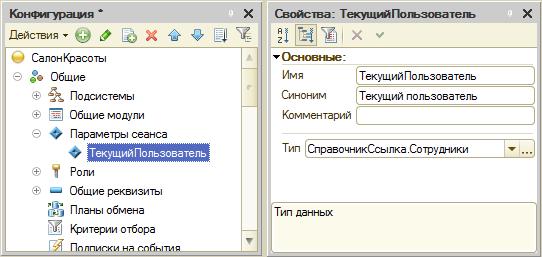
Picture 1. Session option ТекущийПользователь
Now
we need to write to this parameter a reference to the handbook, which is an
employee who is logged into the system. For this we need to write the
appropriate code in the module session. Open a session module from the context
menu of the root element of the configuration process will create it УстановкаПараметровСеанса().Here is the procedure to the form:
Процедура
УстановкаПараметровСеанса(ТребуемыеПараметры)
Сотрудник =
Справочники.Сотрудники.НайтиПоРеквизиту("Пользователь",
ИмяПользователя());
Если не
Сотрудник.Пустая() тогда
ПараметрыСеанса.ТекущийПользователь=Сотрудник;
КонецЕсли;
КонецПроцедуры
Here
we perform a search in directory Сотрудники user details, which should be stored in the
user name of the form in which it is specified in the user list in the
Configurator. ФункцияИмяПользователя () returns the name of the user who is logged into the system as a
string. Having found справочникСотрудники element corresponding to the user who is logged on, we record a
reference to the element found in the current user session option.
All users except the Администратор user by configuring the
user to assign the role of Сотрудник.
Way to build a simple query of "1C: Enterprise 8.2" allows you
to regulate most of the business processes of a manufacturing firm.