PORE-SCALE DIRECT NUMERICAL SIMULATION OF SINGLE
PHASE FLOW IN POROUS MEDIA
Kudaikulov
A.A.
al-Farabi
Kazakh National University, Almaty, Kazakhstan
e-mail:
aziz.kudaikulov@gmail.com
Abstract. The paper presents the
results of mathematical and numerical modeling of single-phase fluid flow in
porous media with periodic microstructure. Object of study is the area in which
the cylinders are arranged in a periodic manner. At the boundaries of the area
for the flow parameters is set periodic boundary condition. Also in the paper
presents comparison with Darcy’s law and the calculation of the permeability
coefficient for different values of the radius of the cylinders.
Keywords: porous medium with
periodic microstructure, Navier-Stokes equation, Darcy’s law, permeability of
porous medium.
In most cases
[1] the Darcy's law is used to determine parameters of single phase fluid flow
in porous medium, which relates filtration rate and pressure gradient as:
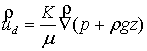 , (1)
, (1)
where  - permeability of porous medium,
  - fluid viscosity,
  - filtration rate,
  - pressure in the
porous medium and
- pressure in the
porous medium and  - hydrostatic
pressure. The main advantage of Darcy's
law is that, if we know the values of the permeability of the
porous medium -
- hydrostatic
pressure. The main advantage of Darcy's
law is that, if we know the values of the permeability of the
porous medium -  , then we can determine the flow parameters of the fluid in
the porous medium for large scale (Area is about 1
, then we can determine the flow parameters of the fluid in
the porous medium for large scale (Area is about 1  and depth is about
100
and depth is about
100  ). But in most cases calculation the permeability -
  is very difficult
problem. The permeability - K is the macroscopic parameter of porous medium,
which characterized the structure of the porous medium (geometrical details of the
porous medium at the pore-scale and other physical parameters such as viscosity).
To exactly calculate the permeability -
is very difficult
problem. The permeability - K is the macroscopic parameter of porous medium,
which characterized the structure of the porous medium (geometrical details of the
porous medium at the pore-scale and other physical parameters such as viscosity).
To exactly calculate the permeability -  , we need to know properties of the porous medium at the
pore-scale. Nevertheless, new experimental technologies and high-resolution
imaging for porous media [3,4] can provide three-dimensional structural details
of porous materials with resolution in
one micron. But the permeability -
, we need to know properties of the porous medium at the
pore-scale. Nevertheless, new experimental technologies and high-resolution
imaging for porous media [3,4] can provide three-dimensional structural details
of porous materials with resolution in
one micron. But the permeability -  does not only depend
on the geometrical details of the porous medium, it is also depends on physical
properties of the porous medium and it varies from one case to another. Therefore
to exactly calculate the macroscopic parameters of the fluid flows in the
porous medium, we need to simulate fluid flow in the porous medium at the
pore-scale. There exist many pore-scale models of the fluid flows in the porous
medium such as Lattice-Boltzmann, pore network models, discrete particle
methods (smoothed particle hydrodynamics) and direct discretization methods (standard
finite element, finite volume, immersed boundary methods). All of these methods
require high computational power and all of these methods, except direct
discretization methods, are not exact. Direct discretization methods, it is
methods that discretize the Navier-Stokes equations and solve these for domain
with complex geometries. The main advantages of the direct discretization
methods is that can be applied for the domains with complex geometries and
simulate fluid flow in the porous medium more exactly than others. These
advancements such as development of advanced numerical methods and high
resolution imaging techniques are now helping researchers to make progress in
the understanding of pore-scale processes and how they influence fluid transport
at macroscopic scale. This paper presents the pore-scale direct numerical
simulation of single phase flow in porous media with periodic microstructure.
This simulation based on the Navier-Stokes equations for incompressible single
phase fluid:
does not only depend
on the geometrical details of the porous medium, it is also depends on physical
properties of the porous medium and it varies from one case to another. Therefore
to exactly calculate the macroscopic parameters of the fluid flows in the
porous medium, we need to simulate fluid flow in the porous medium at the
pore-scale. There exist many pore-scale models of the fluid flows in the porous
medium such as Lattice-Boltzmann, pore network models, discrete particle
methods (smoothed particle hydrodynamics) and direct discretization methods (standard
finite element, finite volume, immersed boundary methods). All of these methods
require high computational power and all of these methods, except direct
discretization methods, are not exact. Direct discretization methods, it is
methods that discretize the Navier-Stokes equations and solve these for domain
with complex geometries. The main advantages of the direct discretization
methods is that can be applied for the domains with complex geometries and
simulate fluid flow in the porous medium more exactly than others. These
advancements such as development of advanced numerical methods and high
resolution imaging techniques are now helping researchers to make progress in
the understanding of pore-scale processes and how they influence fluid transport
at macroscopic scale. This paper presents the pore-scale direct numerical
simulation of single phase flow in porous media with periodic microstructure.
This simulation based on the Navier-Stokes equations for incompressible single
phase fluid:
 , (2)
, (2)
 , (3)
, (3)
where  - density of the fluid,
  – velocity of the fluid flow,
  – pressure,
  – fluid viscosity and
  – acceleration due to gravity. These equations are system of
non-linear partial differential equations and the non-linear term
– acceleration due to gravity. These equations are system of
non-linear partial differential equations and the non-linear term  renders it difficult to solve analitically. It is usually a
convenient way to non-dimensionalize the variables by introducing scaling
factors. Let the velocity
renders it difficult to solve analitically. It is usually a
convenient way to non-dimensionalize the variables by introducing scaling
factors. Let the velocity  scales with the
characteristic velocity -
scales with the
characteristic velocity -  ,
,  - scales with
  where
where  is a characteristic
length, time
is a characteristic
length, time  scales with
  . Then, the dimensionless variables become:
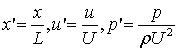 (4)
(4)
On substituting
the primed variables into equations (2) and (3) and rearranging the terms and
dropping the primes, we obtain:
 , (5)
, (5)
 , (6)
, (6)
Further we
consider the equations (5) and (6) instead of (2) and (3). The main difficulty
of the pore-scale modeling of the fluid flow in the porous medium is that it is
very difficult to set the correct boundary and initial conditions for the
system of equations (5) and (6). The paper [8] has proof of that the system of equations (5) and (6)
has a solution and it is unique and depends continuously on initial and boundary
conditions if zero initial condition for the velocity and periodic boundary
conditions for the velocity and pressure are applied. In cases, when need to define more complex initial and boundary
conditions for the velocity and pressure, we can measure these experimentally
[3,4]. In this paper the zero initial condition for the velocity and periodic
boundary conditions for the velocity and pressure are considered. Analytical
solution of the system of the equations (5) and (6) was found only in special
cases and for simple domains. Therefore, to solve the system of equations (5)
and (6) need to use numerical methods. In this paper a finite volume method
with adaptive mesh refinement is used to discretize the Navier-Stokes equations
(2) and (3). To solve these discretized equations, MAC (Marker-and-Cell) method
is used [5,6,7].
This paper considers two-dimensional
rectangular domain with size  (where
  changes from
  to
to  and
and  changes from
  to
to  ), in which the cylinders are arranged in a periodic manner
(figure 1). The initial condition for
the velocity is defined as follows:
), in which the cylinders are arranged in a periodic manner
(figure 1). The initial condition for
the velocity is defined as follows:
 . (7)
. (7)
Boundary conditions for the velocity and pressure are as
follows:
1)
At the boundaries
of the area:
 ,
,
 , (8)
, (8)
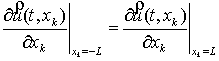 ,
,
2)
On the surface of the cylinders (no-slip condition):
 , (9)
, (9)
where  – number of
dimensions, in our case -
– number of
dimensions, in our case -  .
.
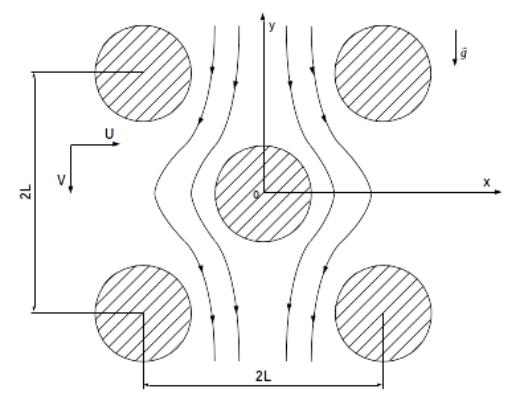
Figure
1: Two-dimensional
rectangular domain with size  (where
  changes from
  to
to  and
and  changes from
  to
to  ), in which the cylinders are arranged in a periodic manner
In order to find the rate of filtration -  need to average the velocity over the volume:
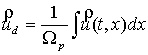 , (10)
where  – volume of the pore space [1]. Further, from
Darcy's law (1) we can find the permeability of the porous medium:
– volume of the pore space [1]. Further, from
Darcy's law (1) we can find the permeability of the porous medium:
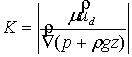 (11)
(11)
Results:
1) Case when radius of cylinders -  = 0,1
= 0,1
|
|
|
|
0,1 |
-2,25 |
|
0,5 |
-0,593 |
|
1 |
-0,296 |
|
2 |
-0,138 |
|
5 |
-0,0583 |
|
10 |
-0,0297 |


Table 1: Relation between fluid viscosity -  and filtration rate -
 for case when radius
of cylinders -
for case when radius
of cylinders -  = 0,1
= 0,1
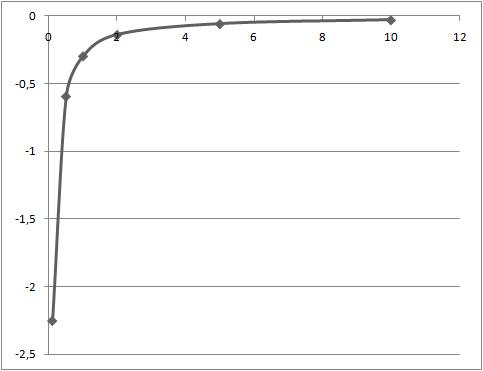
Figure 2: Relation between fluid viscosity -  and filtration rate -
 for case when radius
of cylinders -
for case when radius
of cylinders -  = 0,1
= 0,1
2) Case when radius of cylinders -  = 0,15
|
|
|
|
0,1 |
-1,53 |
|
0,5 |
-0,334 |
|
1 |
-0,171 |
|
2 |
-0,083 |
|
5 |
-0,0356 |
|
10 |
-0,0171 |


Table 2: Relation between fluid viscosity -  and filtration rate -
 for case when radius
of cylinders -
for case when radius
of cylinders -  = 0,15
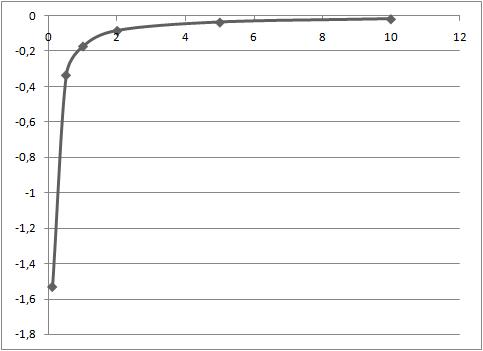
Figure 3: Relation between fluid viscosity -  and filtration rate -
 for case when radius
of cylinders -
for case when radius
of cylinders -  = 0,15
3) Case when radius of cylinders -  = 0,2
= 0,2
|
|
|
|
0,1 |
-0,91 |
|
0,5 |
-0,163 |
|
1 |
-0,084 |
|
2 |
-0,04 |
|
5 |
-0,019 |
|
10 |
-0,0092 |


Table 3: Relation between fluid viscosity -  and filtration rate -
 for case when radius
of cylinders -
for case when radius
of cylinders -  = 0,2
= 0,2
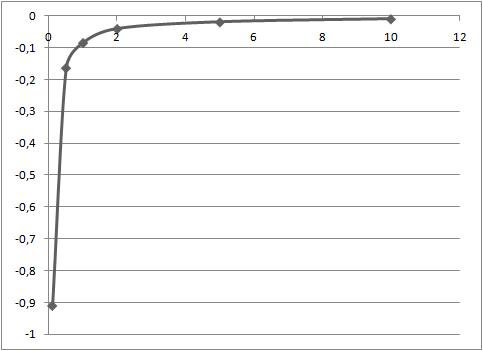
Figure 3: Relation between fluid viscosity -  and filtration rate -
 for case when radius
of cylinders -
for case when radius
of cylinders -  = 0,2
= 0,2
References
1.
Bear J., Cheng A.H.-D. Modeling Groundwater Flow and Contaminant
Transport, Theory and Applications of Transport in Porous Media, Springer,
Volume 23, 2010.
2.
Cannon J.R., Knightly G.H. A note on the Cauchy problem for the
Navier-Stokes equations, SIAM Journal on Applied Mathematics, Vol. 18, No. 3,
1970, pp. 641-644.
3.
Karadimitriou N.K. Two-phase flow experimental studies in micro-models,
Utrecht, Netherland, 2013.
4.
Li D. Encyclopedia of Microfluidics and Nanofluidics, Springer, 2008.
5.
Louis H. H., John B. B. An Adaptive Mesh Projection Method for Viscous
Incompressible Flow, SIAM Journal on Scientific Computing 18(4):996-1013, 1997.
6.
Popinet S. Gerris: a tree-based adaptive solver for the incompressible
Euler equations in complex geometries, Journal of Computational Physics
190(2):572-600, 2003.
7.
Sidilkover D., Ascher U. M. A Multigrid Solver for the Steady State
Navier-Stokes Equations Using The Pressure-Poisson Formulation, Comp. Appl.
Math 14:21-35, 1995.
8.
Yoshikazu Giga, Alex Mahalov and Basil Nicolaenko The Cauchy problem for
the Navier-Stokes equations with spatially almost periodic initial data,
Department of Math., Hokkaido Univ., 2004, Preprint Series # 683