Современные
информационные технологии/3. Программное обеспечение
Zhuaspaev T.A
A.Baitursynov Kostanai State University, Kazakhstan
THE STRUCTURE OF THE ELECTRONIC TEXTBOOK
Electronic
textbook - an automated training system. It includes didactic, methodical and
background information on a subject, as well as software that enables
comprehensive use them for self-production and control of knowledge.
The
electronic textbook is a unit of teaching, organizational, and software and
hardware tools that provide a comprehensive database of educational services.
This complex helps students acquire self-knowledge, skills, together with the
teacher, and without it.
There
are many e-books, which are designed to educate. But not all of them are
written correctly. At the heart of these books should be concrete structure.
Content of textbooks, organized by means of hypertext, so must have the
structure. The structure of the textbook and its content depends not only on
the content of training, but also the form of training.
To
represent the structure of the tutorial, you can use the analogy between
traditional and e-learning tool.
1. The
structure of the electronic textbook should be as simple as possible.
2. Need
to structure the content of education at all levels, through visualization,
modern graphics and animation.
3. The
structure of the electronic textbook should include options for individual
trajectories.
4. Рroblem
form separate blocks of information.
5. Necessary
to build material in the form of a semantic network
Modern
pedagogy recommends the following structure of the electronic textbook:
- cover;
- title
screen;
- table
of contents;
- annotation;
- learning
content;
- graphical
representation of the teaching material;
- self-monitoring
system and system of self-knowledge for
students;
- means
of contextual search;
- glossary
of terms;
- reference
system on the interface of the program;
- program management system.
In the
design of the electronic textbook plays an important role creating the user
interface. One version of the textbook interface is shown in Figure 1.
Electronic textbook solves the following problems:
- get information about the course
and thematic focus of the subject;
- individually reviewed, study or repeat training, methodical,
reference, information material;
- visualize on a computer screen all didactic material (scheme,
drawings, table, graphics, text and others);
- exercise self-control (with automated grading), receive
recommendations for further study not learned the training topics;
- get information about the recommended educational, scientific and
methodical literature;
- print designs and plans for teaching materials for all types of
activities.
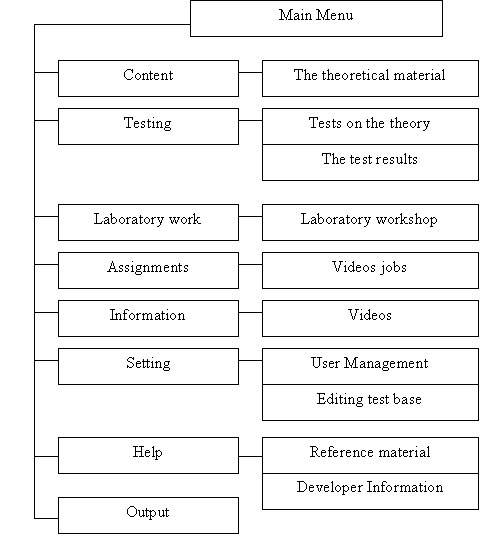

Figure 1 - The structure of the electronic textbook
Thus, the electronic textbook with the correct structure allows
significantly improve the quality of teaching and the development of new
knowledge. Conceptually can be recommended for distance learning.
Literature:
1. Башмаков А. И.
Разработка компьютерных учебников и обучающих систем: учебник / А. И. Башмаков,
И. А. Башмаков – М.: Филинъ, 2003 – 616 с.
2. Морев И. А.
Образовательные информационные технологии. Часть 1. Обучение: Учеб. пособие. –
Владивосток: Изд-во Дальневосточного университета, 2004. – 162 с.