MIXED SIMULATION OF GEOMETRIC, THERMOPHYSICAL AND FORCE INTERACTION BETWEEN TOOL AND WORKPIECE AT THE SURFACE
GRINDING WITH THE PERIPHERY OF A CUP WHEEL
Alexander A. D`yakonov, Leonid V. Shipulin
South-Ural State
University,Chelyabinsk, Russian Federation
One
of the most common and efficient methods for the high precision plain surfaces
process with low roughness values
is the surface grinding with the
periphery of a cup wheel. This type of cutting work is related to a number of processing limits due to the possible
defects as a result of temperature defects (burns, micro-cracks), orange-peel defects, dimensional tolerance
failure etc. The surfaces grinding process
improvement can be achieved due to the
cutting modes optimization with regard to the specified limitations on the basis of mathematic
simulation taking into account the
physical nature of the process.
Grinding
processes are characterized by the diverse physical features, the main of these are: multiple probable microcutting, high heat density
and elastic squeezing in the technological system. Traditionally,
in the process simulation roughness
[1], temperature fields [2, 3] or force
interaction are considered separately. But in fact these process components
are highly interconnected and therefore
an integrated model including the
machined surface, temperatures
and cutting forces micro-geometry simulation is considered instead of several individual
models. At the same time, since the
mechanical interaction between tool and
workpiece is crucial in the
complex sequence of thermophysical and
force interactions, the base for process simulation should be a geometric
model of stock removal.
The
simulation geometrical model
comprising the following compound modules has been developed: simulation of grinding wheel probability face, description of scratches formation from the single abrasive grain, scratches overlapping, grinding surface formation and roughness parameters calculation.
As a result, the part surface relief in
the simulation process is formed by
the number of scratches overlapped according to the
superposition method. Apart from the relief formed
as a result of the simulation in the geometrical
model a number of parameters,
which are the input data for the thermophysical and force models are calculated:
the number of grain microcontacts with
rough surface, contacts coordinates, depth of cut and friction in each of them, removed metal volume, nature of interaction (cutting or deformation), microcontact time.
For the temperature field prediction in
the machining interface and cutting forces the thermophysical and force models were developed
which are:
1. represented in three-dimensional space with separate consideration of each movement,
i.e., the problem was considered in
the fixed coordinate system (machine
coordinate system) with independent consideration of all coordinates;
2. built without assumptions of the fast-moving sources theory with full consideration of each movement,
regardless of its relative value;
3. considering the stochastic behavior of abrasive machining process.
In the conjugation of geometrical and thermophysical models parameters obtained in the geometrical model are imported into the thermophysical model. Thus, each grain
microcontact with the rough workpiece is
represented as the heat source which intensity depends on the removed metal
volume, grain friction area on the dulling point and operating time. The
superposition of a number of heat impulses forms the temperature field on the
work surface. Based on the calculated temperatures and geometric
parameters of single interactions
the calculations of thrust forces for each abrasive grain are made, their summation enables to find the radial
component of the grinding wheel thrust force.
Thus,
the geometric model of the machined surface patterning has been developed
as well as its blending with the existing thermophysical and force models has been made.
The software package designed and implemented
on the basis of these three models
enables to simulate different manufacturing
situations with forecasting the most important technological parameters of surface grinding operations:
surface undulation, heat density and
cutting forces. For illustrative
purposes of the model capability Figure
1 shows the result of simulation in complex model, including the estimated prediction of the machined surface relief
and corresponding temperature field.
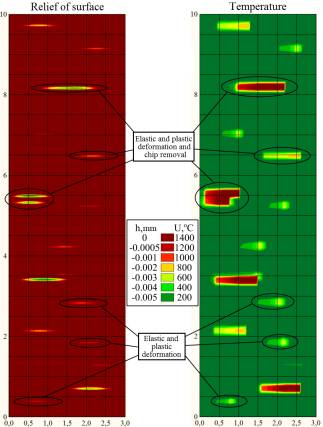
Fig. 1. Result of simulation in complex model of
peripheral surface grinding
This work was supported in part by the
President Russian Federation under Grant МК-873.2014.8.