Vasyl Movchan
AGH University of
Science and Technology
Opportunities to increase oil production in Poland
with the use of Radial Drilling
Technology
The decreasing number of
new discoveries of conventional hydrocarbon deposits in our country forces the
need to search for new ways of development for the oil industry, which would to
maintain or increase the recoverable resources and the continuation of
production. Among possible paths of
expansion should mention the two most important: increasing extraction
from existing fields through the use of secondary and third methods of
operation and commencement of production from
unconventional deposits. Both work associated with increased mining from
fields of conventional and unconventional releasing require the use of new
advanced technologies available and mining. these solutions They require
significant capital investment and, therefore, the key factors determining
their profitability is growth in mining and oil price.
Unfortunately, the current situation on the oil market is not conducive
to the development of advanced and often also expensive methods of extraction
of hydrocarbons, because efficiency EOR methods, and exploitation of
unconventional resources is closely dependent on the prices Oil (Kosowski et
al. 2010). This price after a period of strong growth in the first decade XXI
century and the subsequent sharp decline appeared to stabilize at a level
similar to 100 USD / barrel, which
allowed to look with optimism on the development of advanced extraction
methods (including unconventional), but
in recent months we have to deal with the very strong declines (Fig. 1).
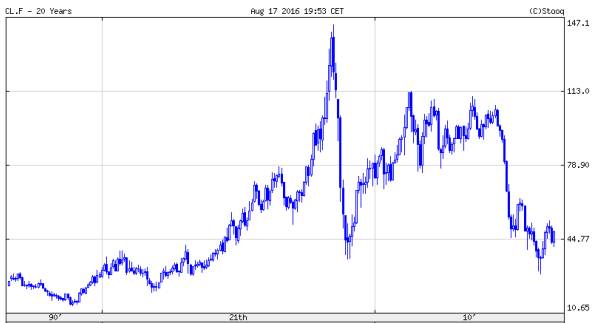
Fig.1. WTI Oil price (USD/stb) – 1985–2015
If this
trend continues, the prices for a longer period will be low, it is to be
expected a significant slowdown in the development of these methods, which
results, among others from:
·
the high cost of
mining,
·
lack of
acceptance of the risk of failure,
·
limit new
projects operational
·
limit the search
for new deposits.
·
restrictions on
access to capital,
·
lack of
profitability of advanced (and expensive) upstream projects.
On the other
hand, a period of low prices could be temporary and perhaps should go use to
analyze heir own resources, technology
development, as well as search for potential assets to buy, as a consequence of
the market situation may be temporary discount oil assets. In the event of a
possible, future growth in prices of oil companies that well take advantage of
the current situation will have available a significant competitive advantage against
other market participants.
The use of
new technologies for conventional beds is aimed primarily better use of
resources already identified and shared. Their range includes both work related
to the transformation of the existing vertical wells in the horizontal and
radial drilling, as well as the use of methods of production intensification
and advanced methods (EOR), including the injection of CO2 into deposits.
In the past
years there has been increased interest in these methods mainly in the USA,
despite periodic fluctuations in oil prices (Manrique et al. 2010). Another
factor which promotes the popularity of advanced methods of developing the
technology, resulting in a reduction costs. Figure 2 shows the number of EOR
projects in the United States broken down by type, and Figure 3 changes in the
amount of EOR projects carried out in the USA in relation to oil prices oil.
Currently in
Poland there are 85 documented deposits of oil (PGI report, 2014). Most of them
are operated for many years at relatively low coefficients exhaustion of the
resources of the underlying geology. This indicates a significant potential,
possible to land even in the absence of significant new discoveries. Because
large differences in geological conditions, infrastructure and economics cannot
be the immediate implementation of the American experience to Polish
conditions. Because a phase of implementation of advanced methods should be
preceded by verification can be the applicability of each method in Polish
conditions. Preliminary analysis, in which criteria for determining the
possibility of using advanced extraction methods. Basic physical properties of
rocks and reservoir fluids allows to assess the possibilities of implementation
EOR methods on Polish deposits (Wojnarowski 2012) (Fig. 2).
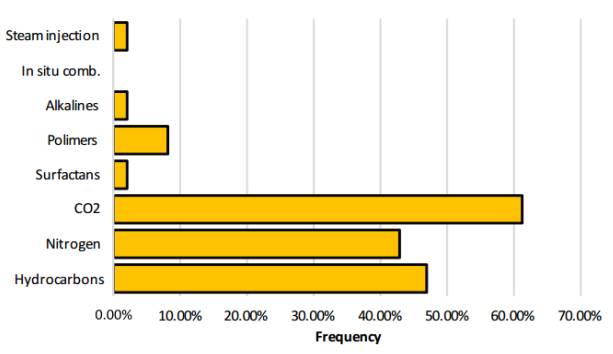
Fig. 2. Possibilities of selected EOR method
applications on analyzed oil fields
The analysis
results show that in Polish conditions is practically no possibility of wider
use thermal methods, mainly because of the small amount of heavy oil deposits.
Alternatively, it is technically possible to use steam injection in one case
but the bed is analyzed in rocks of a double porosity, which undoubtedly
adversely affect the efficiency of the process. Chemical methods shown in
statement does not occupy a significant position mainly due to the requirements
for high porosity and permeability deposits. The use of these methods involves
the addition of high costs, which further reduces their attractiveness to small
Polish deposits. only injection polymers, which "improved irrigation
'deposits, in some cases, may be used. By far the best in comparison to present
methods of injection gas mixing conditions, including injection of CO2, which
is also in line with trends world. At the moment, this method becomes a leading
and virtually the only possible use in carbonate rocks, all other criteria for
its application (Adequate viscosity and density of oil and bed depth) (Manrique
et al., 2007). however, remember that the American experience is mostly with
large deposits and are not directly reflected in Polish conditions. This
solution on domestic deposits therefore it requires detailed research, analysis
and test pilot.
References:
1.
Beckwith, R.
2013. SPE Liquids-Rich Basins Conference: New Technology for Old Plays, JPT,
Nov 2013.
2.
Di Pietro, P.
2014. Next Generation CO2 Enhanced Oil Recovery, NETL Carbon Dioxide
Utilization Congress, San Diego, California.
3.
Manrique i in.
2007 – Manrique, E.J., Muci, V.E. i Gurfinkel, M.E. 2007. EOR Field Experiences
in Carbonate Reservoirs in the United States. SPE Reservoir Evaluation &
Engineering, December, s. 667–686.
4.
Wojnarowski, P.
2012. Potential for increasing oil recovery from Polish oil-fields by applying
EOR methods – Analiza możliwości zwiększenia efektywności
wydobycia ropy naftowej z polskich złóż w oparciu metody OR. Gospodarka Surowcami Mineralnymi –
Mineral Resources Management t. 28, s. 47–58.
5.
Valkó, P.
i Economides, M.J. 1995. Hydraulic Fracture Mechanics.
6.
Manrique i in.
2007 – Manrique, E.J., Muci, V.E. i Gurfinkel, M.E. 2007. EOR Field Experiences
in Carbonate Reservoirs in the United States. SPE Reservoir Evaluation &
Engineering, December, s. 667–686.