SOME
POINTS of the WAREHOUSE THEORY
Oleg B. Malikov, Ph.Dr., professor, St.Petersburg State Transport University
Abstract
Warehouses are main components of logistic chains. Supply chain may be
represented as consisted of warehouses, connected with transport links. Modern
mechanized and automatic warehouses are very complicated technical objects,
which feature with many parameters, a lot of technical decisions and operate under
stochastic influence of flows of arriving and dispatching cargoes. So they run
in permanent changing conditions of different cargo volumes, number of handling
equipment and employees used. Special theory is needed for the due research and
project these complex technical objects.
Keywords: Warehouse, Transport,
System, Material flow, Logistics,
Supply
Chain
Introduction
Warehouses and cargo terminals are wide spread
objects in all industries, trade and transport. Modern mechanized and automatic
warehouses are very complicated technical objects. They rigged with specific
complex equipment (racking systems of various performance up to 20 meters high,
industrial trucks and stacker cranes with automatic control, automatic conveyor
systems and automatic guided vehicles - AGV, means of robotics, palletizers,
computers and on-line electronic data exchange systems etc. They are
characterized with hundreds of various parameters and display stochastic sort
of activity under fluctuating action of material flows. In every case of reconstruction
or building some new warehouse a lot of options, with different parameters and
economical characteristics have to be calculated.
It
is impossible for engineers to consider all dozens of options of possible project solutions. Many profound researches should be carried
out to find the best solutions in many aspects.
Taking all these into account it is necessary to develop some special
theory of warehouses and cargo terminals research and projecting.
Warehouse
Theory
Hundreds
of warehouse projects were worked out by the author for about 20 industries
that made to understand the necessity of new special theory for warehouses and cargo terminals [1-3]. The
General Cybernetic Theory of Systems (GCTS) was applied as a foundation for this theory that was called of Warehouses
System Theory (WST). According to this
theory warehouse should be analyzed as a system, i.e. as a complex of connected
components, having been created for reaching unified objective. For creating
efficient warehouse thorough research should be fulfilled with the following
steps: objective of the system, its components, its structure, activity,
interaction with environment and results of operation. Simulation may be used
at all these steps.
Objective
of the warehouse system
This
is the basic aspect of the warehouse creation and functioning.
Common, or at any rate very wide spread opinion
is that warehouses are created for storage of merchandise. No products however are manufactured just for storage.
They should move to customer to be
consumed.
Supply Chain consists of 2 kind of elements:
warehouses and transport links, connecting these warehouses (Figure 1a). Any
well organized transportation process starts and terminates at some warehouses
(W , W
, W in Figure 1b). A warehouse always interacts with two type of
transport – first Ti, that delivers cargoes to the warehouse and
second To, that delivers cargoes from warehouse to customers (Figure
1c).
in Figure 1b). A warehouse always interacts with two type of
transport – first Ti, that delivers cargoes to the warehouse and
second To, that delivers cargoes from warehouse to customers (Figure
1c).
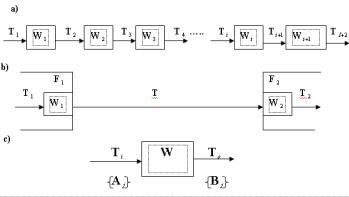
Figure 1. Logistic chain with main components - warehouses W , W
, W at facilities F
 and F
and F and connecting them transport links Ti
Each
of this material flows is characterized not only with whole capacity, but also with the following
parameters: volumes of transport batches; number of different items of cargoes
in transport batches; type and features of transport tare and packing of
cargoes; type and features of freight transport units; time of arrival and
dispatching of transport batches, regularity and conformity of these processes
to some rules; time intervals between
arrival and dispatch of transport batches and their regularity.
Comparison of these characteristics of in-bound and out-bound goods
flows displays, that they may be different from each other. So multitude A of in-bound flow parameters can be not equal to the
appropriate elements of multitude B
of in-bound flow parameters can be not equal to the
appropriate elements of multitude B of out-bound flow parameters (Figure 1,c). Warehouse transforms some of the flow
parameters, mentioned before [4].
of out-bound flow parameters (Figure 1,c). Warehouse transforms some of the flow
parameters, mentioned before [4].
For example, Logistic Center can change: volume
of the transport batches from big to the small ones, change pallets, transport
tare and packing of goods, number of
items in batches, time characteristics of transport batches dispatched etc.
So warehouses of various types and designations are created in the
points of interaction of different transport and industrial systems with an
objective of material flow transformation for the best consequent
transportation and/or using goods. Besides
the warehouse can be efficient if it for due flow transformation would spend as little as possible 6 main resources,
which we have in our real natural environment: space, time, materials, energy,
labor, money. WST provides special means and methods for this.
Components of the warehouse system
According
to WST the most productive approach for warehouse research was proved to select
as the system components: areas of cargo loading, unloading, reception,
storage, picking, inner warehouse
transport etc.
Everyone of these components
of a warehouse system has its own technology, equipment and purpose of functioning.
But there is one general system objective, which all the components operate
for. This is the united objective of creation of the warehouse – to transform
the determined material flow in a specific way with the least spending of
mentioned above 6 resources. That is known as synergetic effect in the General
Theory of Systems.
Structure of the warehouse system
Structure
of the warehouse system represents the various interactions between elements of
the system: in space, time. warehouse technology, depending, economical
interaction, in organization, management and so on. It is these interactions of
the warehouse system components between one to another, that lend to the system
entirety, regularity and organization. Structure of the warehouse system should
be selected or created in such a way that it would allow in the most degree to
reach warehouse system its objective.
Functioning
of the warehouse system
In
every moment the warehouse system is in some state, that feature specific
parameters. These parameters may be
such as level of inventory, amount of machines
at work, occupation of areas with cargo, number of trucks at loading-unloading
docks, number employees at work and so on. During its operation the warehouse system interacts with environment, which consists of
a number of outside systems, and fluctuates from one state to another one. This
functioning of warehouse system should be projected so as it helped the
warehouse system to reach its main objective of material flow transformation.
The number of these states may be very
large, and they are characterized with types and amount of technological
operations to be carried out at the moment. Main four warehouse states may be: only
cargo reception; only cargo dispatching; simultaneously cargo reception and
dispatching; no work at warehouse at all.
Ability of the warehouse system to be in some
state W can be valued with its appropriate probability P(W
 ) – see Figure 2.
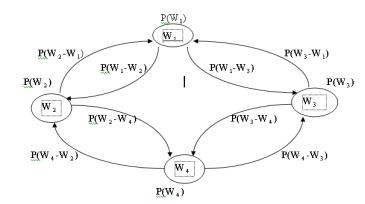
Figure 2. Graph of states and transitions of a warehouse system (4 states
and
8 transitions illustratively) and their appropriate probabilities
Functioning of warehouse system can be represented in formulized view as
a matrix of transition probabilities:

 P
P P
P … P
… P … P
… P
P P
P … P
… P … P
… P
P = ………………………
P P
P … P
… P … P
… P
………………………
P P
P … P
… P … P
… P
Probabilities disposed in the main diagonal of the matrix can be used
for calculation of possibilities of remaining of the warehouse system in the
same states.
This method of formalization of warehouse system functioning can be used
for its research and optimization, for example, for computation quantity of handling
equipment:
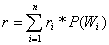 ,
,
where
r - number of handling equipment;
n - number of warehouse possible states;
P(Wi ) – the probability of the i-th state of the warehouse system.
Interaction
of the warehouse with environment
While operating the warehouse system interacts with environment, which
consists of a number of outside systems. This interaction with surrounding systems
should be planned so as it allowed the warehouse system to reach its main objective
of material flow transformation.
Practically this interaction the warehouse system with the environmental
systems represents mutual transferring material and informational flows, which
makes the warehouse to pass under this influence from one its state to
another.
Results
of the warehouse operation
Results of the warehouse system operation should be analyzed and compared
with the objective having been set at the beginning of its projecting. If the
results do not coincide with the objective, it is necessary to change some decisions.
Conclusion
Warehouse should be considered as a system with
specific objective, components, structure, functioning, interaction with environment
systems. This general methodology can
be used also for analyzing other objects in different fields (railway
stations, marine ports, parkings, garages, sport and cultural objects, shops
and markets etc.). These objects do
not produce some new products, but only transform flow parameters and are
very useful for the human society.
References
1.
O.Malikov,
Warehouses & Cargo Terminals. St. Petersburg, 2005, p. 650
2.
O.Malikov,
Business Logistics, St. Petersburg, 2003, p. 240.
3.
O.Malikov.
Warehouses of Flexible Manufacturing Systems. St.Petersburg, Russia, 1986,
p. 186
4.
O.Malikov. Projecting of Automatic Warehouses . St.Petersburg, 1980, p.240
Contacts:
190031, Russia, Saint Petersburg, Moskovskey ave., Petersburg State
Transport University. Department Logistics&Commerce. Ph.Dr, professor Oleg
B. Malikov
E-mail: stadnitskey@mail.ru mob. tel. 8-921-308-8098