Krasa Stupinskaya was awarded the Gold medal in the
15th Russian Agricultural Exhibition "Golden Autumn 2013"
UDC
631.524:631.52:632:621.9.004.18
THE
INTRODUCTION AND CULTIVATION OF SAFFLOWER TINCTORIAL
IN THE
CENTRAL REGION OF NONHUMUS ZONE
S.K. Temirbekova, Sc.D, professor, head of the gene pool preservation
department
I.M.
Kulikov, academician, director of Russian Selection and Technological Institute
of Horticulture and Nursery Sciences Academy
N.E. Ionova,
PhD, associate professor of the Kazan (Volga) Federal University
G.V. Metlina, PhD, head of the laboratory cultivation of forage crops in I.G. Kalinenko¢s Russian Research Institute
of crops
D.A. Postnikov, Sc.D, professor, K.A. Timirjazev¢s Russian Agrarian University
A.A. Norov, Sc.D, professor, Vice-Rector of the University of Dushanbe;
Y.V. Afanaseva, researcher of Russian Selection and Technological Institute of
Horticulture and Nursery Sciences Academy
Russian Selection and Technological Institute of Horticulture and Nursery
Sciences Academy
E-mail: vstisp@vstisp.org;
sul20@yandex.ru
Summery: The article contains data
about new cultivar of safflower - Krasa Stupinskaya. This cultivar is used as
the sidereal, phytomeliorative, stern, decorative and perspective oilseed crop. Recommended for cultivation in
all regions of the Russian Federation.
Key words:
safflower, phytosanitary, phytomeliorative, perspective, oil crops, disease,
enzyme-mycotic seed depletion, energy efficiency.
Safflower (Carthamus tinctorius L.)
belongs to the family of Asteraceae. Centre of origin is Egypt and India. As a result at the
Center of reservation, maintenance and gene pool of the Selection and
Technological Institute of Horticulture and Nursery Sciences Academy, previously named as Moscow branch of
N.I. Vavilov Research Institute of Plat Industry (Mikhnevo, Stupino district,
Moscow region) was created cultivar of safflower tinctorial named ¢¢Krasa
Stupinskaya¢¢.
Authors of this cultivar:
Temirbekova S.K., Kulikov I.M., Kurilo A.A., Norov M.S., Metlina G.V.,
Postnikov D.A., Ionova N.E. Krasa Stupinskaya is included in the State register
of breeding achievements in 2013, patent number 6930. It is recommended for all
regions of the Russian Federation (Fig. 1).
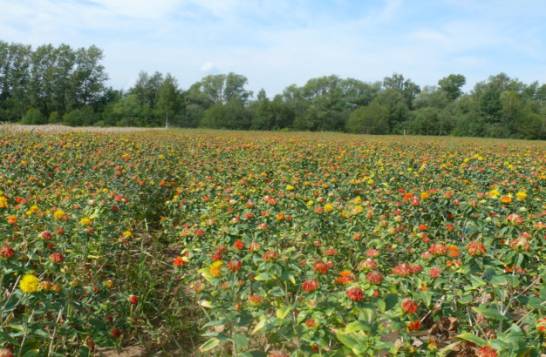
Fig. 1. Krasa Stupinskaya¢s variety of genetic potential at
the flowering stage.
Agronomic characteristics of safflower
in the Moscow region
Krasa Stupinskaya
is an annual herbaceous plant with a well-developed, tap root system, deepening
in soil to 10-20 cm (in the southern regions in 1.5-2 m) (Fig. 2).
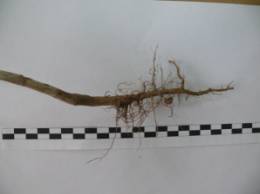
Fig. 2. The root system of Krasa Stupinskaya
Stem is erect, branching,
naked, height is about 83-90 cm. Leaves are sessile, lanceolate,
lantsetoovalnye or elliptic, the edges have small teeth, terminating with small
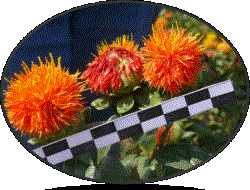
spines. Inflorescence - a basket with a diameter near
1.5-3.5 cm. One plant can from 5-7 to 20-50 and more baskets. The flowers are
tubular with yellow, red or orange quinquepartite corolla (Fig. 3). Fruit -
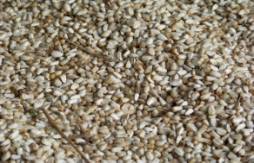
achene, brilliant, similar to sunflower achenes. Seed¢s coat is hard, it is difficult to
crack, reach 40-50 % from the mass of seeds (Fig. 4). The
seeds do not fall off after their maturation.

The seeds can germinate at 1-2 °C, but friendly shoots appear when the
soil at a depth of 10 cm is warmed more than to 5-6 °C. Sowing is carried out
in the Moscow region in late April - early May using conventional grain drills.
Quantity of seeds for sidereal purposes-
20-25 kg/ha, for seed¢s
btaining purposes - 10-12.5 kg/ha. Seed planting depth is about 5-6 cm. In the phase when appear
one pair of leaves light harrowing must be held. Two months after germination
begins the flowering of safflower plants, which lasts about one month. Vegetation period from
germination to maturity in the years with different meteorological conditions
is 105-130 days. Weight of 1000 seeds - 48-51 g (in disadvantaged
overmoistening year 2013 – 34 g). The crop yields
in our zone is about 0.8-1.0 t/ha (in the southern regions - 1.0-1.2 t/ha).
Ingathering needs conventional harvesting equipment [1].
Krasa Stupinskaya is used as
the sidereal, phytomeliorative, stern, decorative and perspective oilseed crop.
This cultivar in the Moscow region has several unique properties
compared to traditional green manure crops - white mustard, blue lupine.
Incorporation of safflower in the budding phase causes a rapid increase of
microbial activity in the soil. In the arable layer the content of available
nutrients such as phosphorus and potassium, is highly increasing. In our
studies, safflower showed high efficiency as a sederal crops on greensward and podzolic soils.
Studying the phytosanitary effect showed that safflower green mass plowing
reduces weed infestation (compared with a pure steam), followed cereal by 62 %, at sowing of white mustard – 56 % and blue lupine - 54 %. As phytomeliorative
culture safflower provides a positive balance of phosphorus in the soil.
Content of available phosphorus in the plow layer of sod - podzolic soil was
increased by 11 % , exchangeable potassium - by 4%. The increase of available
phosphorus in similar versions with cultivation of white
mustard and blue lupine was about 8 %. It was established that after the
termination of safflower green mass to the soil increases the content of
nitrogen - 75.1 kg, of phosphorus - 64.3 kg and of potassium 81.4 kg in 1 hectare. Comparative analysis of the
main nutrients content in the topsoil after plowing different crops studied
allows to conclude that safflower as a white mustard has the ability to
allocate monocarboxylic acids in the zone of root cap and probably translate related phosphates (insoluble
mineral compounds) to available for the absorption phosphate ions, also it
enhance the absorption of potassium ions by safflower plants, which evidenced
by the content of this element in the elevated part of
plants and roots - 1.97 and 1.41 %, respectively.
Use of lupine and safflower as the predecessor culture
Positive balance of essential nutrients largely enforces by the plowing of lupine and safflower green
mass. The highest inflow of potassium and phosphorus available forms in the
plowed layer of sod- podzolic soil under the previous culture provides the plowing of safflower green mass
(289.2 and 42.7 kg/ha), at the same time the rate of nitrogen flows to189.1
kg/ha, which even exceeds the same figure in experiment with the blue lupine - 138.5 kg/ha.
Krasa Stupinskaya is relevant
as a fodder crop. 100 kg of oilcake contained 75.5 fodder units. It is also rich in
fat and protein. Green mass does not contain acids that are harmful to the
animal organism.
Krasa Stupinskaya also can be
used as an ornamental and decorative
plant with yellow, orange and red racemes that can decorate
smallholdings.
Krasa Stupinskaya is a
strategic and perspective oilseed.
Safflower seeds contain from 32 to 38 % of fat.
Absolute fat content in the treated seeds reaches more than 60 % and it is
suitable for food. Safflower oil similar to sunflower oil, but it is more
saturated by linoleic and oleic acids, may be used for food and industrial
purposes (Fig. 5). At the same time α-γ- linolenic acid is an essential,
synthesized only in the culture of safflower and breast milk.
Krasa Stupinskaya is a source
of natural dyes and biologically active substances for the food and cosmetic
industries.
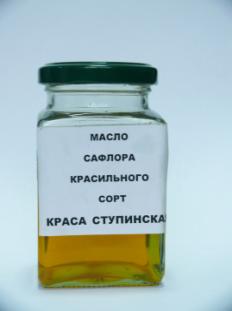
Pic. 5.
Safflower oil
The safflower culture demandtd in medicine, it¢s
flowers can be used for obtaining drugs that cure stroke, cardiovascular and gynecological
diseases.
Pests and
diseases
Safflower pests can be wireworms and cutworms, some specific pests -
Sage scoops and safflower fly. At this time they are out of the Moscow region.
Possible safflower disease: ramulyarioz and rust (disease appears in the form of yellow-brown spots or brown with
dark borders, rounded spots). In conditions of Moscow region rust is absent,
ramulyarioz appears singly, not in all the years of cultivation.
In wet years Krasa Stupinskaya strongly
affected by enzyme-mycotic exhaustion of
seeds (EMIS). EMIS causes seed¢s mass
destruction by such diseases as Alternaria,
Fusarium and others and as a
result is a poor quality
of seeds.
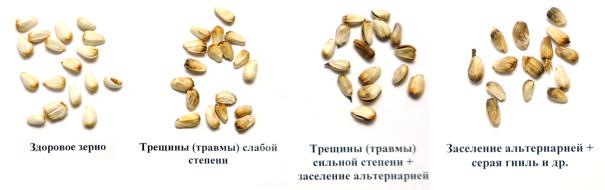
Fig. 6. Growing biological injury as a result of
enzymatic step of EMIS. Krasa Stupinskaya, harvest of 2013
Energy
efficiency of spring barley cultivation with safflower green manuring, lupine
Lata and white mustard Rhapsody
Due to the unstable energy prices, which are directly or indirectly used
in agriculture, there is an urgent need to analyze the costs of energy in crop production,
the payback of bioenergy derived from harvest. According to our calculations
based on energy assessment of cultivation of spring barley with different
variants green manurig, the highest energy yield with grain yield was obtained
by sowing barley with the safflower green mass - 51.65 thousand MJ/ha (Table
1). When lupine green mass was used as the predecessor culture
we also had a significant yield of energy production, which amounted to 51.49
thousand MJ/ha. Minimum energy output of grain was marked with the use of pure
steam (45.24 thousand MJ/ha).
It was found that using of pure vapor due to the low total cost of grain
production energy efficiency was the highest (Ke. - 2.68), the lowest rate was observed
with the use of lupine and mustard cut-root residues (1.96 and 2.06). The
highest energy efficiency was distinguished by safflower, energy efficiency compose 2.47. It should taken into
account the efficiency of green manure crops:
safflower and mustard seeding rate for green manure purposes is 20-25 kg/ha,
and lupine - 120 kg/ha (and a higher price for 1 kg compared with mustard and
safflower).
Table 1 - Energy efficiency of cultivation of spring
barley with different cultures green manuring (2009-2012).
|
The predecessor |
Energy costs for
all technology thousand MJ/ha |
Energy content of the products, thousand MJ/ha |
Energy efficiency, Ke |
|
1. clean steam |
16,9 |
45,24 |
2,68 |
|
2.
White mustard (on a forage) |
23,3 |
48,03 |
2,06 |
|
3. White mustard (as fertilizer) |
22,8 |
48,86 |
2,14 |
|
4.
blue lupine (on a forage) |
25,3 |
49,68 |
1,96 |
|
5.
blue lupine (as fertilizer) 120-200 кg/hа |
23,4 |
51,49 |
2,20 |
|
6. Safflower (on a forage) |
22,5 |
50,34 |
2,15 |
|
7. Safflower (as
fertilizer) |
20,9 |
51,65 |
2,47 |
CONCLUSION
On the basis of the foregoing and conducted to long-term field
experiments it must be concluded that environmental and agronomic properties of
safflower as a unique culture and its cultivation in the non-humus zone will allow to
solve a number of important tasks that will promote the
development of the agricultural sphere in the Russian Federation.
Literature
1. S.K. Temirbekova, I.M. Kulikov, Z.A. Imamkulova, Y.V. Afanasyeva.
Introduction, study and use of safflower oil for the Central
Region of the Russian Federation. // Fruit and berries of Russia.
- M., 2013. - T. XXXVII. - Part 1. - pp. 322-327.