PREVENTING EVAPORATION
OF SURFACE WATER STORAGE FACILITIES FOR LIQUID RADIOACTIVE WASTE
Kh. Dosmukhamedov Atyrau
State University, Atyrau, Republic of Kazakhstan
Abstract
In this article the author considers how to reduce
evaporation from water surface radioactive waste repository "Koshkar -
Ata" in Mangistau region of the Republic of Kazakhstan. This method is the
use of pontoons that are connected together in the form of rings and inside of
which are elastic inserts made of two layers of polyethylene film for storing
solar energy.
Key words: Radioactive wastes, water storage, evaporation, pontoons
Context
At
present, the overall level of contamination increased in the Republic of
Kazakhstan. For example, consider the storage of liquid solutions Koshkar-Ata,
located in the south-eastern part of the peninsula Mangishlak Mangistau region
of 5-6 km north-east of the city of Aktau and 8.7 km to the east coast of the
Caspian Sea (Picture 1).
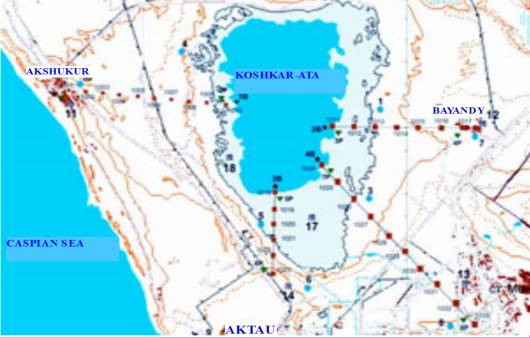
Picture 1 - Location the storage of liquid solutions
Koshkar-Ata
Present
storage of liquid solutions area (77 sq km) has no analogues in the world. Total area of deposited
waste is 66 sq km area, bared beaches at this time is 39 sq km and the process of reduction of the aqueous phase
continues (Picture 2). The composition
placed on the storage of liquid waste comprises substances such as nitrates,
nitrites, ammonium, iron, phosphate, fluoride, strontium, zinc, copper,
chromium, molybdenum, manganese, lead, uranium, radium, thorium. The average
value of gamma radiation background atmospheric boundary layer was 0.12 mkrZv/h. Over the entire period of operation of the storage of
liquid solutions Koshkar-Ata it was stockpiled 51.8 million tons of radioactive
waste with a total activity of 11 200 Curie. Total storage in liquid solutions
placed 105 million tons of toxic and radioactive waste. Marked by elevated
concentrations of heavy metals in the soil ground settlements Akshukur,
Bayandy, Kyzyl-Tube station Mangistau and other areas located on the eastern
and western sides of the Koshkar-Ata. This occurs as a result of spraying
sections of beach storage of liquid solutions, as there is an increased drying
water's surface. In connection with the arrangement in the open countryside,
liquid solutions are storage evaporation energy of the sun and the spread of
harmful substances in the form of gas, dust and vapors. Therefore, necessary to
carry out remediation work, which in turn will not be able to fully solve the
environmental problem in the region. To prevent evaporation from the water
surface liquid waste and further provided the use of spray devices pontoon.
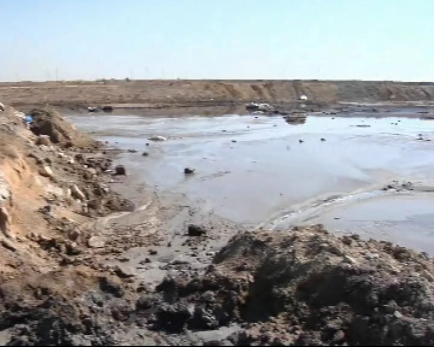
Picture 2 - The storage of
liquid solutions Koshkar-Ata
Solution proposed technical problem is achieved in that the aqueous
surface-coated with oil, is laid interconnected pontoons rubber rings in the
form of rings made of plastic pipes, which are located inside the elastic
inserts of two layers of plastic film for storage of solar energy.
Results
The resilient liner is made of rubber and tied up with the top of the
transparent film from the bottom - the dark. To eliminate the possibility of
spreading out in accordance with picture 3 (figure 2), they were fixed to each
other by means of rubber loops.
In the proposed method, the solar energy is used to melt the engine oil
on the water surface. This method can be applied in a dry hot climate Mangistau
region. Under the influence of solar energy, "heat sink" in the form
of water is heated and under the influence of the internal pressure of the
space under the film is filled with air (Figure 1, Figure 3), which is
impossible by close fitting to the surface. With the rise of pressure under the
film motor oil moistened through intensive steam flows in the oil, and the oil
in the pores of the steam is condensed and forces of the air. Oil, whose pores
are filled with water or closed so that the steam is not able to penetrate
inside, warmed primarily by conduction.
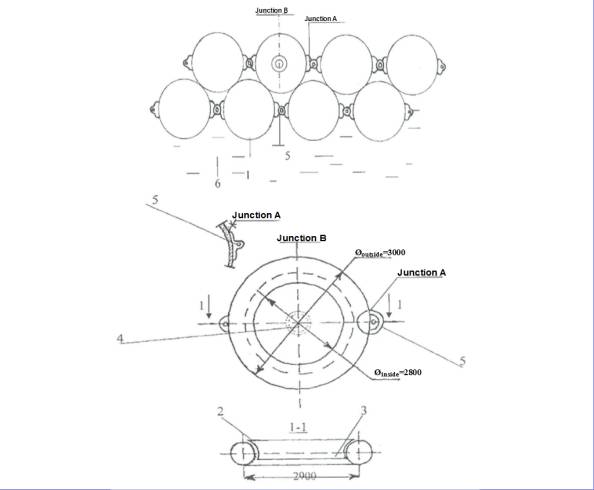
Picture 3 - Installation of pontoons to prevent evaporation from the
water surface liquid waste
1 - pontoons to form a ring of plastic pipes covered with transparent
film; 2 - clear polyethylene
film layer; 3 - black polyethylene
film backsheet; 4 - valve for draining
rain; 5 - rubber hinge; 6 - Oil "AC-8 . "
To
a saturated water vapor from the surrounding space can penetrate the pores of
the material and to condense therein, it must first penetrate the condensate
film on the exposed surface and then move the engine oil in the pores to some
of its depth, wherein the temperature inevitably lower than the saturation
temperature, the is below the transition temperature of the gaseous substance
into a liquid state. Moisture migrating into the pores under the influence of
engine oil gradient tends to compress air trapped in the pores of the engine
oil. In the pores creates an overpressure value which is determined by the
hydraulic resistance. As depth increases, the hydraulic resistance prevents its
exit to the environment increases, so the excess air pressure in the engine oil
increases from the surface into the engine oil. There is a pressure gradient,
which value is proportional to the flux density and moisture directed to the
opposite direction of fluid flow, i.e. from the bottom to the surface of the
engine oil. Under the influence of this gradient slowed the movement of
moisture and displaced part of the air contained in its pores.
The
pontoons are made in the form of a circle and covered with films surfacing
above the water surface will naturally keep the film at a distance of 10 cm,
which is sufficient to move warm air due to the pressure on the lower surface
of the film (temperature drop) in depth, towards the center of the circle to
lift out of the water.
Referring to picture 3 (figure 2) it allows the use of engine oil
performance AC-8 only between the pontoons at 0.25 dm3/m2
without fear of spreading out. The density of the film tension will act tensile
force of water on the inner radius of the circle.
To eliminate the accumulation of precipitation (rain, snow, etc.) in the
center of the circle is performed hole to drain rainfall (Picture 3, Figure 4).
For this purpose, the outer surfaces of the films are bonded rubber pads with
holes into which puts a rubber tube, weakened and flattened at the exit at the
bottom of the film to avoid backflow. Attenuation tube applies to the case of
increasing the pressure between the films, resulting in pressurization of the
top film (swelling).
Conclusions
The technology has a number of advantages and characteristics, namely:
• motor oil AC-8 is a waste not be disposed of having a very low
volatility, which allows you to not pollute the air above the pool MPC their
individual hydrocarbon ingredients, though they themselves liquid waste are
sources of pollution, and are cost-effective in relation to the costs for
transportation and application on water surface by dosing;
• use of used pontoons will reduce the use of motor oil, as well as
eliminate the use of electric heater that works by using electricity as the
heating surface of the engine oil comes from solar energy, which occurs when
the water is heated by the air generated by a polyethylene film with pop-over
pontoon the surface of the water;
• hot water can increase the leaching of valuable components from the
ore.
The proposed method to prevent evaporation would significantly slow down
the process of draining the coastal areas - beach areas and make a more dense
mineralized deposition ingredients of the aqueous phase.
References
1. информационный бюллетень
о состоянии окружающей среды Казахстанской
части Каспийского моря, Выпуск 1 (22) (1 квартал 2010 года).
2.
Айтбаева А., Бисекенов Т.Д., Есенаманова М.С. Радиоактивность почв, и
радиационное состояние хвостохранилища «Кошкар – Ата» в Мангистауской области.
3.
Есенаманова М.С. и другие. Способ предотвращения испарения
водных поверхностей. Предварительный патент №15812, 04.04.2005