Pustova K., Chernetchenko
D., Botsva N., Lavrenjuk А.
Oles Honchar Dnipro National University, Ukraine
NON-INVASIVE
MONITORING TOOLS FOR AUTOMATIC STRESS DETECTION
Chronic stress is endemic to modern society. Stress is
a state of nervous tension that occurs under action of strong influences that
violate the homeostasis and remove the system from the state of equilibrium.
During stress there are changes of some physiological parameters in the human
body. Wearable sensor technology makes it now possible to measure
non-invasively a number of physiological correlates of stress, from skin
conductance to heart rate variability. The ability to monitor stress levels in
daily life can be a key step towards achieving automatic stress monitoring and
healthy lifestyle [1,2]. Therefore, the creation of an automated complex of
continuous assessment of the psycho-emotional state is an actual and timely
task.
For the automated stress detection complex a scheme based
on the microcontroller platform STM32 with ARM Cortex-M1 core and subsequent
real time visualization of the recorded from non-invasive sensors parameters is
suggested (Fig.1)
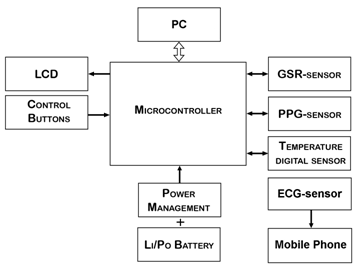
Fig. 1. The structure of automated stress detection
complex
The galvanic-skin reaction (GSR),
which is determined by changes in bioelectric parameters - the potential
difference and the impedance of the skin, is a very sensitive indicator of
human emotional state. The GSR signal is recorded when the electrodes are
applied to the fingers of the subject (usually the index and the ring fingers).
The GSR is predominantly influenced by emotional-psychic activity: when the
decision is made, the amplitude of the reaction maximizes and decreases as the
response to the stereotype develops. Since the GSR amplitude depends on the
complexity of the task and the environment, it is used to assess the emotional
tension of the person.
The local temperature of the human skin surface is
determined, as it is known that during the sudden surges of the emotional
state, short-term temperature bursts due to blood flow to the extremities are
possible.
The wearable ECG-sensor,
based on SenceBand technology [3], also records the
parameters of the cardiovascular system for detecting stress trends. The
informative characteristics are heart rate (HR) and heart rate variability
(HRV), the shift of which reflects the general response to the influence of emotionogenic factors. Such HRV-parameters
as ECG RR-intervals variability index, RMSSD (root mean square of the successive differences) and low-frequencies
(LF) to high-frequencies (HF) HRV spectral components relation (LF/HF) characterize the parasympathetic and sympathetic
activity, or in other words, the level of physiological stress [1].
Another important feature is blood filling, so the
most adequate method for studying the cardiovascular stress-reaction is photoplethysmography (PPG). This technique has the
following benefits: the pulse component of the PPG signal reflects the response
of small arteries, arterioles, capillaries to the emotional state; PPG
component of the slowly changing signal characterizes the blood flow to the
tissues and accordingly reflects the reaction of large vessels. To assess the
emotional state, the following characteristics of the PPG are analyzed: pulse
amplitude, HR, amplitude of the slow component (blood filling), and the height
of the dicrotic wave.
But when registering the parameters of the heart
activity, useful signals are superimposed by artifacts, namely, breathing and
movement.
Additional registration of the respiratory signal allows
filtering out some of the physiological abnormalities from PPG and GSR signals
(with GSR largely, since PPG is recorded from the fingertip). Information
parameters are considered: the breathing cycle (its duration), the amplitude of
respiration, the ratio of the inspiration time to the expiration time.
Artifacts of movement have the greatest impact on GSR,
and since the GSR is considered the most informative (it contains about 60% of
stress information), there is a need to drop the artifacts from the GSR signal.
For this used integral accelerometers that record the human motor activity,
often used. Then, using the adaptive mechanisms and the mathematical apparatus,
the motor component is subtracted from the useful signal GSR, PPG and ECG,
which allows obtaining a better signal in the presence of small motions.
The index of the psycho-emotional state is calculated
as an integral indicator in the form of a weighted sum of physiological
parameters of each of the sensors. The determination of the psycho-emotional
state of a person occurs on a quantitative scale from 0 to 10 conditional
units.
Thus, the automated complex of continuous non-invasive
monitoring of the psycho-emotional state allows determining the level of stress
to cause certain adaptations to many of the stressors from which we suffer.
This is extremely important and useful for providing objective feedback and
making significant adjustments to our behavior. Such a wearable complex can be
used to prevent possible critical errors in areas where the operator's work
requires increased concentration and a low level of emotional stress.
REFERENCES
1. Choi, J. et al. (2012). Development and evaluation of an ambulatory
stress monitor based on wearable sensors. IEEE Transactions on Information
Technology in Biomedicine, 16(2), 279–286.
2. Wu, M. et al. (2015). Modeling perceived stress via HRV and
accelerometer sensor streams. In Proceedings of the Annual International
Conference of the IEEE Engineering in Medicine and Biology Society, EMBS (Vol.
2015-Novem, pp. 1625–1628).