УДК: 658.14/17
doctor of economic sciences, professor
Kruglov V. N.
NOU VPO "Institute
of management, business and technology"
Innovative
way of improving the Russian management
From
the standpoint of system approach management should be focused on the current
state, patterns and projections of changes in the environment. In General, the
system of internal management of the company based on the analysis of
information on internal and external situation [1, p. 293]. This information
base is formed as a result of the implementation of the activities of the
company and includes: forecasts, marketing, opportunities, risks. The
composition of the processes in the enterprise, aimed at evaluation and
analysis of the external environment, represented in Fig. 1.
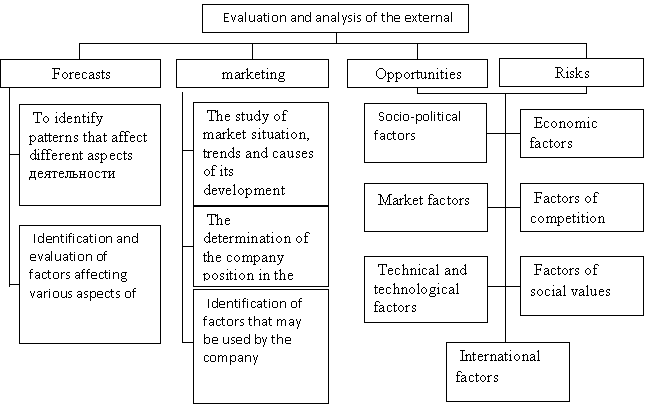

Fig. 1. The composition of the processes in the
enterprise, aimed at evaluation and analysis of the external environment
Forecasts of the company for the purposes of internal management aims
to: identify patterns that affect different aspects of the activity;
identification and evaluation of factors affecting various aspects of the
enterprise.
Marketing allows you to get the following information that can be used
in the development of internal plans: study market situation, trends and causes
of its development; determination of the company position on the market;
identification of factors that may be used by the enterprise [2, p. 350].
Factors opportunities for the development of enterprises and risks are
closely connected, because each of them may be dangerous or a new opportunity
to strengthen positions on the market, so they are conventionally combined in a
number of groups.
1. Socio-political factors. Determine the importance of the role of
society and the state for businesses. Consequently, society and the state
should monitor the factors affecting the company, including the quality of
legal and regulatory documents; a favorable public policies, etc.
2. Economic factors should always be diagnosed and evaluated, because
they directly affect the performance of the enterprises: the rate of inflation,
the prices of resources, interest rates of banks, etc.
3. Market factors pose a constant threat of failure, or a new
possibility of success for the enterprise. Such factors include the dynamics of
income, the level of competition in the industry, the conditions of activity in
the market, etc.
4. Factors of competition include: analysis of the objectives and
indicators of competitors, evaluation of current and future strategies of competitors,
study the strengths and weaknesses of competitors, identifying the position of
competitors in the market etc.
5. Technical and technological factors. Enterprises should regularly
examine the possibility of applying the achievements of scientific and
technical progress for use in its activities, and the modernization of
production, including the use of information technologies in the planning,
design and management fields, mechanization and automation of production
processes, etc.
6. Factors of social values include the changing relationships in
society and in enterprises, for example, worker participation in the management
and revenues of the enterprise, the system of material and moral incentives,
etc.
7. International factors should be considered by companies operating in
international markets: the terms of trade, prices, taxes, etc.
For a successful and sound internal management of the enterprise should
have a complete understanding of not only environmental factors, but also on
its internal situation. This analysis aims to identify critical aspects of the
condition of the company that may affect its ability to achieve its goals. An
examination and analysis should determine: whether the enterprise has the
internal capacity to take advantage of external opportunities; are there his
weak areas, which can complicate its position in relation to external threats
[3, p. 377].
This process is a managerial examination, presenting an analysis and
assessment of the functional areas of the enterprise, thus allowing you to
identify the strengths and weaknesses of the internal state.
The composition of the pre-planning processes in the enterprise, aimed
at evaluation and analysis of the domestic situation, reflected in Fig. 2.
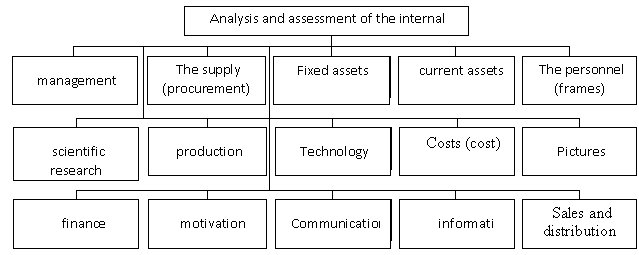

Fig. 2. The composition of the processes in the
enterprise, aimed at evaluation and analysis of the domestic situation
Study on the management system of the enterprise is aimed at:
identifying problems in the methods of acceptance of administrative decisions
in the organizational structure of management, management effectiveness, etc.
The supply (procurement) includes: structure of suppliers, terms of
supply, prices, etc.
It should be noted that the management survey is largely determined by
the future goals of enterprise development, which are then reflected in his
plans.
As can be seen, in-house management should cover all the main areas of
production and economic activity within enterprises and beyond are closely
interrelated and are aimed at achieving the final result. The whole system of
internal management should be based on comprehensive ensure accurate
information based on research results, including analysis of enterprise's
activities during the past period and for the future. The assessment helps to
identify possible trends and situations that could influence the results of the
company.
Meanwhile, against the enterprises of Russia it is necessary to note the
presence of existing gaps between the components of the process of intrafirm
management. So, due to the lack of infrastructure for enterprises is still
difficult to access marketing, it is difficult to obtain the results of
scientific research and experimental development (R & d), which can be
incorporated into projects is not carried out risk assessment, etc., which
leads to strategic errors in the justification of plans. There are also
multiple challenges in the implementation stages of management, which reduces
the efficiency of the whole system of intrafirm management.
During the twentieth century took place the transformation of the
science of management from traditional management to modern, while development
continues to the present time [4, p. 332].
Modern corporate management puts in the first place not internal
factors, and aspects of adaptation to changing environmental conditions.
Developed specific techniques achieve strategic and operational objectives.
Modern management is based on a developed marketing system based on the
needs of the buyer. The basis of our business planning. The combination of the
strategic plan with the medium-term and current plans of the stability of
results of the company. Management is the art of conflict-free leadership,
which transforms the chaotic community of people in an organized, purposeful,
productive group with common goals and tasks.
Thus, it is possible to conclude that the immaturity of the Russian
internal management, where the main drawback of the Russian model of management
– a balance of the two tendencies: the mono culture of the Soviet period and
the variation in national economic practice of individual regions. Russian
management, in the period of the transfer of ownership, different operational,
situational character [5, p. 359].
Thus, the Russian management model needs to change to achieve results that
are significant on a global level. And changes must occur both at the micro and
macro levels.
Literature:
1. Vasilieva N. And., Kruglov V. N. Investment provision of innovative
development of the region. /N. And. Vasiliev, V. N. Kruglov//Audit and financial
analysis. – 2013. – No. 1. pp. 292-297.
2. Vasilieva N. And., Kruglov V. N. Economic and social aspects of the
implementation of priority national projects in the region (on the example of
Kaluga region). /N. And. Vasiliev, V. N. Kruglov// Audit and financial
analysis. – 2013. – No. 3. pp. 336-351.
3. Kruglov V. N., Leontiev L. S. problems of innovative development of
small business in the Russian Federation. /L. S. Leontiev, V. N. Kruglov//
Audit and financial analysis. – 2013. – No. 3. – pp. 374-379.
4. Kruglov V. N., Leontiev L. S. the Way of resource support for innovative
development of the economy. /L. S. Leontiev, V. N. Kruglov// Audit and
financial analysis. – 2013. – No. 4. pp. 326-333.
5. Kruglov V. N., Leontiev L. S. scenarios for the formation of the forecast
of development of the region. /L. S. Leontiev, V. N. Kruglov// Audit and
financial analysis. – 2013. – No. 5. – pp. 358-367.