research supervisor, Ph.D., associate Professor, Vladimir Sapa
Kostanay
State University A. Baitursynov, Kazakhstan
The efficiency of solar panels
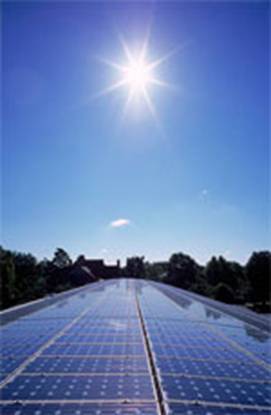 Much
confusion exists today around the notion of efficiency of a solar system. This
is an important criterion of their value. The concept of efficiency of solar
cells is the percentage of incident solar light is converted into electricity,
with the further possibility of use. Different materials for solar panels,
creating different efficiency. Even the same manufacturers have different
efficiency of conversion. Increased efficiency is the best way to reduce the
cost of solar energy.
Much
confusion exists today around the notion of efficiency of a solar system. This
is an important criterion of their value. The concept of efficiency of solar
cells is the percentage of incident solar light is converted into electricity,
with the further possibility of use. Different materials for solar panels,
creating different efficiency. Even the same manufacturers have different
efficiency of conversion. Increased efficiency is the best way to reduce the
cost of solar energy.
The
efficiency of the solar battery depends on the purity of the plates, which are
used as raw materials in manufacturing. In addition, it is very important
whether the panel monocrystalline or polycrystalline form. Most large companies
concentrate their efforts on improving efficiency to reduce costs in the
ruthless use of solar energy.
Consider the General range of efficiency of solar cells based on
different item types and different technologies.
Are of the following types: polycrystalline or monocrystalline silicon.
Multi-solar panels have lower efficiency than the battery of monocrystalline
elements.
Efficiency of solar panels can range from 12% to 20% for the normal
monocrystalline silicon. In normally, the estimated efficiency is 15% and
depends on the performance of the silicon. Some of the manufacturers are
constantly improving efficiency in order to reduce their costs and stay ahead
of rivals in this competitive industry. Others give maximum efficiency
crystalline solar cells using large scale of production.
Polycrystalline solar cells have a lower cost than monocrystalline and
efficiency in the range of 14-17%.
Thin-film technology, in contrast to the carbon – silicon materials, has
a number of advantages.
Amorphous silicon technology С-Si has the lowest
average efficiency, but they are the cheapest.
The greatest potential in enhancing the effectiveness of have a
copper-indium-gallium-sulfide (CIGS) and cadmium - tellurium (Cd-Te). Many
manufacturers propel the development of this technology and represent one of
the most high performance of its models, increasing it by 19%. They reached
this value using several methods, including the application of reflective
coating that can capture more light from the corner.
If you can justify the dependency not from material, but from the
dimensions, the higher the efficiency, the less the required area of the
working surface of the batteries.
Although the average percentage may seem a little low, you can easily
change equipment, namely at installation with enough power to cover energy
needs.
Factors affecting the efficiency of the solar arrays include:
The orientation of the surface mounting. The roof should ideally face
South, but a quality design can often compensate for other directions.
The angle of inclination. The height and tilt of the surface can affect
the number of hours of sunshine received an average day during the year. Large
commercial systems have solar tracking system that automatically changes the
angle of the sun during the day. Not typically used for residential
installations.
Temperature. Most of the panels are heated during operation. Thus,
generally should be installed slightly above the roof level, to ensure
sufficient flow of cooling air.
Shadow. In principle, the shadow - enemy of solar energy. When you
choose a failed design when mounting, even a small amount of shade on one panel
can shut down energy on all the other elements. Before you develop a system,
carried out a detailed analysis of the shading surface mounts, to identify
possible forms of shade and sunlight throughout the year. Then conducted
another detailed analysis that validates the findings.
Conventional solar panels with high efficiency solar industrial scale
mounted on the pile above the ground at 80cm, located in the direction from
East to West, along the motion of the sun, at an angle of 25 degrees.
References:
1. Yurchenko, A.V.; Savrasov F.W.; Yurchenko V. The
real cost of energy - from resources to consumer // Bulletin of the Tomsk
Polytechnic University. - 2009. - P. 43-46.
2. Stepanenko, N.I.; Gubin, V.E. Prospects for the use
of alternative and renewable-energy sources in the conditions of Siberia //
Modern Techniques and Technologies: Proceedings of IX Intern. Conf. students,
graduate students and young scientists. - Tomsk, 2003. - T. 1. - P. 47-48.
3. Lukutin, B.V.; Surzhikova O.A.; Shandarova, E.B.
Renewable energy in decentralized energy supply. - M .: Energoizdat, 2008. -
231 p.