Экономические науки/15.Государственное регулирование экономики
Postgraduate student Golub M.O.
Simon Kuznetz Kharkiv National University of Economics, Ukraine
The
Development of Government regulation process in the Sphere of Ecological
tourism.
The tourism industry is one of the
world’s largest, accounting for some 9% of global GDP and generating more than
US Dollar(USD) 6 trillion in revenue each year. It provides livelihoods to more
than 255 million people worldwide. The sector is particularly important for
some of the world’s poorest countries, especially some Small Island States. The
industry faces profound impacts from climate change – impacts that are already being
felt [1]. Relevant tourism legislation may exist but not be fully or adequately
implemented in Ukraine. This may be because of insufficient resources or
technical knowledge, which may be addressed through the provision of
well-directed support.
Unfortunately, the problem of the impact of climate change on tourism and the process of government influence on this problem have been insufficiently learned in Ukraine. However, there are scientists who have made a great contribution to this issue: O. Dmytruk, J. Zinkiv, B. Campbell, A. Lyubitseva, A. Stepanenko, T. Tkachenko, T.Adamenko, M. Nicholls, S. Gossling, A. Challinor, J. Hansen, N. Kyrnasovska etc. The aim of this article is to analyze the impact of climate change on the tourism industry.
Ecotourism is a form of tourism involving visiting fragile, pristine, and relatively undisturbed natural areas, intended as a low-impact and often small scale alternative to standard commercial (mass) tourism. Its purpose may be to educate the traveler, to provide funds for ecological conservation, to directly benefit the economic development [2].
Climate is a complex system itself
is closely interrelated with the tourism system. Figure 1 depicts a schematic
representation of the interactions between these two systems, the connections
between the sub-systems that compose them, and the influences of other external
systems which affect them [3].
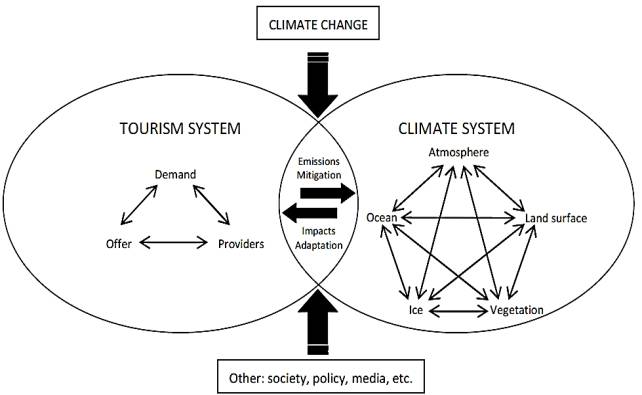
Fig. 1 A system approach to the tourism-climate
relationship
The tourism system influences the
climate system mainly by the emission of greenhouse gases, both directly as a
consequence of for example transport and indirectly through electricity uses [4].
Elements in the tourism system that
can affect the climate system include changes in tourists’ demand for certain
activities or destinations: for example, more or less demand for holidays using
planes as the means of transport significantly affect the carbon footprint of
tourism. Changes in the offer can also have an impact on the climate system as
destinations might choose to promote activities with greater or lesser energy
use than others. Finally, providers such as tour operators can influence
demand, promoting short or long-haul destinations, whereas transport providers
can invest in energy efficiency to reduce emissions related with the movement
of
tourists [4].
Climate change is one of the most serious threats to society, the economy and the environment. Changing climate and weather patterns are already changing travel demand and tourist flows, and this in turn is impacting tourism businesses, host communities and other related sectors such as agriculture, handicrafts and construction [5]. As temperatures rise, the attractiveness of many destinations will fade. Winter sports will become less viable in some locations. Coastal tourism is highly vulnerable to rising sea levels [1]. The changes which can be now observed are presented on the Fig. 2.













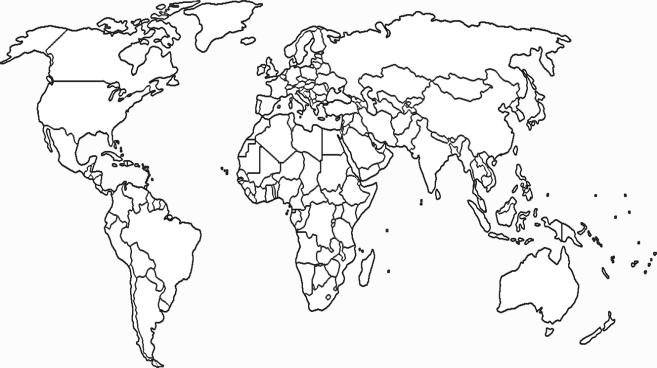
- Hotspot - Regional knowledge
gaps
|
WS = warmer summer |
LB = land biodiversity loss |
D = increase in disease outbreaks |
|
WW = warmer winter |
MB = marine biodiversity loss |
TCI = travel cost increase from mitigation policy |
|
SLR = sea level rise |
W = water scarcity |
EE = increase in extreme events |
|
PD = political destabilization |
|
|
Fig. 2 Tourism “Vulnerability” Hotspots [5]
Environmental responsibility also
makes economic sense – increased efficiency means greater profits and
reassurance of long-term sustainability for investors. In addition, demand for
responsible business is increasing as consumers are more conscious of the
environmental implications of travelling [5].
Climate change is a challenge requiring the
participation and support of all tourism stakeholders – it is only through
effective collaboration that the tourism sector will drive a global response to
climate change [5]. The analysis of vulnerability to climate change is a key
element in the development of current and future management strategies for
tourism destinations. It requires consistent and structured methodologies of
adaption [6].
The imperative for adaption to climate change has
advanced substantially within the scientific community and moved higher up the United
Nations Framework Convention on Climate Change (UNFCC) and national
policy agendas over the past decade. Adaption can be to contemporary climate
variability and extremes or to future climate change [6]. It can take many
forms: technical, policy, planning, legal, economic, institutional and
behavioral. Table 1 illustrates a diverse range of technological, managerial,
policy and behavioral adaptions that are currently used to deal with climate
variability at the business and destination levels [7].
Table 1
Portfolio of climate adaptions utilized by tourism stakeholders
|
Type of adaption |
Tourism operators/ businesses |
Tourism industry associations |
Governments and communities |
Financial sector (investors/insurance) |
|
1 |
2 |
3 |
4 |
5 |
|
Technical |
·
Snowmaking ·
Shore-protection structures, beach
nourishment ·
Rainwater-collection and
water-recycling system ·
Cyclone-proof building design and
structure |
· Pilot-test structural adaptions · Develop websites with practical information on adaption measures |
· Reservoirs and desalination plants ·
Shore-protection structures, beach
nourishment · Weather forecasting and early warning systems |
·
Develop and test advanced building
design or material (fire-hurricane resistant) standards for insurance ·
Provide information to customers |
Ending
of table 1
|
1 |
2 |
3 |
4 |
5 |
|
|
· Water conservation plans · Low-season closures |
·Use short-term seasonal forecast to plan marketing activities |
·
Fee structures for water ·
Coral bleaching response plan |
· Adjust insurance premiums or not renew insurance policies |
|
Managerial |
· Product and market diversification · Regional diversification in business operations · Redirect clients away from impacted destinations |
·Snow condition reports through media ·Training programs on climate change adaption ·Encourage environmental management with firms (e.g. via certification) |
·
Demand-side management programmes
(water, energy) ·
Convention/event interruption
insurance ·
Business subsides (e.g. insurance
or energy costs) |
·
Require use of advanced building
standards ·
Restrict lending to high-risk
business operations ·
Include social cost of carbon in
financing and credit risk assessments |
The availability of these adaption options will be
context-specific and will vary according to environmental characteristics,
government jurisdiction and tourism marketplace or business model. Climate
adaptations that are rarely undertaken in isolation as a single, discrete
action, but commonly involve multiple adaptations that are very specific to the
destination climate and its tourism products [7].
Unfortunately, this is a very vital question but at
the same time, we can’t say, that it is able to use this adaption system in
Ukraine. The solution to this problem can be the improvement of the ecotourism
legislative level. First of all, we should promulgate Ecotourism Law. Then, it
is necessary to establish a set of legal system of ecotourism and to strengthen
the supervision to the government in the implementation of ecotourism laws and
regulations. Therefore, we should strengthen the judiciary’s supervision to the
implementation of ecotourism law and play the overall efficiency of ecotourism
legal supervision.
Our knowledge and understanding of the ways by which
climate change is manifesting itself and will affect the environment and society
have improved substantially in recent years. That’s why government should
establish the system of ecotourism planning to weaken the external diseconomy
of ecotourism. Moreover, it should protect the ecological environment of
ecotourism for the survival and development, and at last promote the ecotourism
to develop continuously and healthy.
References
1. European Climate Foundation. [Electronic resource].
– Access mode : http://europeanclimate.org
2. Honey M. Ecotourism and Sustainable Development: Who Owns
Paradise? (Second ed.). – Washington DC:
Island Press, 2008. – 568 p.
3. Rind D. Complexity and climate / Rind D. – Science № 284, 1999. –
p. 105-107.
4. Survey on
the attitudes of Europeans towards tourism. Brussels: European Commission
[Electronic resource]. – Access mode: http://ec.europa.eu
5. World Tourism Organization UNWTO [Electronic
resource]. – Access mode: http://www.unwto.org
6. Scott D. Tourism
and Climate Change. Impacts, Mitigation and Adaptation / Scott D.H.,
Hall M., Colin M., Gössling S. – London: Routledge, 2012. – 464 p.
7. Scott D. Weather and Climate Information for Tourism
/ Scott D.,
Lemieux C. – White Paper commissioned for World Climate Conference 3, Geneva
and Madrid: World Meteorological Organization and United Nations World Tourism
Organization. – 2009.