Building and architecture /2. Architectural solutions
construction and reconstruction
Doctor of
architectural Sciences Ponomarenko EV.
Research Institute
of theory and history of architecture and town-planning of the Russian Academy
of architecture and construction Sciences, Branch
Office in Samara, Russia
Architecture of half-timbered
churches of southern Urals 18th-mid 19th century
Wooden timber frame building design was typical for
Western Europe. Such designs were common in secular architecture of the German
lands almost everywhere.
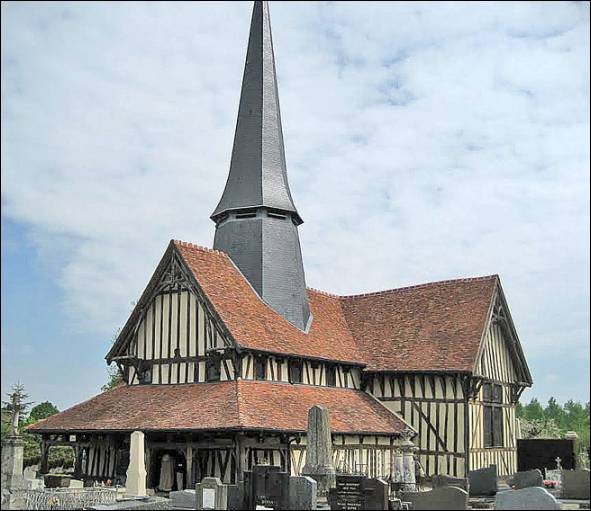
Figure 1. Church in Longsols
The traditions of the half-timbered houses were strong
in England and Normandy. In Germany and in France there are a few small
half-timbered churches. A typical example is the Church of Saint Giuliano and
Vlasii (church Saint-Julian et Saint-Blaise) in the village of Longsols in
Champagne (Figure 1).
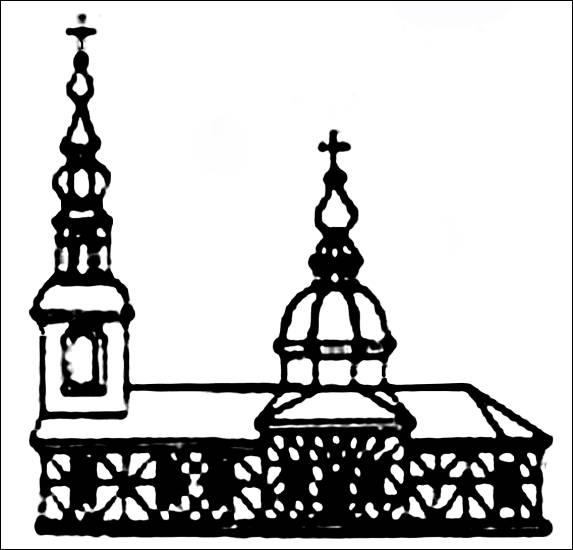
Figure 2. Trinity Church in
Orenburg
Half-timbered houses in Russia under the name «wattle
and daub» or «grid construction» has been known since the beginning of the 17th
century. The construction was wooden frame of pillars, beams and Struts, the
space between them filled with broken brick, stone, and other materials. In
addition, half-timbered buildings were erected in Moscow, for example, in the
seventies of the 17th century in the so-called Novoinozemskoj (German) Sloboda,
populated by immigrants from Western and Central Europe. But in Russia, it was
a small number of buildings with such construction.
The fortress-city of Orenburg was laid April 19, 1743
onwards. Its construction was completed before the onset of cold weather.
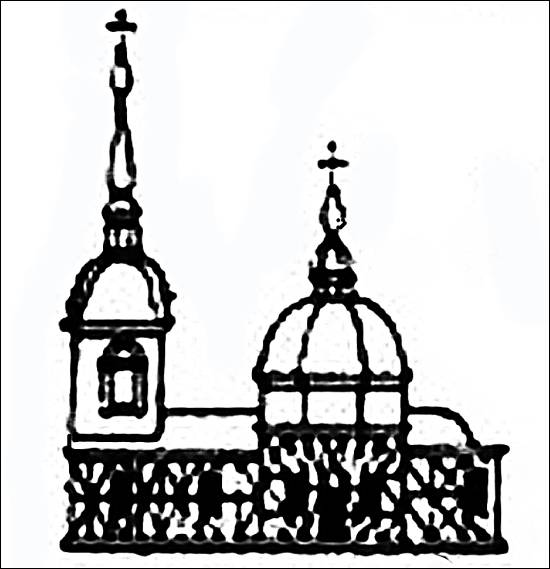
Figure 3. The Church of St.
Nicholas in Orenburg
Therefore, public buildings were built with a wooden
frame. In the steppe zone near the forest fortress under construction was not
enough, in addition the quality of the forests is not allowed to use for the
construction of large buildings. State-owned buildings were temporary. For
their construction did not require a large amount of construction wood.
The most interesting architectural buildings were the
Church. In the fortress of them built three (figures 2, 3). The first church
with frame of logs was erected in just five months. In September, it was
consecrated in the name of the assumption of the Blessed Virgin Mary.
Her image has not survived. What was this church can
only assume based on eyewitness descriptions. «Its width according to the
figures given in the explication of Orenburg 1751 was 4 sazhens, length 10
sazhen, which translated to modern measures of length, is 8.52 meters and 21.8
m respectively» [1, d. l., 2442, p. 1216].
In 1744, was built the Church of the Holy Trinity. This
church had a frame constructed of wood [2, d. 12, p. 4-5]. Length of Trinity
Church without apse stood at 17.8 meters, the width is 7.8 meters.
The Church of St. Nicholas also had a skeleton
structure of wood. It was a little less Trinity, as can be seen in archival
drawings. Drawings of these two churches were sent by Peter Ivanovich
Ryčkovym June 3, 1760 years Professor Miller, along with other plans
Orenburg buildings [2, d. 12, p. 3].
In general it can be stated that the architecture of
half-timbered church buildings of Orenburg was very distinctive and unusual in
the southern Urals. The composition of these temples was uniformity. Their
planning decisions had a four-part structure. The Bell Tower located above the
entrance porch. The central volume of the churches was addressed in two tiers. The
upper tier had no Windows. Porch, a refectory, and the lower tier of the
central level have the same width. Large pentagonal altars temples were
slightly narrower main volume. Each of them from the East was penetrated by
three Windows.
Literature:
1. Russian
State military-historical archive, p. 349, op. 27.
2. Russian
State archive of ancient documents, f. 192, op. 1.