Технические науки/
4. Транспорт
Assoc. Prof., Ph. D., A.
Cherepakha, Assoc. Prof., Ph. D., D. Kopytkov
Kharkov National Automobile
and Highway University
The model development to create
the virtual cargo delivery routes in the service region
The process to create the routes for delivery of
consumer goods is carried out by a transport service enterprise during its
operation under conditions of stochastic transport market macro system.
In the model of the route formation it is supposed to
allocate the parameters of transport services demand as input parameters, the
random effects of the environment are offered to be taken into account by simulation
of the random variables of the delivery process technical and operational
parameters [1, 2], but the result of the process are suggested to evaluate on
the service quality indicators (Figure 1).
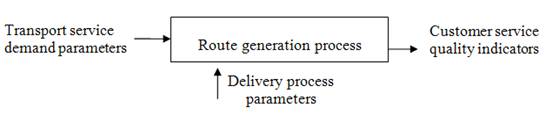
Figure 1 – Cybernetic model to create the delivery
routes of consumer goods
The cargo owners are the demand generating subjects of the consumer
goods market. Transport service customer when applying a request specifies the
source and destination of the goods, in this case, any of the cargo owners can
act both as a shipper and as a consignee. A number of shippers SFO can be defined as a set
of the following objects
 , (1)
, (1)
where FO1, FO2, …, FONFO – cargo owners functioning in the transport market
of consumer goods in the region;
NFO – number of cargo owners in the transport market.
The single cargo owner in the transport market model should be
characterized by the location parameters [3] and by the request flow to describe
its demand [4]
 , (2)
, (2)
where LFO – cargo owner location
characteristics;
DFO – request flow characteristics to describe the cargo
delivery demand.
Characteristics of the cargo owners geographical location is determined
by the coordinates with taking into account the scale [3]. However, if there
are some assumptions about the size of the grid for the service region,
characteristic of the geographic location can be estimated by the number of the
square [3]. For example, in paper [6] in order to describe the geographical
location the Location class has been
proposed to use. The Location class contains
the x and y fields giving the coordinates of the subject on a square grid,
the size of which is specified in the areaSize
entry.
Associating with the real geographical areas is done in the class with
the help of the city and region string fields, containing the
name of the locality and the
name of the region, respectively. By default, the name of the region is defined
as the number of the cell in the grid. To access the value of this entry the Area property is used that is of only the
accessory reader and is determined via x,
y and the areaSize. Thus, in accordance with the approach [4] to describe the
cargo owner geographical location is sufficient to specify the following set of
parameters
 , (3)
, (3)
where x, y – cargo owner grid
coordinates in the Cartesian system;
Nр – geographic specification level.
The article [3] states that the most important parameter of the
transport market model is the geographic specification level Nр. At the same time the geographic specification level
refers to the size of a square grid that defines the cargo owner coordinates
(the areaSize field in the Location class). The coordinates are
determined in accordance with the principle illustrated in Figure 2 (option for
Nр = 4). The cargo owner location is
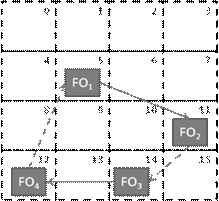
Figure 1 – Service region zoning based on the geographic
specification level
This approach to the cargo owner geographical location is sufficient to
describe a pair of parameters
 , (4)
, (4)
where k – number of
geographical segment of the territory, on which the cargo owner is located.
It should be noted that the approach (4) is only justified in the case
of a square grid.
These approaches to the characterization of the geographical segments
are interchangeable. Thus, geographical segment number can be determined from a
set of parameters (3) as follows
 . (5)
. (5)
Conversely, the x and y coordinates are determined from the
set of parameters (4) in the formulas
 , (6)
, (6)
 , (7)
, (7)
where  – integer part
of a.
– integer part
of a.
Since (3) and (4) are interchangeable, then, resulting
from the principle of minimizing the number of parameters of interest, the
preferred approach is to determine the characteristics of the cargo owners'
geographical location from a pair of the set of parameters .
In general, for a time horizon the demand for cargo
transport services is a set of requests
 , (8)
, (8)
where r1, r2, …, rNR – cargo owner requests for transport services;
NR – number of requests submitted during the period
under consideration.
The single request flow describing the demand for delivery of consumer
goods [5] should be found from the set of random variables, which are the
parameters of single transportation requests. At the same time as the main
parameters of the cargo lot, the delivery distance and the request interval were
considered [4, 5]. The study [6] was done to outline a zero mileage as a request
flow characteristic.
If there are a number of the cargo owners SFO, thus, there are the geographic location
characteristics of each cargo owner, provided that the transport network misalignment
ratio close to 1, the delivery distance can be determined from the consignor
and consignee geographical location parameters. So, in presence of LFO it is inappropriate to
consider the distance delivery as the request flow parameter. As a necessary
characteristic of the delivery request is an indication of the consignor FOS and consignee FOO, where  ,
,  and
and  , the distance of delivery can be estimated as follows
 , (9)
, (9)
,
where xS, yS и xO, yO – consignor's and consignee's
coordinates, respectively.
Obviously, the larger the value Nр and the closer the
value of the transport network misalignment factor to 1 (this assumption is
usually true in large cities), the formula (9) is more accurate.
The specifics of the consumer goods transportation is expressed in
respect of cargo owners’ needs to fulfill the delivery time. Therefore, one of
the main characteristics of the consumer goods delivery request is the shipment
time expected by the consignee. If it is possible to estimate the request
processing duration, then as the request characteristics an allowable service
waiting time can be taken, wherein
 , (10)
where  – consignee-expected shipment time, hours;
 – actual duration of the
transport service request, hours.
– actual duration of the
transport service request, hours.
Thus, the consumer goods transportation request is minimally described
by a set of the following parameters
 , (11)
where  – request reception time,
hours;
– request reception time,
hours;
 – cargo amount
specified in the request, tons.
– cargo amount
specified in the request, tons.
Except the above-stated parameters, the delivery requests have other
characteristics. However, within the routing task the set (11) is sufficient.
Transport service demand DFF
should be determined as a summation of cargo owners' needs
 . (12)
In the mathematical model to form the consumer goods delivery routes the
transport service demand is the incoming parameter and is described by a set of
characteristics
 , (13)
where  ,
,  ,
,  and
and  – random variables of the cargo amount, request
reception interval, critical waiting time for the request service and delivery
distance for the incoming flow of requests.
– random variables of the cargo amount, request
reception interval, critical waiting time for the request service and delivery
distance for the incoming flow of requests.
As criterions to take into account the impact of the environment on the delivery
routes formation process, in the model it is proposed to consider the main
technical and operational parameters as random variables – the 1 ton loading
and unloading time  , and the average road speed
  on the network.
The process of forming the delivery route is considered as the aggregation
of the incoming requests to the current point in the group so as to meet the
cargo owners’ requirements from one side, and to provide the most effective
option service of the incoming request flow – from the other side.
In this context, the delivery route ρ can be mathematically defined as the set of requests,
the satisfaction of which is provided by one vehicle during a carrying cycle
 , (14)
where r(1), r(1), …, r(Nρ)
– cargo owners’ requests to be serviced in the route delivery process;
Nρ – number of the requests served by one vehicle per
ride.
The processing quality of the delivery request flow is determined by
trouble-free operation of the hauler and can be estimated as the "number
of the requests served-to-the total number of the requests received" ratio
 , (15)
where R – cargo owners service
level;
nserv. – number of the requests serviced;
nΣ – total number of the requests in the flow.
For the set of the routes obtained the number of the requests serviced
can be calculated as the sum of capacities of all the sets ρ
 , (16)
where  – set capacity (number of elements);
Nr – number of the delivery routes obtained.
Accordingly, the total number of the requests in the flow can be found
as the sum of the set capacities DFO
that designates the cargo owners’ demand for the time range
 . (17)
Thus, the task to obtain the delivery routes for the consumer goods can
be formulated as a determination, in the course of client servicing, of such set
of the routes Sρ, for
which the value of cargo owners’ service level is optimal
 . (18)
The following restrictions must be taken into account when solving the
above-stated problem: a) request service time limitation: for the requests aggregated
into the route the time interval of their income should not exceed the
allowable waiting time for the request received earlier; b) delivery route
efficiency limitation: exceeding the dynamic load factor for a set of requests
aggregated into the route over the minimum acceptable dynamic load factor (this
value is determined by the ratio of market price to the transport service cost);
c) cargo amount limitation: there are vehicles used for the delivery, which are
of a carrying capacity value that is not less than the maximum possible value
of the cargo lot; if the cargo amount exceeds the carrying capacity, such lot
is considered as two or more lots with an cargo amount not exceeding the
vehicle carrying capacity.
In solving the problem (18) it is proposed to use the following
assumptions to the correctness of the mathematical statement: the transport
network density for a large city is so high that the misalignment factor is
close to 1; a set of shippers is final and cannot be changed during the
simulation period: the situation of new customers in the region as well as
their disappearance (company dissolution) is not considered; the model
presented assumes that the vehicles are of the same body type (vans) used to
carry the consumer goods; if the vehicles of different types of body are
required when generating the routes it is necessary to consider the flow of
requests for the appropriate nature of goods.
REFERENCES
1. Кельтон В. Имитационное моделирование: Пер. с англ. / В. Кельтон, А. Лоу. – СПб. : Питер, 2004. – 847 с.
2. Наумов В. С. Развитие научно-технологических основ
экспедиторского обслуживания на автомобильном транспорте: дис. … доктора техн.
наук: 05.22.01 / Наумов Виталий Сергеевич. – Харьков, 2013. – 352 с.
3. Наумов В. С.
Повышение эффективности информационных систем управления процессами транспортно-экспедиторского
обслуживания / В. С. Наумов, О. А. Скорик, А. А. Васютина // Вісник
Севастопольського нац. техн. ун-ту: Зб. наук. пр. –2013. – Вип. 143. – С. 211 –
214.
4. Нефедов Н. А. Относительная эффективность развозочных
маршрутов / Н. А. Нефедов
// Автомоб. трансп.: Сб. науч. тр. – 2002. – Вып. 10 – С. 82 – 84.
5. Naumov V. An approach to
modeling of demand on freight forwarding services / V. Naumov, Ie. Nagornyi
// Trip Modelling and Demand Forecasting. – Kraków, 2014. – Vol. 1(103). – P. 267 – 277.
6. Наумов В. С. Развитие научно-технологических основ
экспедиторского обслуживания на автомобильном транспорте: дис. … доктора техн.
наук: 05.22.01 / Наумов Виталий Сергеевич. – Харьков, 2013. – 352 с.