Pavlova A.A.,
Gvozdeva T.V., Koltsova E.A.
Ivanovo
State Power Engineering University, Russia
Development of the Process Maintenance for the Company's
Information System
This
article examines the sustainability of the company's information system. The
information system is one of the important information sources that supports
job of the whole company. Development of the information system consists of
stages and tasks that are distributed between the project team members. The
effectiveness of the project team depends on timely information support. The research
purpose is to increase the effectiveness of the sustainabilityof company's
information system such as information security, relevance, integrality and timeliness
of the information support.
For
this, several objectives are to be attained, namely organisation of the project
information resources, organisation access to information resources for the
project team, and automated support for technical documentation of the project
solutions.
To
achieve the goal, different methods of data analysis are employed.These methods
allow selecting accurate data for further development of the system. Sources
used are both international and Russian standards and acts.
Firstly,
let us look at the role of the maintenance in the life cycle of the information
system. The maintenance is the process of information system improvement, which
is caused by the need ( ) of the new information resources (
 ). This need arises from the changes in internal or external environment of
the company or from the problems (
). This need arises from the changes in internal or external environment of
the company or from the problems ( ) of information system exploitation. The maintenance process can be
represented by a set of variables:
) of information system exploitation. The maintenance process can be
represented by a set of variables:
|
|
(1) |

where  ,
,  the variables value is represented in Figure 1.
The resources are needed for
improvement of the information system (2):
|
|
(2) |
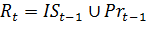
where is the existing
information system (3) and
is the existing
information system (3) and  – information
technology profile of the company (4).
– information
technology profile of the company (4).
|
|
(3) |

where stands for specifications
on the information system
stands for specifications
on the information system  .
.
|
|
(4) |
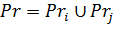
where - requirements for the architecture and
structure of information system,
- requirements for the architecture and
structure of information system,  – decisions on
choice of methodology and technology creation, maintenance and improvement to
the information system. The requirements are presented in the form of external
normative documents (NDe) and specifications for the information system that
are designed in the process improvement
– decisions on
choice of methodology and technology creation, maintenance and improvement to
the information system. The requirements are presented in the form of external
normative documents (NDe) and specifications for the information system that
are designed in the process improvement  (5).
(5).
|
|
(5) |
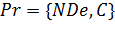
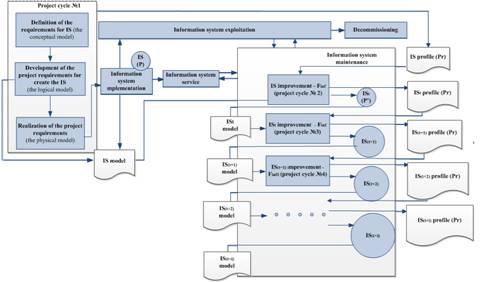
Figure 1.The life cycle of information system
Next, there is the issue of providing the information resources for
maintenance. This requires the record of information technology profile of the
company, the technical and organisational documentation of the project
information system and compliance with the integrity and consistency of the
technical documentation. The technical solutions are to be presented as a set
of the technical records that should be described by the unified rules. This allows
repeated use of the records while creating the output technical documentation
of the project.
Let us now turn to the possible
solution. Document Information Typing Architecture (DITA) is an XML data model
for authoring and publishing technical documentation.This provides the unification
of the technical records and structuring of the technical solutions. The system
of the project management is needed for organising access to technical
solutions, as well as records and requirements in accordance with the project
tasks. Figure 2 which shows the architecture of the information system.
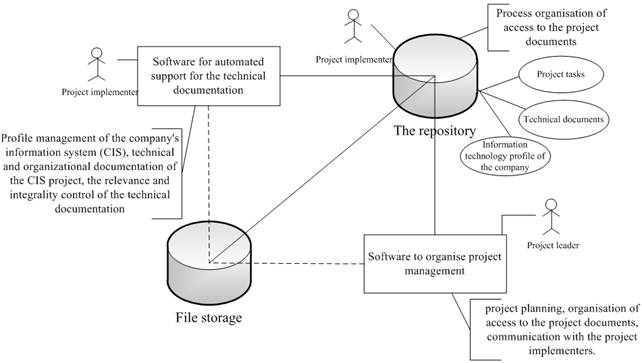 Figure 2.The architecture of the information system.
To summarise, the encoding
system of the records and project documents has been developed. This allows the
project implementer to use all project documents in accordance with the project
stage. Further, the system of automatic documentation could be employed with
the configuration in accordance with the project phases.