Bys S.
Ensuring of spring seal ring dimensional stability
Annotation: Rolling bits’ high
durability is provided by their support protection from abrasive by means of
steel rings instalment with guaranteed gap in string ring lock. Due to abrasive and hydrogen wear as
well as ring’s external surface grip the gap increase takes place which causes
joint uncovering and abrasive parts ingress into rolling bit support and,
finally, bearing unit workability failure.
The research of friction
conformity and string steel wear in different structural situation in the air
and hydrogen media has been carried out in the work. An attempt has been made
to determine main indicators of constructional durability and wear resistance of
steel. The string
steel optimal structure has been determined that provides high wear resistance,
durability and reliability at work.
At present oil and gas wells are predominantly drilled with rolling bits
of different types, which are able to work in different conditions. Long-term
observations and exploitation experience showed that the absence of failures
and workability are mainly determined by wear resistance and constructive
peculiarities of support components, their production and exploitation quality
[1, 2, 4, 5, 11]. In most cases (up to 70%) bit supports wear leaves behind
cutting structures wear and is the major reason for bits substitution. The
support components are at very complicated exploitation conditions. On the one
hand they are subjected to wear and grip, and on the other they are permanently
contacting with hydrogenous working media as well as ambient media (water and hydrosulphuric solutions). Encapsulation is of great
importance for supports’ durability rise. For rolling bits’ open support
protection from abrasive medium a string ring is used. The duration of its
protective action depends, first of all, on the constructively correct choice
of its geometrical dimensions – slit width in the range of 0.1…0.2 mm. The
string ring contacts the milling cutter raked surface with its external
surface, and slides on end surface inside journal furrow. At the same time the
saturation of ring material with hydrogen takes place, which, in turn, causes
hydrogen wear advent, i.e. total wear increase.
So, the aim of the research was 60C2 spring steel friction and wear
regularities determination (С - 0,57...0,65%; Si - 1,5...2,00%; Mn - 0,60...0,90%; Cr £
0,30%; Ni £
0,25%) with different structural conditions in the air and hydrogenous medium.
Mechanical characteristics of 60С2 steel after hardening and tempering
are given in table 1 [14].
Table 1 - Mechanical characteristics
of 60С2 steel after hardening and tempering
|
Tempering
temperature, °С. |
Structural
condition |
sв, МPа. |
s0,2, МPа. |
d, %. |
y, %. |
HRC, МPа. |
КІс, МPа×Öm. |
|
200 |
LM+RА |
2510 |
2230 |
0,53 |
0,41 |
590 |
22,58 |
|
300 |
М |
2470 |
2110 |
1,28 |
11,9 |
550 |
29,03 |
|
400 |
Т |
2180 |
1970 |
2,42 |
26,0 |
500 |
42,58 |
|
500 |
Т+S |
1580 |
1380 |
2,95 |
34,1 |
460 |
54,52 |
LM
- low-temperature tempered martensite; RA - retained
austenite; M – martensite; T – troostite;
S – soorbite.
The researched steel structure, obtained as a result of hardening and
low-temperature tempering, is a typical lath martensite
with high dislocation density, containing about 8% RA. After medium-temperature
tempering – dispersible structure troostite plus soorbite.
Tribological
characteristics of the researched steel was estimated on the basis of analysis
of controlled variable dependencies (wear intensity, temperature in the
friction zone, friction coefficient) on veriable
factors (slip velocity and specific load) fig.1.
|
|
|
Fig.
1 - Dependencies of 60C2 steel wear intensity (1,2) and friction slip
coefficient (3,4) with different structural condition at pressure of P=10MPa for different velocities: a - V =
0,1 m/s; b - 0,2 m/s; c - 0,3 m/s; d - 0,4 m/s (1, 3 – in the air; 2, 4 – in
hydrogen). |
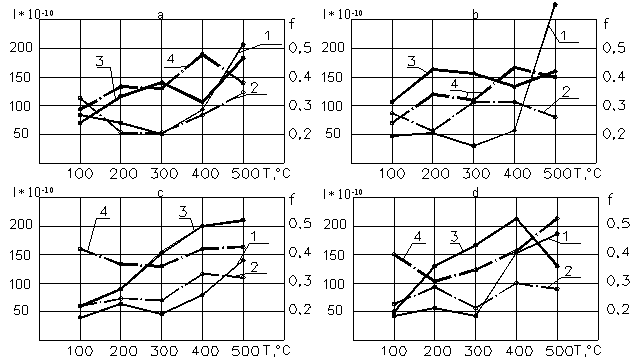
Fig. 1 shows the fact that tribological
characteristics of patterns being researched in the air and hydrogenous medium
differ greatly. Differences can be observed at friction slide speed and pattern
clamp pressure. Curves analysis, given in fig.1 showed that at certain
conditions wear intensity and friction coefficients decrease for patterns in
hydrogenous medium in comparison with ones, being researched in the air and
vice versa. Minimal wear intensity and friction coefficient values at certain
conditions of the research (friction slip speed, pattern clamp pressure,
structural condition) can also be noticed. It’s necessary to note the fact that
relative slide speed being rised above 0.3 m/s as
well as tempering temperature being increased above 300°С
make tribological situation of the researched 60C2
steel with the rider unable to work due to metal of friction surfaces grip and,
as a consequence, rapid mechanical friction of contact surfaces takes place. It
being noticed that the disastrous wear is observed from the very beginning of
work.
Microstructure analysis of friction surfaces of the steels researched
with different initial structural condition confirms grip focuses presence on
their surface.
The least wear intensity value is observed at friction slip speed of 0.2
m/s and pattern clamp pressure of 10 MPa for patterns
with tempering structure of 300°С, whereas
minimum friction coefficient value has been noticed to be at friction slip
speed of 0.3 m/s and pressure of 10 MPa for
low-temperature tempered martensite. It’s necessary
to be noticed that in the friction slip speed and pressures range, being researched,
the patterns tempered at 300°С have the
lowest wear intensity at probation in the air (fig.1, curves 1).
The results of research of 60C2 steel patterns’ wear intensity
dependency in the air and with different structural condition given in fig. 1
indicate the fact that the curves have qualitatively similar character and
differ in quantity only. Actually, at constant wear intensity is going down to
certain minimal value with friction slip speed increase, but then is going up
with further speed increase. Moreover, the tendency is typical for all patterns
with different structural condition. The dependency character is unchangeable
with pattern clamp pressure increase.
Patterns hydrogen pickup changes wear intensity situation, but the
patterns with tempering structure of 300°С
have the lowest wear intensity, practically for all conditions of research
(fig. 1, curves 3).
Patterns hydrogen pickup leads not only to qualitative, but qualitative
change of wear intensity character of 60C2 steel in comparison with patterns
researched in the air. In addition, steel wear intensity increase in
temperature range of 100-300°С for all
speed and pressure ranges takes place. This can be explained by the fact that
materials’ hydrogenation with low-temperature martensite
structure causes greater embrittlement of the given
materials and, correspondingly, their intensive wear [3, 6, 12, 15].
Analysing friction
surfaces, it has been noted the secondary structures presence with residual
phase and structural changes on metal surface layers which had been caused by
processes, accompanying friction and wear. Such interaction products are the
third phase and have a screening effect, and wear process itself is a creation
and destruction alternation of the protective secondary structures [9, 10].
|
|
|
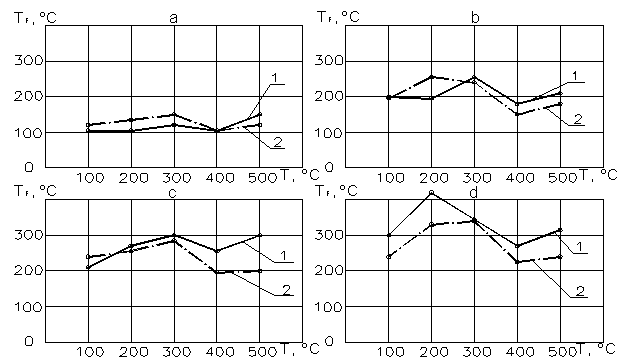
Fig.
2 - Dependency of contact temperature T from structural condition of 60C2
steel and testing rate (P=10MPa): а - V = 0,1 m/s; б - 0,2 m/s; в - 0,3 m/s; г - 0,4 m/s(1 – in
the air; 2 – in hydrogen). |
Increasing tempering temperature of 60C2 steel up to 400°С,
the decrease of patterns’ wear intensity in hydrogen medium is observed, and,
in some cases, the patterns’ wear intensity is found lower than those
researched in the air. Particular fact is necessary to be noted that wear
intensity of the patterns with tempering structure of 500°С
and higher (the research of the patterns with tempering structure of 650°С
was also carried out) in hydrogen medium is lower than in the air for all speed
and clamp pressure ranges. In this case, obviously, hydrogen braking of moving
dislocations takes place, which causes materials’ wear resistance increase.
This suggestion is verified in several works [7, 8, 13, 16, 17]. Moving
dislocations’ hydrogen braking occurs due to Kottrell’s
atmosphere creation, which hinder dislocations’ relocation in metal crystal
lattice. It’s obviously that hydrogen, which is present at tension imposition,
diffuses with active slip surfaces in the result of slip friction and forms
atmospheres that hinder dislocations’ migration and hardening of the material
takes place.
|
|
|
Fig.
3 - Dependency of contact temperature TF from slip velocity of
60C2 steel with different structural condition (P=10MPa): a – tempering
temperature of 200°C; b - 300°С; c - 400°С; d - 500°С
(1 – in the air; 2 – in hydrogen). |
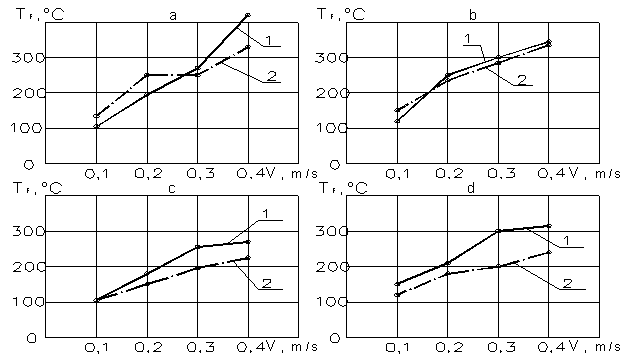
The temperatures in friction zone, depending on experiment’s condition,
have been researched (fig.2, 3). For the patterns, researched in the air and
hydrogen medium, temperature in the friction zone increases with simultaneous
both slip friction speed and pressure increase. Moreover, low-tempered martensite, being transited to soorbite
and slip friction speed being increased, the decrease of temperature in the
patterns’ friction zone in hydrogen medium has been noticed. It should be also
noticed that for the patterns tested both in the air and hydrogen medium with
tempering structure of 400°С the lowest
temperature in the friction zone for whole loading-speed range is observed,
whereas for the patterns with tempering structure of 300°С
it is the highest.
Analyzing 60C2 steel friction slip coefficient dependency with different
structural condition for all criteria of research (fig. 1), one can notice,
that the dependency character of the patterns, researched in the air and
hydrogenous medium, is different. It must be noticed that friction coefficient
of hydrogenated patterns is less than non-hydrogenated ones at friction slip
speed of 0.2 m/s. Similar regularity is also observed at patterns clamp
pressure increase.
Factual research of friction surfaces testifies the latter to be covered
with protective skins of the secondary structures. Moreover, the secondary
structures’ qualitative difference on the friction surfaces, researched in the
air and hydrogenous medium, can be clearly visible. The secondary structures,
obtained at patterns research in hydrogenous medium, are light, whereas the
ones obtained at research in the air are dark.
Possibility of materials’ wear resistance prediction on the basis of
standard mechanical properties characteristics and destruction tenacity
criterion (KIc) is found to be of special
interest. So, comparative evaluation of ultimate stress limit (sВ),
hardness (HRC), fracture toughness (KIc)
and wear intensity (I) dependence of 60С2 steel from it’s structural condition
has been carried out (fig. 4). It has been determined that temperature being
increased, ultimate stress and hardness limit decreases, whereas destruction
tenacity criterion increases. Material’s wear intensity goes down at first, but
then goes up. In our opinion, such a trend of wear intensity curve can be
explained by the fact that fracture toughness value increase raises it’s wear
resistance, though durability values decrease (up to tempering structure of
300-400°С).
|
|
|
Fig.
4 Dependencies
of constructive durability and wear resistance values from 60C2 steel
structural condition. |
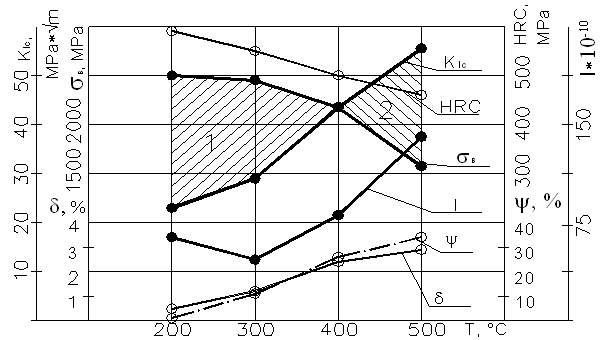
Further tempering temperature increase though causes destruction of
material and durability characteristics decline, but wear intensity increases.
On the basis of that, we can make a conclusion that depending on material’s
structure there may be two ways of high stress relaxation, which takes place in
friction contact zone of two surfaces: plastic deformation (which takes place
in materials with low yield stress and high fracture toughness) or destruction
(at considerable alloy hardening defects of submicrostructure
are locked, plastic deformation is minimal and relaxation is realised due to new surfaces creation – crack growth). For
60C2 steel with tempering structure up to 400°С
relaxation of tensions, occurring in surface layers of materials, being rubbed,
is obviously carried out by fragile destruction. At tempering temperature
increase up to 400°С
relaxation mechanism change takes place. Besides, one cannot but admit cymbate dependency character of wear intensity (I) and
fracture toughness (KIc) (fig. 4), which
denotes two characteristics bond. So, to impart high wear resistant values it’s
necessary not only to increase it’s yield stress, but also destruction tenacity
criteria (KIc), where destruction
tenacity’s share is obviously dominant.
Thus, the research let us recommend 60C2 spring steel with martensite tempering structure (tempering temperature of
300°С)
for rolling bits’ support protection from abrasive parts ingress
and their rapid wear, which provides minimal wear intensity values.
References.
1. Абдулин Р.А., Сурикова О.А.
Применение долот новых типов за рубежом. - М.: ВНИИОЭНГ, 1987. - (Обзор. информ.. Сер. "Бурение"). - 18 с.
2. Абрамсон
М.Г., Познякова Л.А., Кочуков В.В. Качество и
надёжность шарашечных долот. Исследование их
показателей // Тр. ВНИИБТ.
3. Водородоустойчивость
стали. Арчаков Ю.И. Серия "Достижения отечественного
металловедения". М., Металлургия, 1978. - 152 с.
4. Беликов В.Г., Посташ
С.А. Рациональная отработка и зносостойкость
шарошечных долот. - М.: Недра,1972. - 161 с.
5. Виноградов В.Н. и др.
Долговечность буровых долот. - М.: Недра, 1977. - 256 с.
6. Гаркунов Д.Н. Триботехника.
- М. : Машиностроение, 1985. - 424 с.
7. Колачёв
Б.А., Заика В.И., Фишгойт А.В. Влияние водорода на
предел текучести стального проката в период проведения сдаточных испытаний. -
Физ.-хим. механика материалов, 1984, №2, с.25-28.
8. Корчагин А.П. О влиянии водорода
на предел текучести стали. - Изв. АН СССР. Сер.
Металлы, 1973, №5, с.202-203.
9. Костецкий
Б.И., Носовский И.Г. Износостойкость и антифрикционность деталей машин.-Киев.:
Техника, 1965.- 206 с.
10. Крагельский
И.В., Михин Н.М. Узлы трения машин. - М.:
Машиностроение, 1984. - 280 с.
11. Анализ опор зарубежных долот:
Обзорная информация. // Масленников И.К. Сер.: Машины и нефтяное оборудование.
- М.: ВНИИОЭНГ, 1975. - 100 с.
12. Защита от водородного износа в
узлах трения / Под ред. А.А. Полякова. - М. : Машиностроение, 1980. - 135 с.
13. Попов К.В., Хворостухина
М.А. Действие водорода на малоуглеродистую сталь при катодной поляризации её в
электролите. - Изв. Сиб. отд-ния АН СССР, 1958, №8, с.39-43.
14. Рахштадт
А.Г. Пружинные стали и сплавы. - М. : Металлургия, 1982. - 400 с.
15. Швед М.М. Изменение
эксплуатационных свойств железа и стали под влиянием водорода. - Киев.: Наук.думка, 1985. - 120 с.
16. Швед М.М., Яремченко
Н.Я., Билый Л.М. Влияние водорода на прочность и характер разрушения стали с
различной концентрацией углерода. - Физ.-хим. механика материалов, 1976, №5,
с.14-15.
17. Янчишин Ф.П., Яремченко
Н.Я., Швед М.М. Влияние водорода на предел текучести и кратковременную
прочность железа различной дисперстности. - Физ.-хим.
механика материалов, 1974, №3, с.98-100.