Filippova
I.V.
Financial
University under the Government of the Russian Federation
Shmigol
N.N.
Financial
University under the Government of the Russian Federation
Candidate
of Engineering Sciences, full professor Nevezhin V.P.
Financial
University under the Government of the Russian Federation
COMPARATIVE ANALYSIS OF THE HUMAN DEVELOPMENT
INDEX
The technological processes
for comparing the standard of living and the development of the society were
elaborated quite a long time ago. Various indices were introduced as the
criteria of the standard of living, such as the standard of living of the
population estimated based on a set of various indices: mortality rate, birth
rate, income rate and many others. Most indices evaluated the quality of life
based on economical characteristics without taking into account the specifics
of development of the countries. The human development index became a more
sensitive indicator reflecting the differences between developed, developing
and underdeveloped countries.
The questions devoted to
this problem have been looked into quite profoundly in the literature of recent
years [1] [2]. In [2], the author carries the technologies of the index
measurement over to the regions of the Russian Federation applying this index
to divide the Russian Federation geographically by the levels of potential
human development.
We intend to contemplate the
same principle of division, but as the objects of analysis the two opposing
camps of Christianity and Islamic doctrine are to be considered.
Let’s start traversing the
problem by introducing the main notion of interest.
Human Development Index (HDI) is a composite
indicator used to characterize human development in the countries and regions
of the world.
It is
calculated yearly by the experts of the United Nations Development Programmer
(UNDP) in collaboration with the group of independent international experts,
who use the results obtained by the national research centers as well as the
international data.
The research resulted in issuance of a special
series of the UNDP Development Reports. The concept of human development
elaborated by the UNDP is the most famous product of the organization.
For the first time the UNDP introduced the
results of its research in 1990, in the process of the research, the notion of
human development was formulated as follows. “Human development is a process of
broadening the choice range. The most important elements of choice are living a
long healthy life, getting an education and having a decent standard of living.
Additional elements of the choice include political freedom, guaranteed human
rights and self-respect”.
The concept
of human development replaced the theories based on economic development which
used the gross national product as the indicators, and for which a human was
merely a driving force of economic growth.
Year 2010
was crucial in the understanding of this notion, as it underwent certain
transformations. In the opinion of the authors of the UNDP, the definition of
human development as broadening of choice range is foundational, but
insufficient. Human development implies the conservation of positive results
for a long time and resistance to the processes that lead to human oppression
and increase structural inequality.
The new defining principles can be formulated
in the following directions: social justice, stability, and respect for human
rights.
Finally, at the moment, the level of the index
is defined by the three components.
- welfare: broadening of real freedoms of a
person so that they could prosper;
- broadening of rights and possibilities, as
well as agency: the capacity of an individual and of groups to act and to
obtain valuable results;
- justice: promotion of social justice,
providing stability of results over time, respect for human rights and other
societal ends;
This research on Christian and Islamic countries was based on these
three components.
The analysis was carried out based on the following factors:
- longevity and health;
- knowledge;
- decent standard of living.
Each factor is defined by its own values.
For instance, longevity and health depend on life expectancy, birth and
death rate and the level of medicine, but not only that, as the level of availability
of medicine for all social groups should be taken into consideration. The
knowledge is defined by years of schooling and the level of education. A decent
standard of living, as before, is defined by the gross national product.
The results of analytics on Christian countries are depicted in Table 1.
Table 1
The Values of Human
Development Index and the Contributing Factors in Christian Countries [3]
|
Name |
HDI |
Life expectancy |
Standard of living |
GNI |
Employment
level |
Population,
mln. |
|
Austria |
0,881 |
81,14 |
10,83 |
42
929,64 |
58,9 |
8,5 |
|
Andorra |
0,83 |
81,17 |
10,38 |
40597,12 |
50,1 |
0,08 |
|
Argentina |
0,808 |
76,31 |
9,83 |
17296,7 |
62,5 |
41,45 |
|
Belgium |
0,881 |
80,55 |
10,87 |
39470,9 |
53 |
11,1 |
|
Bulgaria |
0,777 |
73,55 |
10,57 |
15401,58 |
50,3 |
7,22 |
|
Bolivia |
0,667 |
67,26 |
9,21 |
5551,94 |
78,5 |
10,67 |
|
Brazil |
0,744 |
73,94 |
7,18 |
14274,77 |
68,4 |
200,36 |
|
Great
Britain |
0,892 |
80,55 |
12,31 |
35001,63 |
59,1 |
63,14 |
|
Hungary |
0,818 |
74,62 |
11,31 |
21239,13 |
50,7 |
9,95 |
|
Germany |
0,911 |
80,74 |
12,95 |
43048,68 |
58 |
82,73 |
|
Greece |
0,853 |
80,77 |
10,16 |
24657,99 |
43,8 |
11,13 |
|
Denmark |
0,9 |
79,39 |
12,1 |
42880,28 |
59,2 |
5,62 |
|
Ireland |
0,899 |
80,71 |
11,61 |
33414,4 |
55,6 |
4,63 |
|
Iceland |
0,895 |
82,09 |
10,41 |
35116,46 |
71,2 |
0,33 |
|
Spain |
0,869 |
82,1 |
9,58 |
30561,47 |
47,9 |
46,93 |
|
Cyprus |
0,845 |
79,84 |
11,62 |
26770,73 |
62,4 |
1,14 |
|
Liechtenstein |
0,889 |
79,89 |
10,26 |
87085,09 |
54,7 |
0,04 |
|
Luxembourg |
0,881 |
80,55 |
11,28 |
58694,72 |
60,5 |
0,53 |
|
Malta |
0,829 |
79,75 |
9,89 |
27022,18 |
49,9 |
0,43 |
|
Mexico |
0,756 |
77,5 |
8,47 |
15854,09 |
63,9 |
122,33 |
|
Netherlands |
0,915 |
81,04 |
11,89 |
42397,2 |
61 |
16,76 |
|
Norway |
0,944 |
81,5 |
12,63 |
63909,45 |
65,5 |
5,04 |
|
Peru |
0,737 |
74,83 |
9,01 |
11279,88 |
78,9 |
30,38 |
|
Portugal |
0,822 |
79,95 |
8,25 |
24130,07 |
55,5 |
10,61 |
|
Philippines |
0,66 |
68,7 |
8,8 |
6381,44 |
69,3 |
98,39 |
|
Finland |
0,879 |
80,54 |
10,29 |
37366,07 |
57,6 |
5,43 |
|
France |
0,884 |
81,81 |
11,13 |
36628,78 |
54,4 |
64,29 |
|
Switzerland |
0,917 |
82,6 |
12,24 |
53761,92 |
65,9 |
8,08 |
|
Sweden |
0,898 |
81,82 |
11,74 |
43201,35 |
62,7 |
9,57 |
|
Ecuador |
0,711 |
76,47 |
7,59 |
9997,96 |
72,2 |
15,74 |
Since the estimation of the
human development index is based on the factors which are connected in
real-world contexts, we have conducted the evaluation of such connection based
on correlation analysis.
The data obtained permits to
believe that longevity and health factor (r = 0,891) is the most essential of
HDI definitions. It is not for nothing that health has been considered the
primary virtue of a person, and developed countries, such as Switzerland,
France, Germany, Great Britain and others, with the value of life expectancy
over 80 years, give full attention to health care and have the highest rates in
this area.
The influence of gross
national product on the index value stands out for its level of significance.
As expected, a higher level of income in a country raises this index, which is
easy to see in small countries with intensive development level, for instance,
in Liechtenstein, Andorra.
The tendencies for growth of living standard for small states are seen
by considering the inverse relationship of population size to index number.
However, this connection is weak, and additional investigations are necessary
in order to make actual conclusions.
The remarkable fact is that the employment level in Christian countries
hasn't demonstrated a considerable dependence on HDI.
Other aspects prevail in Islamic countries, see Table 2.
Table 2
The Values of Human
Development Index and the Contributing Factors in Islamic Countries [3]
|
Country |
HDI |
Life
expectancy |
Level of
education |
GNI |
Employment
level |
Population,
mln |
|
Afghanistan |
0,468 |
60,95 |
3,21 |
1903,66 |
52,2 |
30,55 |
|
Bangladesh |
0,558 |
70,66 |
5,07 |
2713,09 |
73,4 |
156,59 |
|
Brunei |
0,852 |
78,55 |
8,68 |
70883,48 |
68,1 |
0,42 |
|
Gambia |
0,441 |
58,82 |
2,79 |
1557,31 |
80,4 |
1,85 |
|
Guinea |
0,392 |
56,11 |
1,58 |
1141,86 |
79 |
11,75 |
|
Egypt |
0,682 |
71,16 |
6,37 |
10399,77 |
51,2 |
82,06 |
|
Indonesia |
0,684 |
70,83 |
7,51 |
8970,35 |
70,7 |
249,87 |
|
Jordan |
0,745 |
73,85 |
9,91 |
11337,03 |
44,3 |
7,27 |
|
Iraq |
0,642 |
69,42 |
5,58 |
14007,32 |
44 |
33,77 |
|
Iran |
0,749 |
74,05 |
7,84 |
13450,7 |
44,7 |
77,45 |
|
Yemen |
0,5 |
63,11 |
2,51 |
3945,18 |
50 |
24,41 |
|
Qatar |
0,851 |
78,37 |
9,07 |
119,029.12 |
89,8 |
2,17 |
|
Kuwait |
0,814 |
74,29 |
7,21 |
85,819.68 |
76,3 |
3,37 |
|
Libya |
0,784 |
75,33 |
7,52 |
21,665.64 |
55,4 |
6,2 |
|
Malaysia |
0,773 |
75,02 |
9,53 |
21,823.93 |
65,5 |
29,72 |
|
Mali |
0,407 |
55,03 |
1,99 |
1499,38 |
65,5 |
15,3 |
|
Maldives |
0,698 |
77,92 |
5,84 |
10073,97 |
67,4 |
0,35 |
|
Morocco |
0,617 |
70,94 |
4,37 |
6905,18 |
51,5 |
33,01 |
|
Niger |
0,337 |
58,41 |
1,44 |
872,53 |
66 |
17,83 |
|
Nigeria |
0,504 |
52,51 |
5,25 |
5353,38 |
61,7 |
173,62 |
|
United
Arab Emirates |
0,827 |
76,84 |
9,09 |
58068,22 |
84,4 |
9,35 |
|
Oman |
0,783 |
76,55 |
6,77 |
42191,36 |
67,6 |
3,63 |
|
Pakistan |
0,537 |
66,57 |
4,73 |
4651,64 |
56,3 |
182,14 |
|
Saudi
Arabia |
0,836 |
75,48 |
8,7 |
52109,36 |
60,4 |
28,83 |
|
Senegal |
0,485 |
63,45 |
4,45 |
2169,26 |
75,5 |
14,13 |
|
Tanzania |
0,488 |
61,53 |
5,11 |
1702,12 |
91,9 |
49,25 |
|
Tunisia |
0,721 |
75,87 |
6,48 |
10439,7 |
47,1 |
11 |
|
Turkey |
0,759 |
75,26 |
7,56 |
18391,4 |
48,5 |
74,93 |
|
Chad |
0,372 |
51,18 |
1,51 |
1621,77 |
76,7 |
12,83 |
|
Ethiopia |
0,435 |
63,64 |
2,41 |
1302,64 |
84,1 |
94,1 |
The pattern in Islamic
countries is totally different.
Firstly, the average values in these countries are not to be compared
with the listed indices for Christian countries owing to a higher standard of
living.
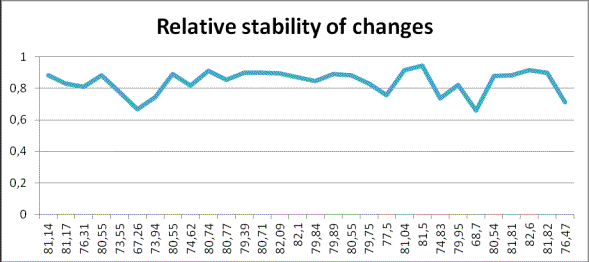
Figure 1- The graph
of variance of the index based on life expectancy
Secondly, Islamic countries
show a drastic differentiation between Qatar, UAE with the indices over 0.82
and Afghanistan with the index below 0.45.
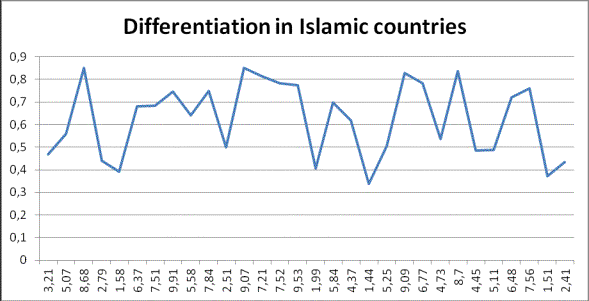
Figure 2 -The
graph of variance of the index based on the level of education
The connection between
measurements and the index in Islamic countries demonstrates similar tendencies
towards longevity.
A strong connection between longevity and the
index of human development demonstrates that the progress of medicine and the
health care systems in most Islamic countries hasn't reached an adequate level
yet. However, the existence of a close connection of longevity as an index in
both Christian and Islamic parts of the world highlights this criterion in the
evaluation of the HDI.
A
particular influence of the level of education on the estimate for Islamic
countries (r = 0,938) is a reflection of difficulties with acquiring education
and the radical change in the status of people who get education in Islamic
countries. In Fig.2, the movement of human development index in connection with
the level of education can be observed clearly.
At first
sight, the connection between the gross national product and the human
development index is not so evident in Islamic world. But such a weak
association is explained by the small volume of the sample we took, abrupt
jumps and the irregularity of distribution in Islamic countries.
The latter
estimates demonstrate the same weak association of population size and human
development index as for Christian countries.
It's
possible to forecast the tendencies of future changes in HDI, as the movement
of the estimates is insignificant and the influence of the factors is
unambiguous. Without any special commotions, in the current situation,
Christian countries will maintain the index on a high level thanks to the
development of healthcare and the overall economic level.
It doesn't
seem possible to forecast the future movement of estimates for Islamic
countries because of a highly unstable behavior of underdeveloped countries
with a small share in the general mass of population of Islamic countries.
It is fair
to say conclusively that the basis for calculating the human development index
is still the life expectancy factor, which by itself defines quite well the
level of the development of a society. The analysis on Christian and Islamic
countries has merely proven it.
The
dependence of HDI is strongly associated with the level of education for both Islamic
and Christian countries. Probably, the level of education in all countries
influences heavily the income of the population and, as a result, the life
expectancy.
Therefore,
it may be noted that the education factor is related to the human development
index in a more complex way due to its direct influence on the life expectancy
of population.
In the
course of investigations, a strong relationship between the gross national
income and the human development index was elicited. In this aspect, no distinctions
between countries with different religious preferences were found.
Of special
note is the fact that the index of employment, usually considered as one of the
factors influencing the economic indicators of a country doesn't influence the
index of human development in Christian countries. It is easily explained by
the complex and multilevel social policy of the developed countries of Europe.
At present, a citizen of Germany doesn't necessarily need to work to maintain a
high enough standard of living. This level is provided for him by the social
securities.
Another
pattern is demonstrated in Islamic countries – the employment level there does
not influence the Index of Human Development due to the two following reasons:
– rich countries, such as UAE and Qatar,
maintain a high standard of living based on natural resources and don’t have to
worry about the employment rate;
– drastic
differentiation of the countries, which doesn't permit to conduct the investigations more thoroughly, and also
the employment of population in the agricultural sector, the production of
foods for their own consumption, which isn't always reported as a direct
employment of population.
References
3.
http://hdr.undp.org/en/countries/