Педагогические науки/3. Методические основы воспитательного
процесса
Teacher Bondarenko I. Oleksandra
National
Technical University of Ukraine “Igor Sikorsky Kyiv Polytechnic Institute”,
Ukraine
Motivation in the classroom
Motivation is defined as the internal and external
factors that stimulate desire and energy in people to be continually interested
and committed to a job, or to make an effort to attain a goal [1]. Classroom
motivation is important, in order for effective teaching and learning to occur
and although students ought to have some measure of motivation towards
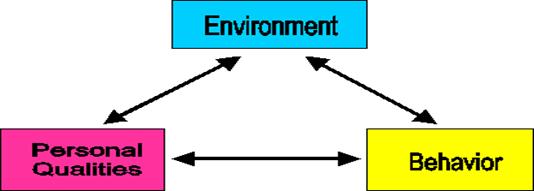
succeeding in the classroom, teachers need to be mindful of their own behavior,
teaching style, design of course, teaching environment, nature of assignment,
informal interaction with learners and appearance which can affect learner
motivation.
And, of course, we have some other understandings and
definitions of motivation. Here are some from Dwight David Eisenhower, Lloyd
Dobens, Jim Rohn, Homer Rice and John C Maxwell. So, motivation is the art of
getting people to do what you want them to do because they want to do [Dwight
David Eisenhower]. The only lifelong, reliable motivations are those that come
from within, and one of the strongest of those is the joy and pride that grow
from knowing that you have just done something s well as you can do it [Lloyd
Dobens]. Motivation is what gets you started. Habit is what keeps you going
[Jim Rohn]. You can motivate by fear. And you can motivate by reward. But both
of these methods are only temporary. The only lasting thing is self –
motivation [Homer Rice]. The whole idea of motivation is a trap. Forget
motivation. Just do it. Exercise, lose weight, test your blood sugar, or
whatever. Do it without motivation. And then, guess what? After you start doing
the things, that’s when the motivation comes and makes it easy for you to keep
on doing it [John C Maxwell] [2]. If to sum up, we can easily say that if you
are motivated you have a reason to do a particular thing [3].
If you are unmotivated you have no interest in or
reason to do a particular thing. If you are demotivated you have lost your
motivation. If you are re-motivated you become motivated again [4].
Earlier, we mentioned such notions as internal and external factors,
which gives us the opportunity to move to consideration of extrinsic and
intrinsic motivation in the classroom. Now then, extrinsic motivation refers to
behavior or that is driven by external rewards such as money, fame, grade, and
praise. Extrinsic motivation arises from outside the individual. Intrinsic
motivation refers to behavior that is driven by internal rewards. This means
that motivation engages in a behavior and arises from within the individual
because it is naturally satisfying to you.

Researchers into intrinsic motivation has identified
three aspects of intrinsic motivation: mastery – the task that we find most
engaging are those that are just
difficult enough to challenge us, but not too difficult for us to achieve.
It is extremely, satisfying and motivating to overcome a series of progressively
harder challenges; purpose – we need to know what are we trying to achieve.
This goes well beyond traditional objectives like making money, meeting
deadlines and getting good grade; it’s all about who we want to be in life, and
how we want to be remembered after we are gone; autonomy – if you give people
the chance to decide for themselves what they do, when they do it, who they do
it with and how they do it, they will be highly motivated and will produce
superior results [5].
Four types of autonomy are:
1.
Autonomy
over task: choosing learners should do;
2.
Autonomy
over time: choosing when learners should do something;
3.
Autonomy
over team: choosing who learners work with;
4.
Autonomy
over technique: choosing how learners should achieve something [6].
Simple motivation techniques are:
·
Humour,
·
Winning
points and stickers,
·
Races,
·
Making
videos,
·
Competitions,
·
Competitive
games,
·
Praise,
·
Project
work,
·
Making
posters,
·
Experiments,
·
Creativity,
·
Challenges
[7].
References:
1. BusinessDictionary.com,
2014
2. British
Council Coursebook “Certificate in Vocational English Language Teaching
(CiVELT), Module 10 – Language learning in ESP: motivation, p.1
3. British
Council Coursebook “Certificate in Vocational English Language Teaching
(CiVELT), Module 10 – Language learning in ESP: motivation, p.2
4. British
Council Coursebook “Certificate in Vocational English Language Teaching
(CiVELT), Module 10 – Language learning in ESP: motivation, p.2
5. British
Council Coursebook “Certificate in Vocational English Language Teaching
(CiVELT), Module 10 – Language learning in ESP: motivation, p.10
6. British
Council Coursebook “Certificate in Vocational English Language Teaching
(CiVELT), Module 10 – Language learning in ESP: motivation, p.10
7. British
Council Coursebook “Certificate in Vocational English Language Teaching
(CiVELT), Module 10 – Language learning in ESP: motivation, p.15