The
examination of fibre spektrum on preserved maize hybrids for livestock feeding
Brucknerová,
M., Čermák, B., Lád, F.: Faculty of Agriculuture, University
of South Bohemia, Agriculture fakulty in České Budějovice
Summary
The composition of plants harvested for
maise silage on the used hybrids and the enviromental conditions. If the hybrid
moisture content at the time of harvest (too wet or too dry) may also be a
problem if the proper maturity is not matched to the area. Poor quality of
maise sorts may result due to decreased grain content.
Introduction
The produciton of the roughage is in
some detail influenced by climatics effects but in principle feed´s quality
is ifluenced by farmer. In many farming business
isn´t crop rotation for intenzive animal
production and rational nutrition chosen well, which is connected with
technical and technologies means of the farmer.
The maize is a very good material
for intensive and economic feed production.The new hybrids make dynamic growing,
whitch is usually 2 – 3%
year on year progression. The largest reserve for using in agricultural
routine is low utilisation of the genetics progress.
The maize plant is composition many
different parts. These parts aren´t constant in any case because are affected
by type of maize hybrid, climatics effects, time of harvesting and technical
performans during the harvest. The final feed effect is a result of feed value of
several plant parts.
The ear-corn is the most important
for energy, who has 65% nutrients on the whole. Pandrůněk (1982),
Čermák et al. (2001) determine concentration of energy ear-corn
8,0-8,2 MJ NEL/Kg DM. During maize the milk maturity
is very intensive accumulation of starch into the corn which gets yellow.
Accumulation of starch ends of depozit brown or black stripe on the gemmule. In
this time is corn glassy, has 35% moitsure and ear-corn has around 60% DM
(Pandrůněk 1982, Čermák et al. 2002).
The silage maize is so much pliant feed.
Intensive nitrogen fertilization (above all salpeter´s form) turned the
maize to product with middle or narrow proportion of nutrients.It happens
frequently in early vegetative stages, i.e. flowerage, milk and wax maturity (Flíček 1977), therefore when semiearly
varieties on foothills
areas are used for feeding or ensilge. In these stages, in nitrogen
spectrum appear high proxy NPN and very important bindings with nitrogen and oxygen,
which are anbiologic and toxic for the most of the livestock (Míka
1986). But the amino acids spectrum and biologic value of proteins are also
changing. Overgraduating by nitrogen in fertilizer for plants causes falling of
a concetration of lysine.
Frequently disscused variety
differences in cumulation of nitrogen are showed in extreme surroudings most
often or only in short-time, especially during intensive growing. That also
indicate results which were taken from15 different maize hybrids produced on
balanced fertilization (Tetter 1986).
Nitrates content in plants and
especially in maize has high value in early stage of development, falls with
stand age. It may by a problem in feeding green-stuf maize but also maize
silage that have been fertilized by high rations of nitrogen from gross
vegetation. Nitrates are totally degraded in „clostride silages“, with high
butyric acid content. This reduction is total, the final product is ammonia. If
there are presented nitrates at silages , rising hydrogen spends for their
reduction and butyric acid in these silages doesn´t rise (Ataku and
Narasaki 1981, Čermák et al. 1999, Loučka et al. 2001).
For yeld quality have decisive
effect on part of ear-corn in dry mass, which has to be over limit 50%. Rising of
part of ear-corn increases energy concentration and with connection also grows
hectare energy production (Pandrůněk, 1982, Loučka, 2002). By
maize can be practically produced several feedstuff which are different in part
of various fractions of plant, in particular ear-corn. The feedstuff that is produced
by ear-corn will get well-founded especially in continuity with need for high
production dairy cow, regarding the needs of
high-production cows, where they can contribute finding the solution of
effective energy dotation in conditions of limited consumption of feed ration
dry mass at the beginning of lactation.
Maize silage presents
high-quality sugar feedstuff , which shouldn´t miss in stability view fied
ration for cattle in the winter and the summer feed period. Quality silage also
contains enough of residual sugar that have good effects on the digestive rumen
processes. It´s well known that quality of fermentation proces s
influences structure of epifyt microflora by silage crops.
Material and methodics
In
years 2002-2005 were experiments done at two locations. The experiments were
done in so-called rain shadow, altitude
Results and methods
In table 1. we presented results monitoring
yield of masses according to each habrids, with FAO numbers for maize silage. Count
of plants per hectar sowed amound
90 000 units per hectar, during harvest was in range 84-87 000 by
each hybrid. Differences between hybrids aren´t statistical significant. Same
results features Loučka et al. (1999), Čermák et al. (2001)
and other authors in long-term attempts. Yields of masses durign harvest
weren´t statistical significant. Same variants fertilized Amofos
„subbase“ during harvest weren´t
significant difference. Differences between fertilized and nonfertilized
were apparent during vegetation, but in crop´s time offseted. Pandrůněk
(1982) features significant differences of
yields not only during vegetation , but also in crop´s time.
Čermák et al. (2005) ascertained trends by lower fibre, lower
starch in ears and higher proxy of nitrogen by different maize hybrids in crop.
Same results we show in table 3.
|
Table 1. Average
weight of samples and check calculation to maize yield |
|
|
|
|
||||||||
|
|
|
|
|
|
|
|
|
|
|
|||
|
Number |
FAO |
Awearage weight samples kg |
Awearage weight samples kg |
Length of ground |
breadth of ground |
Arera of ground |
Yield of kg/ha control |
Yield of kg/ha ad fertilised |
|
|||
|
|
S |
Ad fertiliser AMOFOS |
control |
|
|
ar |
|
|
|
|||
|
1. |
220 |
1035 |
1230 |
133 |
2,8 |
372,4 |
33029,0 |
27792,7 |
|
|||
|
2. |
200 |
1430 |
1410 |
132 |
2,8 |
370,8 |
38021,3 |
38560,6 |
|
|||
|
3. |
210 |
1450 |
1575 |
131 |
2,8 |
369,3 |
42649,5 |
39264,6 |
|
|||
|
4. |
210 |
1460 |
1490 |
131 |
2,8 |
367,7 |
40518,4 |
39702,6 |
|
|||
|
5. |
220 |
1425 |
1610 |
130 |
2,8 |
366,2 |
43967,6 |
38915,5 |
|
|||
|
6. |
240 |
1740 |
1755 |
130 |
2,8 |
364,6 |
48131,9 |
47720,5 |
|
|||
|
7. |
210 |
1320 |
1420 |
129 |
2,8 |
363,1 |
39111,2 |
36356,9 |
|
|||
|
8. |
210 |
1480 |
1640 |
129 |
2,8 |
361,5 |
45365,0 |
40939,1 |
|
|||
|
9. |
230 |
1490 |
1550 |
128 |
2,8 |
359,9 |
43060,7 |
41393,9 |
|
|||
|
10. |
230 |
1670 |
1760 |
128 |
2,8 |
358,4 |
49107,1 |
46596,0 |
|
|||
|
11. |
240 |
1510 |
1710 |
127 |
2,8 |
355,6 |
48087,7 |
42463,4 |
|
|||
|
12. |
240 |
1810 |
1760 |
126 |
2,8 |
352,8 |
49886,6 |
51303,9 |
|
|||
|
13. |
240 |
1740 |
1610 |
125 |
2,8 |
350 |
46000,0 |
49714,3 |
|
|||
|
14. |
250 |
1735 |
1810 |
124 |
2,8 |
347,2 |
52131,3 |
49971,2 |
|
|||
|
15. |
250 |
1710 |
1715 |
123 |
2,8 |
344,4 |
49796,7 |
49651,6 |
|
|||
|
16. |
230 |
1390 |
1390 |
122 |
2,8 |
341,6 |
40690,9 |
40690,9 |
|
|||
|
17. |
240 |
1315 |
1210 |
121 |
2,8 |
338,8 |
35714,3 |
38813,5 |
|
|||
|
18. |
250 |
1510 |
1345 |
120 |
2,8 |
336 |
40029,8 |
44940,5 |
|
|||
|
19. |
240 |
1340 |
1450 |
119 |
2,8 |
333,2 |
43517,4 |
40216,1 |
|
|||
|
20. |
230 |
1165 |
1110 |
118 |
2,8 |
330,4 |
33595,6 |
35260,3 |
|
|||
|
21. |
250 |
955 |
940 |
117 |
2,8 |
327,6 |
28693,5 |
29151,4 |
|
|||
Table 2. Nutrient variation in corn silage of different
hybrids:g/kg DM
|
Nutrients |
x |
sd |
min |
max |
|
Org.
matter, OH |
930,8 |
14,9 |
910 |
945 |
|
Nl
-CP |
97,O2 |
1,8 |
59 |
165 |
|
Tuk-Fet |
42,3 |
6,7 |
31 |
74,2 |
|
NDF |
456,7 |
48,3 |
311 |
591 |
|
ADF |
239,1 |
12,1 |
198 |
291 |
|
BNLV-NPex |
519,1 |
48,1 |
195 |
260 |
|
Škrob
Starch |
184,3 |
47,1 |
164 |
350 |
|
Str.OH,
DOM% |
70,2 |
3,1 |
66 |
75 |
In the year 2002 – 2005 we monitored selected green maize hybrids and
silages from this hybrids. Nitrogen fertilization „subbase“ in ration 150 kg
Amofos showed lower grow of fibre, nitrogen´s rise and low protein
content. Another changes get into during silage storage. Variability nutrients
contentgreen and silage masse depend on fraction of ear and corn maturity
(Jambor 2003. Čermák 2002, 2005). We are continue attempts. Differences
graphic-represented in diagrams 1, 2
advert to PDI and NEL dependence by FAO average content of maize
hybrids. PDI values for hybrids with FAO number 200 – 220 are significant as
compared to another hybrids. NEL value isn´t significant.
Table 3: The comparison of parameters of maize hybrids in g and MJ/kg DM
|
Hnojeni fertilise |
FAO |
Vláknina fibre |
Tuky fet |
Popeloviny ash |
NL |
BNLV |
OH |
PDIN |
PDIE |
BE |
ME |
NEL |
NEV |
|
B |
200 |
217,71 |
28,47 |
40,20 |
80,39 |
633,22 |
959,80 |
50,51 |
83,03 |
18,73 |
10,86 |
6,54 |
6,57 |
|
B |
210 |
221,85 |
25,65 |
43,97 |
83,26 |
625,27 |
956,03 |
52,32 |
83,78 |
18,68 |
10,82 |
6,51 |
6,54 |
|
B |
220 |
200,68 |
27,95 |
37,74 |
82,63 |
651,01 |
962,26 |
51,92 |
83,82 |
18,79 |
10,89 |
6,56 |
6,59 |
|
B |
230 |
205,53 |
30,54 |
41,45 |
91,31 |
631,17 |
958,55 |
57,37 |
85,55 |
18,77 |
10,85 |
6,53 |
6,55 |
|
B |
240 |
209,08 |
28,33 |
38,77 |
84,39 |
639,40 |
961,23 |
53,03 |
84,17 |
18,78 |
10,88 |
6,55 |
6,58 |
|
B |
250 |
213,97 |
28,68 |
40,54 |
83,42 |
633,39 |
959,46 |
52,42 |
83,77 |
18,74 |
10,86 |
6,54 |
6,57 |
|
B |
260 |
162,15 |
27,20 |
36,80 |
82,80 |
691,05 |
963,20 |
52,02 |
84,00 |
18,81 |
10,90 |
6,56 |
6,59 |
|
B+F |
200 |
216,06 |
29,33 |
38,06 |
87,91 |
628,64 |
961,94 |
55,23 |
85,02 |
18,82 |
10,89 |
6,55 |
6,58 |
|
B+F |
210 |
219,36 |
30,65 |
41,99 |
89,03 |
618,96 |
958,01 |
55,94 |
84,92 |
18,75 |
10,84 |
6,52 |
6,55 |
|
B+F |
220 |
203,09 |
30,95 |
37,22 |
90,53 |
638,08 |
962,78 |
56,88 |
85,60 |
18,85 |
10,90 |
6,56 |
6,58 |
|
B+F |
230 |
208,55 |
31,68 |
38,09 |
90,49 |
631,19 |
961,91 |
56,85 |
85,47 |
18,83 |
10,89 |
6,55 |
6,57 |
|
B+F |
240 |
210,25 |
29,99 |
39,34 |
86,57 |
633,85 |
960,66 |
54,39 |
84,53 |
18,78 |
10,87 |
6,54 |
6,57 |
|
B+F |
250 |
209,94 |
31,32 |
40,02 |
86,18 |
632,54 |
959,98 |
54,15 |
84,26 |
18,77 |
10,86 |
6,54 |
6,57 |
|
B+F |
260 |
193,95 |
23,80 |
38,35 |
81,35 |
662,65 |
961,65 |
51,11 |
83,84 |
18,77 |
10,88 |
6,55 |
6,58 |
Basic
fertilisation B, Basic+ fertilization 150 kg
Amophos per hectar-B+F
Graf 1.
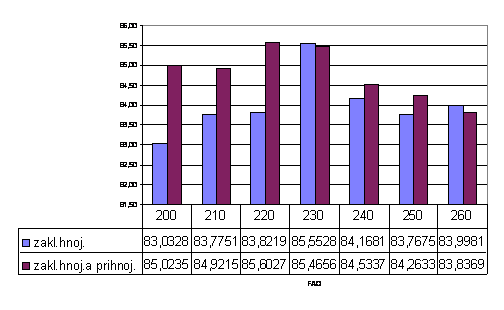
Comparison of PDIE in maize hybrids
Graf 2.
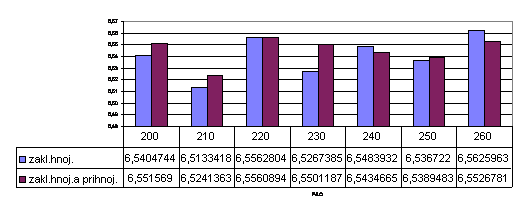
Comparison of
NEL contint in maize hybrids
For
statistical data result land area stabilization maize-growing. Growing oriented
to increase by area for LKS crop or CCM. As well grows dry matter harvested
maize under 400 grams.
Table 4. Qualitative
parameters of awerage maize silages
|
|
``x |
s x |
x min. |
x max. |
n |
|
Sušina dry matter |
328,1 |
42,5 |
223,84 |
421,82 |
155 |
|
NEL (MJ . kg -1) |
2,02 |
0,17 |
1,38 |
2,61 |
155 |
|
PDI (g. kg -1) |
15,98 |
3,21 |
10,02 |
21,05 |
155 |
|
K. mléčná lactic ac. (g.
kg -1) |
21,79 |
4,98 |
7,2 |
32,99 |
155 |
|
K. octová acetic ac.(g. kg -1) |
6,99 |
2,63 |
3,67 |
16,53 |
155 |
|
K. máselná butyric ac.(g . kg -1) |
0,05 |
0,21 |
0 |
1,2 |
155 |
|
pH |
3,72 |
0,32 |
3,19 |
4,29 |
155 |
|
KVV (mg Na OH . 100 g -1) |
1468 |
439 |
585 |
2185 |
155 |
Table 5. Fibre fraction of maize hybrids
|
Numer of hybrids |
Ad fertiliser AF/0 |
% labor. Dry
matter |
ADL % |
ADF % |
NDF % |
CF% |
|
1 |
AF |
93,89 |
2,08 |
25,05 |
46,93 |
20,4 |
|
,2 |
0 |
93,99 |
2,63 |
27 |
49,41 |
22,12 |
|
2 |
AF |
93,75 |
2,2 |
25,22 |
47,01 |
21,21 |
|
|
0 |
93,83 |
1,66 |
22,54 |
40,5 |
19,55 |
|
3 |
AF |
93,94 |
1,99 |
24,51 |
44,99 |
21,14 |
|
|
0 |
93,96 |
1,8 |
25,22 |
46,96 |
20,06 |
|
4 |
AF |
94,14 |
2,67 |
27,72 |
48,18 |
23,38 |
|
|
0 |
94,18 |
1,96 |
26,36 |
47,81 |
22,8 |
|
5 |
AF |
93,94 |
2,4 |
27,24 |
48,37 |
23,21 |
|
|
0 |
94,13 |
1,84 |
24,74 |
41,52 |
19,8 |
|
6 |
AF |
94,44 |
2,24 |
28,43 |
49,29 |
23,47 |
|
|
0 |
94,36 |
2,32 |
27,69 |
49,17 |
23,87 |
|
7 |
AF |
93,37 |
2,22 |
27,19 |
49,25 |
22,65 |
|
|
0 |
94,50 |
1,6 |
23,62 |
45,16 |
21,16 |
|
8 |
AF |
94,44 |
2,06 |
27,68 |
51,79 |
23,88 |
|
|
0 |
94,37 |
2,37 |
28,14 |
50,4 |
24,43 |
|
9 |
AF |
94,97 |
2,46 |
25,78 |
45,91 |
21,01 |
|
|
0 |
93,67 |
1,94 |
23,17 |
39,32 |
19,55 |
|
10 |
AF |
93,91 |
1,97 |
22,73 |
43,68 |
19,75 |
|
|
0 |
93,26 |
2,2 |
25,69 |
46,35 |
22 |
|
11 |
AF |
94,83 |
1,98 |
26,29 |
49,18 |
22,47 |
|
|
0 |
93,41 |
1,98 |
23,79 |
47,38 |
21,31 |
|
12 |
AF |
94,31 |
2,35 |
25,22 |
46,04 |
22 |
|
|
0 |
93,96 |
1,97 |
24,5 |
48,82 |
22,43 |
|
13 |
AF |
94,00 |
1,96 |
23,5 |
43,81 |
21,23 |
|
|
0 |
92,96 |
2 |
26,41 |
46,87 |
22,41 |
|
14 |
AF |
94,16 |
2,06 |
25,81 |
46,68 |
22,62 |
|
|
0 |
93,57 |
1,91 |
24,13 |
43,04 |
22,06 |
|
15 |
AF |
93,53 |
2,73 |
27,57 |
48,75 |
23,73 |
|
|
0 |
92,23 |
2,24 |
26,24 |
44,14 |
21,7 |
|
16 |
AF |
93,77 |
2,49 |
27,95 |
50,5 |
24,04 |
|
|
0 |
92,98 |
2,23 |
26,86 |
51,07 |
23,52 |
|
17 |
AF |
92,50 |
2,27 |
25,2 |
46,56 |
22,17 |
|
|
0 |
92,55 |
2,07 |
26,5 |
48,53 |
23,18 |
|
18 |
AF |
93,15 |
1,96 |
23,51 |
44,32 |
20,1 |
|
|
0 |
93,02 |
1,97 |
23,03 |
44,35 |
20,31 |
|
19 |
AF |
93,22 |
1,87 |
24,34 |
45,89 |
20,1 |
|
|
0 |
93,02 |
2,03 |
24,77 |
43,18 |
20,68 |
|
20 |
AF |
93,49 |
2,65 |
26,78 |
45,26 |
21,57 |
|
|
0 |
93,13 |
2,2 |
26,96 |
45,2 |
23,58 |
|
21 |
AF |
93,24 |
1,99 |
25,19 |
45,54 |
21,27 |
|
|
0 |
92,93 |
2,12 |
27,4 |
47,28 |
23,89 |
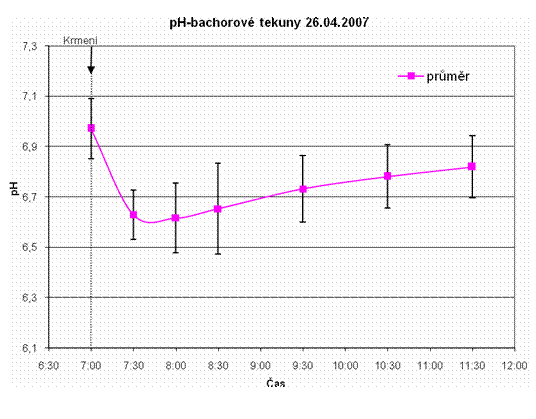
Graf 3. pH of rumen´s fluid
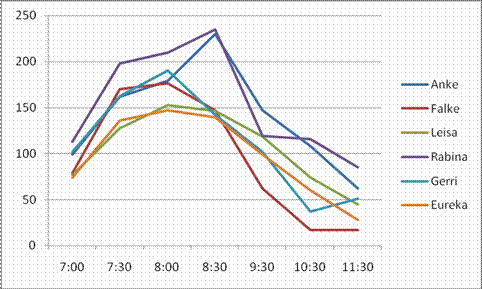
Graf 4. Content of NH3 – N (mg/l) in
ruminal´s fluid, experimental cows
Results
The maize is an arable crop providing high
energy and mass yield, necessary for the cattle feed ration balance.
On
the basic of long-term monitoring chosen hybrids is possible to recommend to
every grower to test nutrients and potencial of yield to environmental
conditions and cattle wants. Basic for decision is maize dry matter
at intervals 30 – 35 %. LKS or CCM harvest is optimal 50 % dry of ear matter. Crucial is meeting of harvest
technology and conservation.
After
feedin in ruminant´s fluid is pH rate on minimum value, this value come
back slowly (after 5 and more hours). In the same time is NH3-N
content in luminal fluid very different. After feedig fast growing, then fall
down under previous value.
Durig
the long-term silage storage, nutients are changing that is neccessary minimalize
with keeping of technology, feeding and storage (mixing, picking,...) to
minimalize the second fermentation damage.
This article was suported by project MSM 6007665068
Literature:
Ataku, K. and N. Narasaki
(1981): The influence of nitrate
on silage quality: 1.
the. relationship between the nitrate content of the ensiled grass and the ...
http://edoc.hu-berlin.de/dissertationen/iv-polip-2001-07-19/PDF/I
Čermák,
B.: et al. 1999, Výživa a krmení
telat a jalovic, Institut výchovy a
vzdělávání MZ ČR, Praha, 1999, ISBN 80-7105-180-2.
Čermák, B. ; Kadlec, J. ; Lád, F. ; Nováková, Š. ; Brucknerová, M. ;
Kačerovský, A.Změny spektra vlákniny u vybraných
druhů trav v průběhu vegetace. Aktuální
otázky bioklimatologie zvířat '02: VFU Brno 12. prosince
2002. 2002:20-24.
krmných
směsí pro výkrm brojlerových kuřat.
Čermák, B. ; Kadlec, J. ; Lád, F. ;
Podkówka, Z. Porovnání různých
nutričních variant hybridů kukuřice.
Aktuální otázky
výroby a produkce siláží: sborník
přednášek . mezinárodního workshopu. 2001;9:81.
Čermák, B. ; Frelich, J. ; Klimeš, F. ; Voříšková, J.
; Lád,
F. ; Kobes, M. ;
Jančík, F. ; Slípka,
B. 2005 Produkční
ukazatele skotu chovaného v podhorských a horských
oblastech v pastevním období 2004-2005 v porovnání
s výsledky ve vybraných Rakouských konvenčních
a bio chovech. Kvalita bioprodukce (faktory, které ji
ovlivňují) : sborník ze semináře dne 29.
listopadu 2005. 2005:39-49.
Flíček,
V.:1977: Závěrečná zpráva subetapy VÚ
N-03-333-871-03-04/6 Ověření jakosti ovsa a kukuřice
při pěstování a využití ve vyšších
oblastech. 92 s.
Jambor V, Homolka
P.: The effect of stage of maturity of alfalfa on content of nutritive value
and degradability of crude protein.www.vuzv
Loučka
R.et al. 2001, Metody konzervace píce pro
ekologické zemědělství / Radko Loučka …
Pozdní poučení z včasných varování
: princip předběžné opatrnosti 1896-2000
Loučka, R 2002: Machačová, E.,., Žalmanová, V., Homolka, P.:
Effect of probiotic enzymatic … Trinacty J., Homolka P., Zeman L, et
al. Whole tract and post ruminal digestibility …
www.vuzv
Míka,
V. et.al. : 1986: Kvalita píce. UZPI . 227s.
Pandrůněk
S.1982:Kukuřice i do netradičních oblastí.
Zemědělec. č. 48, s.1-2.
Tester,M.1986. Fyziologie rostlin.
Skripta ZF 112 s.
Feed law 2001. Zákon o krmivech 46,
2001 UZPI Praha 168 s.