Law/9. Civil law
Asel Kenzhetayeva, magister
Zhetysu State
University named after I. Zhansugurov, Taldykorgan, Republic of Kazakhstan
THE
LEGAL NATURE OF A BILL OF EXCHANGE AS AN NEGOTIABLE INSTRUMNET
Supervisor - Phd in Law, Y.Sh .Dussipov
One
of the most actual issues today relate to a bill of exchange. The concern of
this research is to examine peculiarities of the bill of exchange throughout
its history and figure out the legal nature of the bill of exchange as an
negotiable instrument. Before starting our research it would be better to
clarify what the bill of exchange is. In accordance with legislative acts there
are a number of definitions towards the term, like for instance, “Bill of
exchange is defined as an unconditional order in writing, signed by the drawer
addressed to another, directing him to
pay to a third party a specified sum of money on demand or at a future time.” [1,
56]
Another
one says that “Bills of exchange are
negotiable instruments incorporating an unconditional order, addressed by one
person to another, signed by the person giving it, requiring the person to whom
it is addressed to pay on demand or at a fixed or determinable future time a
certain sum in money to or to the order of a specified person.” [2, 86]
From
this we can see that bill of exchange is an instrument which has unconditional
order to pay a certain sum money, the time of
payment, the place of payment, the name of the person who is to pay (drawee),
the name of the person to whom or to whose order payment is made, the date when
and the place where the bill is issued, the signature of the person who issues
the bill (drawer). Now it
would be significant to investigate history of legal regulation of the bill of exchange.
Having analyzed different materials, we came to know that the bill of exchange
is ancient practice, which takes its origin from Italy in the 12th and 13th centuries. “Italy, in that period,
was considered to be the centre of trade in Europe. The merchants throughout
Europe came in contact with the Italian Lombards, through whom negotiable
instrument bills of exchange in their present form were introduced to Europe.
The implications of negotiable instruments remained relatively constant
throughout Europe, until the end of the 17th and the beginning of the 18th centuries. Thus far, the practice relating to negotiable
instruments on both sides of the Channel was, due to the common origin from
which negotiable instruments evolved, as well as the trade exchange,
substantially similar. Since the 17th and 18th centuries, the essential
characteristics of negotiable instruments have witnessed variant treatment.
These differences became more apparent at the beginning of the 19th century
when, incidentally, the practice of negotiable instruments was incorporated in
special codifications. The major codification in the Anglo-American group is
English Bills of Exchange Act (1882) B.E.A. The influence of the B.E.A. was not
confined to English legal system. Rather, it travelled across the Atlantic and
beyond the Continent. Canada and the Commonwealth countries adopted the B.E.A.
wholly or partly. In the United States, the B.E.A. has also been consulted.”
“At present, the major codifications of the law of
negotiable instruments could be divided into two groups, namely the Anglo-American
and the Continental Geneva legal groups. The main codification of the latter
group is the Geneva Conventions of 1930 and 1931.”[1, 20] “In 1930, the
committee convened a conference to discuss the experts' draft convention.
However, it was decided that the conference should discuss the unification of
laws relation to bills, notes and cheques in two separate sessions. The 1930
session was concerned with bills of exchange and promissory notes. The 1931
session was, by comparison, concerned with cheques. Both sessions were held in
Geneva.”[1, 21]
“Two types of documents could, in the light of the
foregoing application, qualify as negotiable instruments, viz. “documents of title” and “money documents”. Examples of the
former are the bill of lading and warehouse receipts. Examples of the money
document are bills of exchange, share certificates and treasury bills. If we
take the money document, it incorporates a monetary obligation. The issuer of
the document promises to pay to the third party specified sum of money or
arranges with another that payment of the specified sum of money shall be made
in favour of a third party.” [1,36]
Moving on, it would be necessary to note that securities have long
living history, where appears the term “Scripophily”. So actually “scripophily, the collecting of old stocks and bonds,
gained recognition as a hobby around 1970. The word "scripophily"
was coined by combining words from English and Greek. The word "scrip" represents an ownership
right and the word "philos" means to love. Today, there are thousands
of collectors worldwide (Scripophilists) in search of scarce, rare, and popular
stocks and bonds. Collectors who come from a variety of businesses enjoy this
as a hobby, although there are many who also consider scripophily a good investment.
In fact, over the past several years, the hobby has exploded in popularity. A
large part of scripophily is the area of financial history. Over the years
there have been millions of companies which needed to raise money for their
business. In order to do so, the founders of these companies
issued securities.” [3] (see figure-1.)
The bill of exchange is considered to be security which is the negotiable
instrument in other hand. As the negotiable instrument
bills of exchange have a few clear benefits in market economy to discuss about,
except being part of history. “Companies have used
Bills of Exchange for hundreds of years. Their longevity is due to the
advantages they provide in trading transaction.
- Bill of Exchange facilitates the granting of
trade credit to a buyer.
- Bill of Exchange provides a legal acknowledgement
that a debt exists.
- It can provide a seller with access to financing.
- It can provide easy access to legal systems in
the event of non-payment.” [4]
We
should consider the arguments mentioned above, and let us turn our attention to
“the following are the advantages of bill of exchange:
1. It is legal evidence of debt.
2. It is a convenient method for the transfer of debt
3. A creditor can sue on the bill itself
4. It is the negotiable instrument and can be transferred for the
settlement of one's debt without difficulty.
5. It can be cashed before due date by discounting.
6. A debtor enjoys the benefit of full period of credit.
7. It affords an ease means of transmitting money from one place to
another.
It is for the aforesaid advantage, a
buyer can easily be included to purchase goods and accept bills drawn on him by
the seller when he is not prepared to pay cash at the time of purchase.” [5]
Due to the growing tendency of information technology the
bill of exchange is changing its format (see figure 2 and 3). And “it is
necessary for negotiable instruments in the form of bills of exchange and
promissory notes have to preserve their expediency in international trade in
the modern day. They must be recognised in a valid electronic format. These
electronic instruments should be capable of satisfying legal requirements which
are set out in various statutory provisions and different jurisdictions.”[6]
From the foregoing, it could be concluded that the
bill of exchange as the negotiable instrument plays a great role in market
economy development of every country. And it is known as the security in many
European countries, but there are some governments, where the bill of exchange
is not deemed to be securities, but means of payment. Like for instance, if we consult with the Republic of Kazakhstan
Law on payments and remittances it notes that “A Bill of Exchange is application
of bills of exchange as a method of payment shall be governed by laws of the
Republic of Kazakhstan on circulation of notes.”[7] Thus, the bill of exchange
has two characteristics, which means being security and method of payment. Since
shaping an efficient market deals with the introduction of an efficient finance
instrument, here arises the monetary obligations which should be regulated by
law.
Appendix
|
Figure1. securities of the last century
|
|
Figure 2. bill of exchange paper format
|
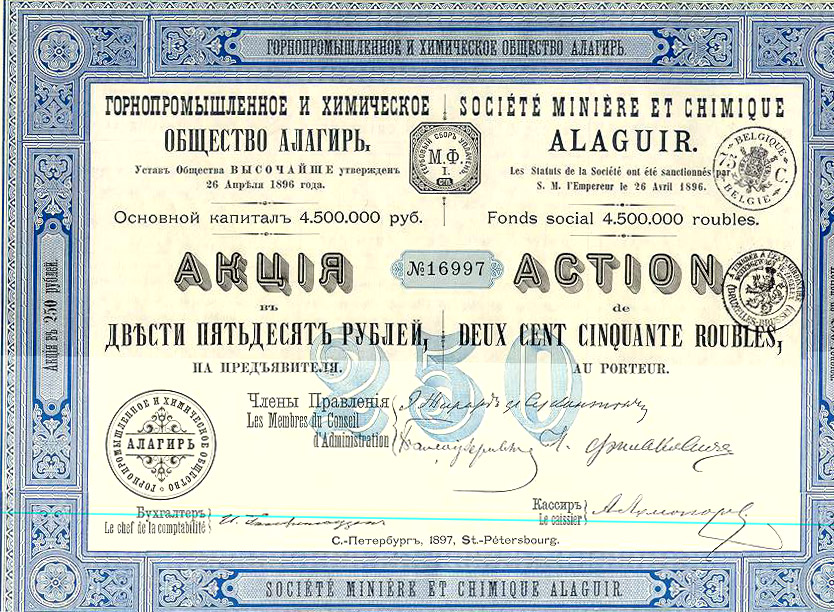
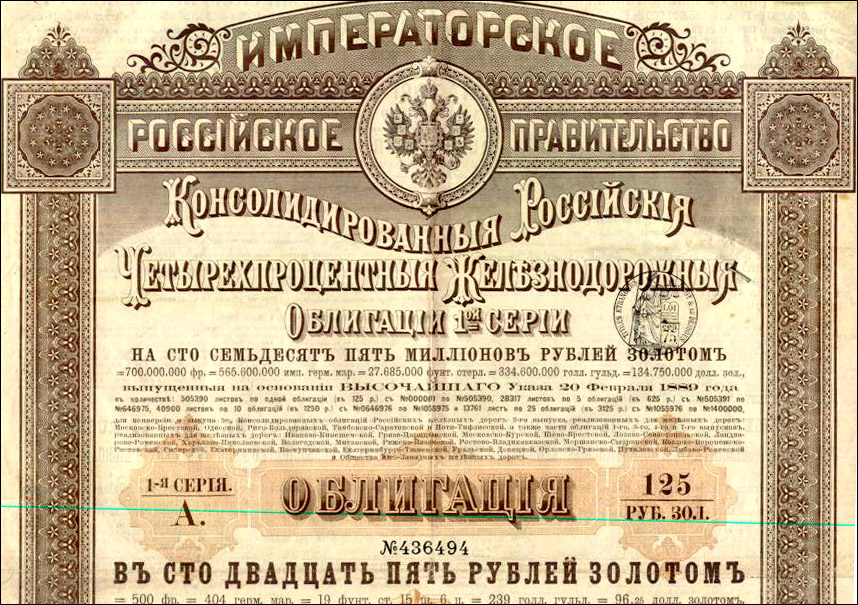

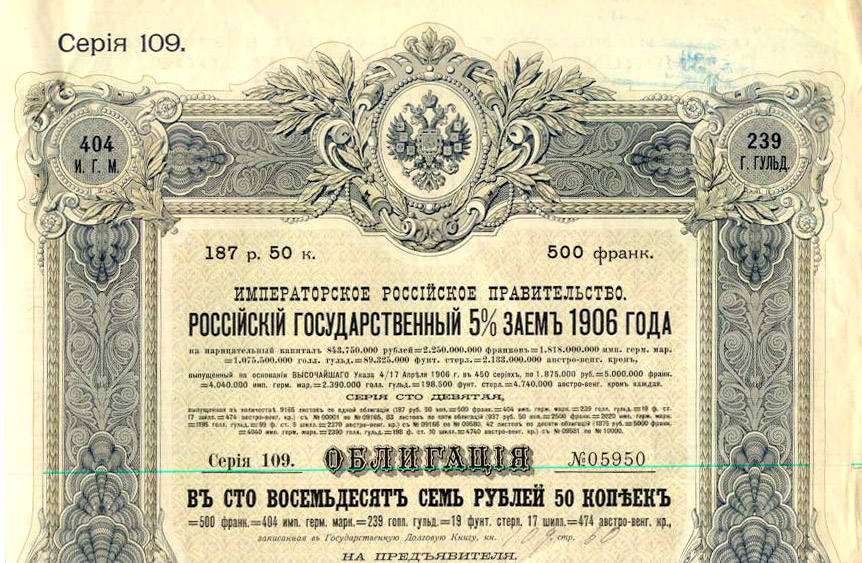
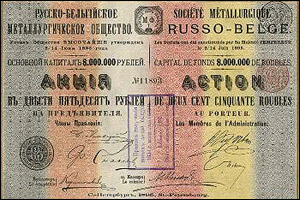


Figure3. paperless
format of bill of exchange
|
|
|
|
|
|
|||
|
|
|||||||
|
|
|
|
|
||||
|
|
|
|
|
||||
|
|
|
|
|
||||
|
|
|
|
|
||||
|
|
|
|
|
|
|||
|
|
Pay
this Bill of Exchange |
||||||
|
|
|
|
|
|
|||
|
To the
order of |
|
||||||
|
|
|
|
|
|
|||
|
|
|
|
|
||||
|
|
|
|
|
||||
|
|
|
|
|
||||
|
|
|
|
|
||||
|
|
|
|
|
||||
|
|
|
|
|
||||
|
|
|
|
|
|
|||
|
|||||||
|
|
|
|
|
|
|||
|
|
|||||||
|
|
|||||||

Reference:
1.
Alsulaimi, Zaki (1990) The risk of the forgery of signatures and
the problem of conflicting entitlements in the law of negotiable instruments: a comparative study, Durham
theses, Durham University. Available at Durham E-Theses Online: http://etheses.dur.ac.uk/6527/
2.
Fasil Alemayehu,
Merhatbeb Teklemedhin, Law of Banking,
Negotiable Instruments and Insurance Teaching Material, Sponsored by the Justice and Legal System
Research Institute, 2009
3.
http://en.wikipedia.org/wiki/Scripophily
[Accessed: 9th March 2014].
4.
http://www.aibtradefinance.com/tf/frontBOEPage5.asp [Accessed: 8th March 2014].
5.
http://www.accounting4management.com/advantages_of_bill_of_exchange.htm [Accessed: 7th March 2014].
6.
http://www.lawteacher.net/tort-law/essays/principle-of-negotiability-of-negotiable-instruments.php [Accessed: 6th March 2014].
7.
Law of the Republic of Kazakhstan
dated June 29, 1998 N 237 concerning
payments and remittances
8.
Figure 1. http://aveksel.narod.ru [Accessed:
9th 8th March]. [Accessed: 1st March
2014].
9.
Figure 2. http://aveksel.narod.ru/zel_14.html[Accessed:
9th March 2014].
10. Figure 3. http://www.aibtradefinance.com/tf/BillofExchange.asp
[Accessed: 10th March 2014].