Analysis of biological methods and biotechnology to industrial
and environmental safety
Bukeikhanov
N.R., Gvozdkova S.I., Chmyr I.M., Butrimova O.V., Nikishechkin A.P.
The article summarizes a
widespread approach to solving scientific and technical problems, based
on the direct or indirect use of the methods of bionics-imitation or creative
adapting techniques developed nature. Characterized biotechnology saving
material and energy resources, reduce pollution of
natural, industrial and residential environment.
Key
words: safety, methodology, biological methods, biological technology, bionics,
resource saving.
Engineering systems for implementation of industrial and
environmental safety
includes methods for minimizing exposure
to toxic compounds, radioactive waste,
noise, electromagnetic and other types
of radiation, as well as reducing negative factor at source [1-3].
In
general, methods for implementation of industrial and environmental safety
methods based
on all types of resources saving – natural, material, energy, computing, information, human and others
[6,7].
The
development of
real projects for implementation of industrial and environmental safety is based on the use of complex mutually complementary physical, chemical
and biological methods.
We
have generalized information
about widespread approach to
solving scientific and technical problems based
on the direct or indirect use of
bionics – imitation and / or creative adapting methods developed
nature.
Historically, the first implementation methods
of bionics
should be considered biotechnology. The first
stage of biotechnology
referred to 6000-5000 years BC, when people learned to
bake bread, brew beer, cook
cheese and wine.
Second, scientific stage of
biotechnology was based on the research of Louis Pasteur
of enzymatic nature of fermentation in the XIX century.
During
this period derived the enzymes, been much research
about microorganisms, received culture of animal and plant
cells and methods developed their artificial cultivation.
Research
in the field of physiology,
biochemistry
and genetics of microbial and animal cells identified ways to get products microbial synthesis, needed
for medicine agriculture
and industry.
Modern industrial biotechnology produces bacterial
biomass, yeasts, fungi,
viruses and
then get enzymes,
antibiotics, antigens, protein
and another – the main components medical
preparations and food.
Application of achievements of high
technologies – information technology, tools technology, nanotechnology and other
– to research in the field of biology have contributed to the extensive work in the field of artificial intelligence, neurocomputers, creation of
genetic engineering
for the production of artificial superproducer of bacteria, animal and plant cells, the immobilized enzymes, genetically modified
products and other biologically active substances.
For implementation of industrial and environmental safety special attention is paid engineering
aspects of biotechnology
and the use of methods of bionics
for the development of equipment,
materials, reagents, energy sources,
for identify the technological
parameters to improve the efficiency processes.
Now formed a definite
bionics as applied science on the application of technical devices and systems
organization principles, properties, functions and structures of nature.
Using the methods of bionics in the analysis of the
structure and functioning of biological systems for solving engineering
problems allows creative thinking specialists:
● to create the inventions of fundamentally new tools, machines, devices,
equipment, building construction and technological processes;
●
to
modernize and optimize the function of technical equipment and technologies.
By studying biological
systems, bionics optimizes the solving engineering problems. Now not only
analyzes the improvements, but also the creation of new tools, machines,
devices, equipment, building construction and technological processes whose
characteristics are similar to those of natural systems. The invention based on
bionics methods do not copy nature, and borrow from the natural concept that
were identified during the the evolutionary development of mechanisms of
biological systems, contributing them in a difficult environment viability.
In these research the authors consider the
advisability of extension of ideas about using bionics methods not only for the
development and modernization of production technique but also the
technologies.
By using methods of
bionics engineering decisions is useful to consider in the scheme of
creation systems of industrial and
environmental safety (Figure 1).
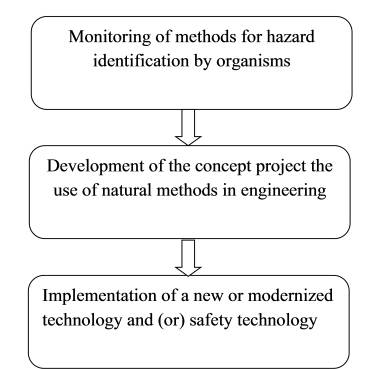
Figure 1. – Вionics and creation systems of industrial and environmental safety
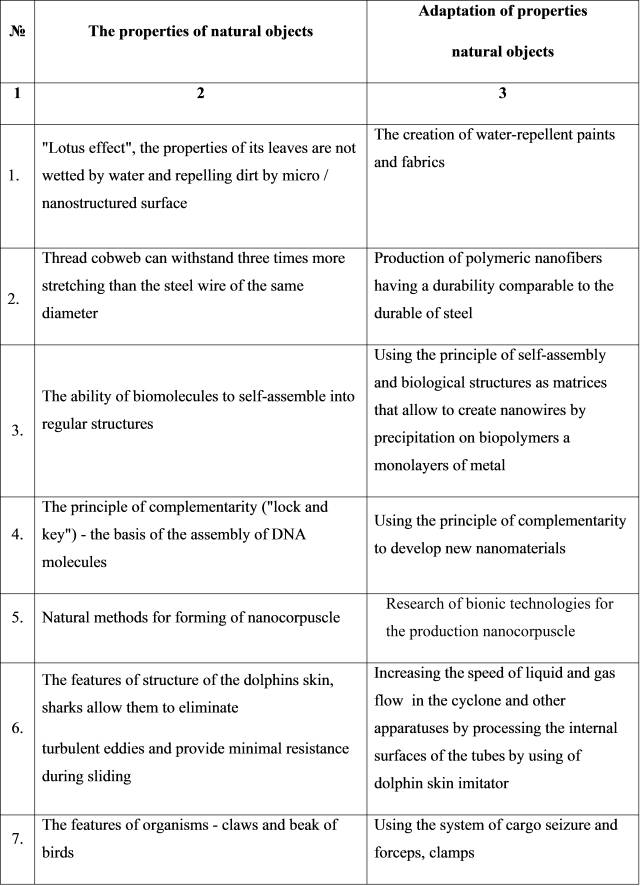
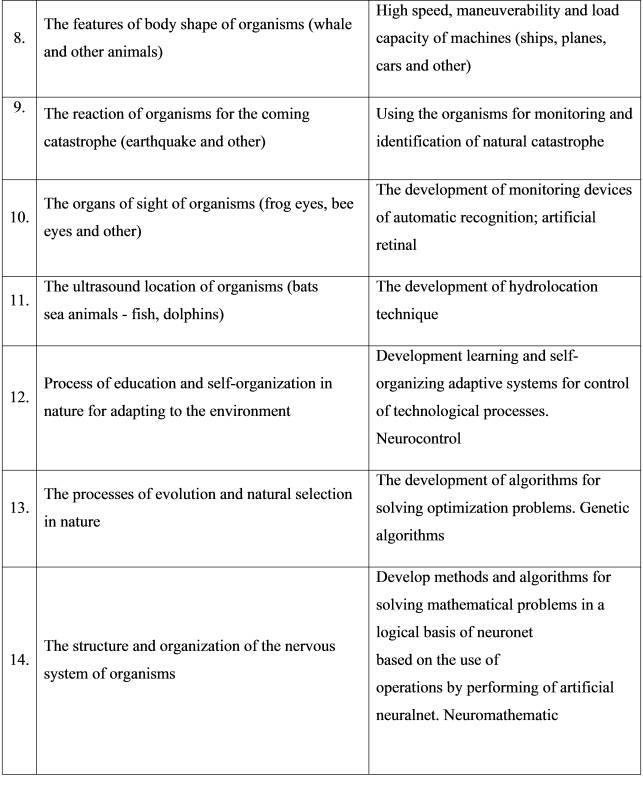
Based on the analysis of
scientific and technical information, we identified examples of the use of
bionics in engineering methods (Table 1).
Table
1. Еxamples of the use of bionics in engineering methods [1-7]
 Now were formed and
actively develops technologies of production and environmental safety based on
the principles of bionics:
Now were formed and
actively develops technologies of production and environmental safety based on
the principles of bionics:
·
neutralization
of waste water in the aeration tank.
·
analysis
of biofuel technology to realize the national programs to create alternative
energy sources, for the realization of rejection of using oil products.
·
The
development of artificial photosynthesis based on the achievements of
nanotechnology for hydrogen production (modeling light phase natural
photosynthesis) and biomass (modeling dark phase of photosynthesis) - fuel for
transportation, energy, feed and food.
Вibliography
1. Bukeikhanov N.R.,
Gvozdkova S.I., Chmyr I.M.
Сleaning
processes of production water: schoolbook/ N.R. Bukeikhanov, S.I. Gvozdkova,
I.M. Chmyr.‒
М.: Moscow State Technological University "STANKIN" 2011. ‒ 84
р.
2. Bukeikhanov N.R.,
Gvozdkova S.I., Nikishechkin
A.P., Chmyr I.M. Chemical and biological methods for
implementation of industrial and environmental
safety:
Monograph/ N.R. Bukeikhanov, S.I. Gvozdkova, A.P. Nikishechkin, I.M. Chmyr.‒ М.: Moscow State Technological
University "STANKIN" 2012. ‒ 120 р.
3. Bukeikhanov
N.R., Gvozdkova S.I., Chmyr I.M., Hudoshina M.Y. The
concept of resource saving projects: schoolbook/ N.R. Bukeikhanov, S.I. Gvozdkova, I.M. Chmyr, M.Y. Hudoshina. ‒ М.:
Moscow State Technological University "STANKIN" 2012. ‒ 119 р.
4. Nikishechkin
A.P. Neuronet
technologies: schoolbook. ‒ ETI Moscow State Technological University
"STANKIN", Egorievsk, 2010. ‒ 124 р.
5.
Nikishechkin A.P., Popov A.V. Research the possibility
of using artificial neuronet in control systems for
electric arc welding processes // International Scientific and Technical
Conference "Information and Technologies". ‒ М.: MEI
Publishing, 2008. р. 269 - 273.
6. Schwarzburg
L.E. Features of environmental safety in production. Publishing
"New Technologies", "Life safety», №6, 2006. р. 9 -13.
7.
Schwarzburg
L.E.
Тhe environmental еnsuring processing technologies. Vestnik
MSTU "STANKIN." Scientific journal. M.: MSTU "STANKIN», №1,
2008. р.38-43.