Ecology / 6. Ecological monitoring
PhD. Myslyuk O., PhD. Khomenko O., student
Zinchenko M.
Cherkasy State Technological
University, Ukraine
WATER QUALITY ASSESSMENT OF ZOLOTONOSHKA RIVER
Zolotonoshka river belongs to the
Dnipro river basin and is its left first order stream. The complicated water
and ecological situation on the river that led to the death of fish several
times requires the detailed research, development and implementation of special
measures directed at exploring the strength, the character, the sources and the
factors of the process.
The
purpose of this research is to assess the degree of contamination of water in
Zolotonoshka river and the factors of the formation of its hydrochemical state.
The assessment of water quality was based on the matching of some indicators of
water quality to the normative requirements of maximum permissible
concentrations for fishery (MPCf) and on the contamination coefficient (CC) [1]. The quantitative and qualitative hydrochemical
indicators were analyzed based on the results of systematic observations (in
spring and autumn) during the period of 2008-2014 that are conducted by
sanitary-epidemiological station of the Zolotonosha city on 2 controlled river
stations - the river station, that is 1 km upstream Zolotonosha city and the
river station, that is 0,5 km downstream Zolotonosha city.
The
analysis and generalization of long-term data of monitoring observations showed
that there is a systematic excess of the normative values for sulfate ions
(1,2-3 MPCf). The increase of the concentration on the river station located
downstream the city is the evidence of anthropogenic impact [2].
The excess of MPC by the ammonium ions content (1,2-6,1 MPCf)
is permanently indicated and is particularly significant on the river station
located downstream the city. The high content of ammonium indicates its poor
water quality of Zolotonoshka river due to the arrival of insufficiently
treated wastewater from sewage treatment plants of Zolotonosha city. The high
concentrations of ammonium ion on river station located upstream of the city is
probably the result of the land runoff and emission of untreated wastewaters in
its upstream (in Drabiv region there are no treatment facilities).
Since 2009 there have been identified the systematic
excesses of MPCf (1,3-28,3 times) by nitrite ion, which
is the most toxic of nitrogen compounds and can have detrimental effect on the
life of living organisms. The level of water pollution by nitrogen ammonia is
repeatedly assessed as unstable, but the high level of water contamination by
nitrites is typical and high.
The level of
dissolved oxygen, the content of which in the water characterizes the oxygen
condition of the water reservoir and determines its ecological and sanitary
condition, was found low both on river stations upstream and downstream the
city. The oxygen concentration varied in the range of 3,6-4,1 mg/dm3.
Biological consumption of oxygen (BOD5) value exceeded the standard in 1,6-3,3 times.
The
excess of MPCf is also identified by heavy metals, in particular by manganese, iron and
copper. Manganese concentration was much higher than the normative (3,5-8 MPCf). The
high concentrations of manganese both on the first and the second river
stations are probably the results of the natural factors. The increased
concentration of manganese in the water depends significantly on the content of
dissolved oxygen. The reduction of the oxygen content in the water up to its
complete deficiency leads to a significant increase in the concentration of manganese
due to manganese coming from the bottom sediments [3]. The concentration of
iron was significantly higher than standard (up to 12 MPCf) and may
be related to both - the natural content of this element in the surface waters,
leaching of elements from soil and forest floor, and the anthropogenic
influence. The concentration of copper exceeded the standards in 2-6,4 times.
The maximum
concentration of oil products (16 MPCf) was recorded in autumn 2009 on the river station
located downstream Zolotonosha city. The water pollution on river stations I
and II with oil products is caused by the
land runoff and emission of waste waters of industrial facilities. The
increase of the concentration of oil products (in 1,2-3,3 times) is observed on
river station downstream Zolotonosha city, which is the evidence of the impact
of urban agglomeration on water quality in the river.
According to the result of the calculation of
the contamination coefficient, the water quality can be assessed
as moderately polluted. The value of CC ranges from 2,7 to 4,6. The level
of water pollution on the river station downstream Zolotonosha city is
generally higher. In autumn, this coefficient increases slightly, that can be
explained by natural factors impact such as high temperatures and water-short
area in summer, resulting in the decrease of water content and water quality
impairment. In 2012, the water content was 45-50% of the annual runoff, in 2013
- 44-47%, in the spring of 2014 - 39-42%. The tendency of CC growth is observed (Fig. 1).
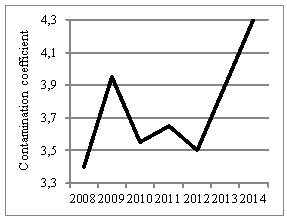
Fig. 1 – The average annual value of contamination
coefficient of Zolotonoshka river
The water of
Zolotonoshka river is in critical state and loses its natural ability to
cleanse itself under significant and growing anthropogenic impact, the level of
which is close to the sustainability limit of the system. Taking into
consideration the assessment of the formation conditions of the hydrochemical
state of the river, we can speak about the significant impact of urban agglomeration.
References
1. Organization and implementation of observations of
surface water pollution (in Ministry ecoresources system) КНД211.1.1.106
– Kiev, 2003. – 70 pp.
2. Khomenko O.M., Gajdar I.A. (2010). The analysis of the ecological state
of small rivers of the Cherkassy region (on the example of river Zolotonoshka).
Journal of Ecological Safety, (2), pp. 39-42.
3. Linnyk P.N., Zezerya
V.A., Zubenko I.B., Zubko A.V. (2010). The content and form of the migration of
metals in the water of Zaporizhia storage reservoir.
Hydrobiological Journal, (4), pp. 97-116.